Is China Ending the Dollar's Rule? What It Means for You
China has cut US Treasuries by half since 2013 and keeps buying gold. How the dollar became king, what de-dollarisation means, and what Indians should do.

Nikhil Varghese, CA · 5 min read

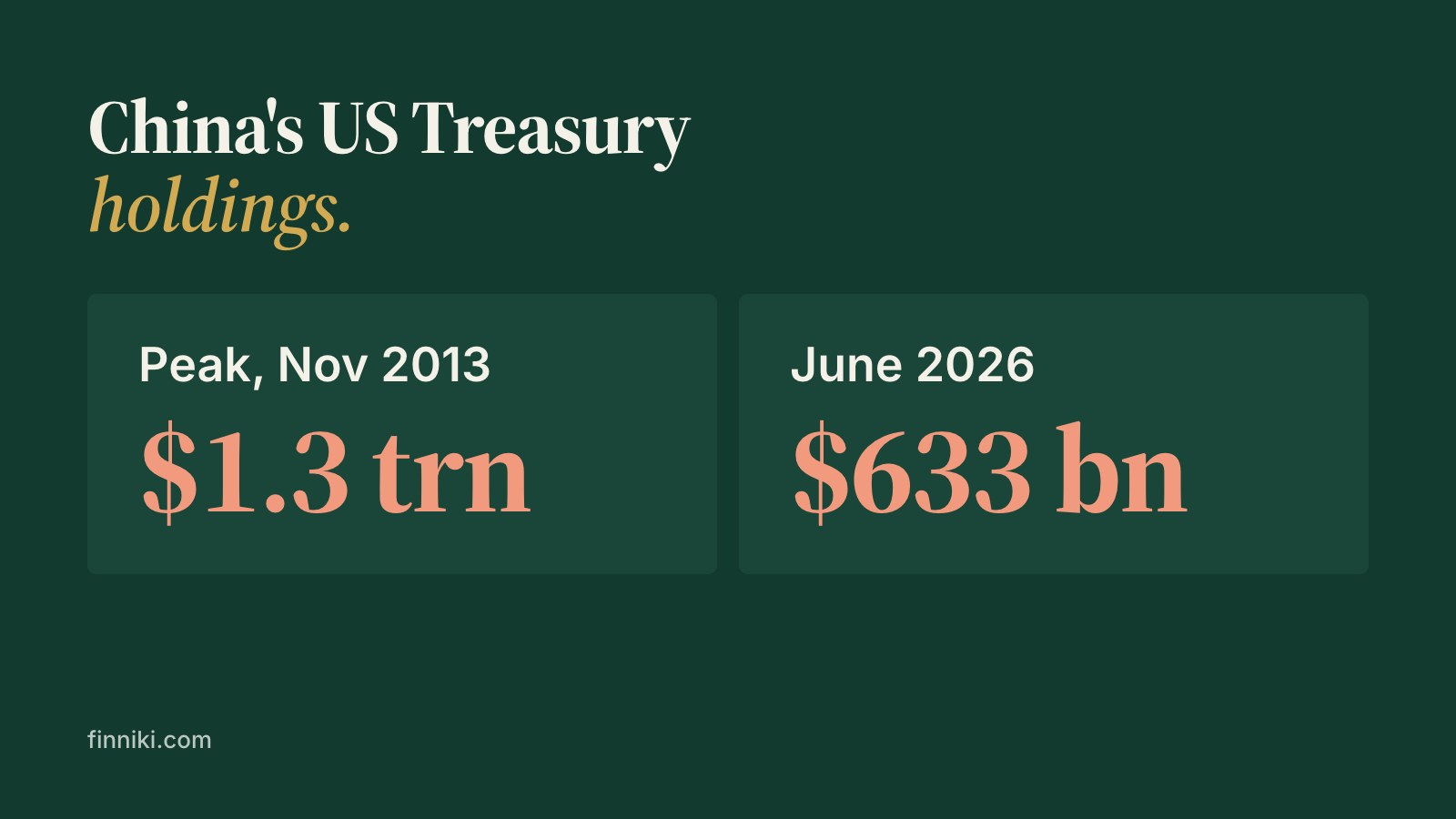
Quick answer: China is steadily reducing its reliance on the US dollar. Its holdings of US Treasury bonds have fallen from a peak of about $1.3 trillion in 2013 to about $633 billion in June 2026, while its central bank has kept adding gold, reaching about 2,300 tonnes officially. It has also built ways to trade oil in yuan. This will not end the dollar's dominance overnight, because the dollar is still at the centre of world trade, debt and reserves, but its unchallenged position is weakening. For Indian investors the lesson is diversification: keep equity as the core, hold some gold, and add global exposure.
Updated October 2026. The episode said China had cut its Treasuries to about $770 billion; by June 2026 the US data showed about $633 billion. The People's Bank of China has bought gold in most months since late 2022, though it paused for about six months in 2024, so "every single month" overstates it.
 Watch the episode: China's gold strategy masterplan, and how it could change your money
Is China really moving away from the US dollar?
Yes, gradually. Two signs:
- Fewer US Treasuries. China held about $1.3 trillion of US government bonds at its peak in November 2013. US data put its holdings at about $633 billion in June 2026, roughly half. (Some analysts think China holds more through custodians outside the US, so the true figure is debated.)
- More gold. The People's Bank of China has added gold to its reserves in most months since late 2022, taking official holdings to about 2,300 tonnes. Many analysts believe the real figure is higher, because purchases can also go through state banks and other channels.
China is swapping paper promises for metal, and there is a long-term strategy behind it.
How did the US dollar become the world's currency?
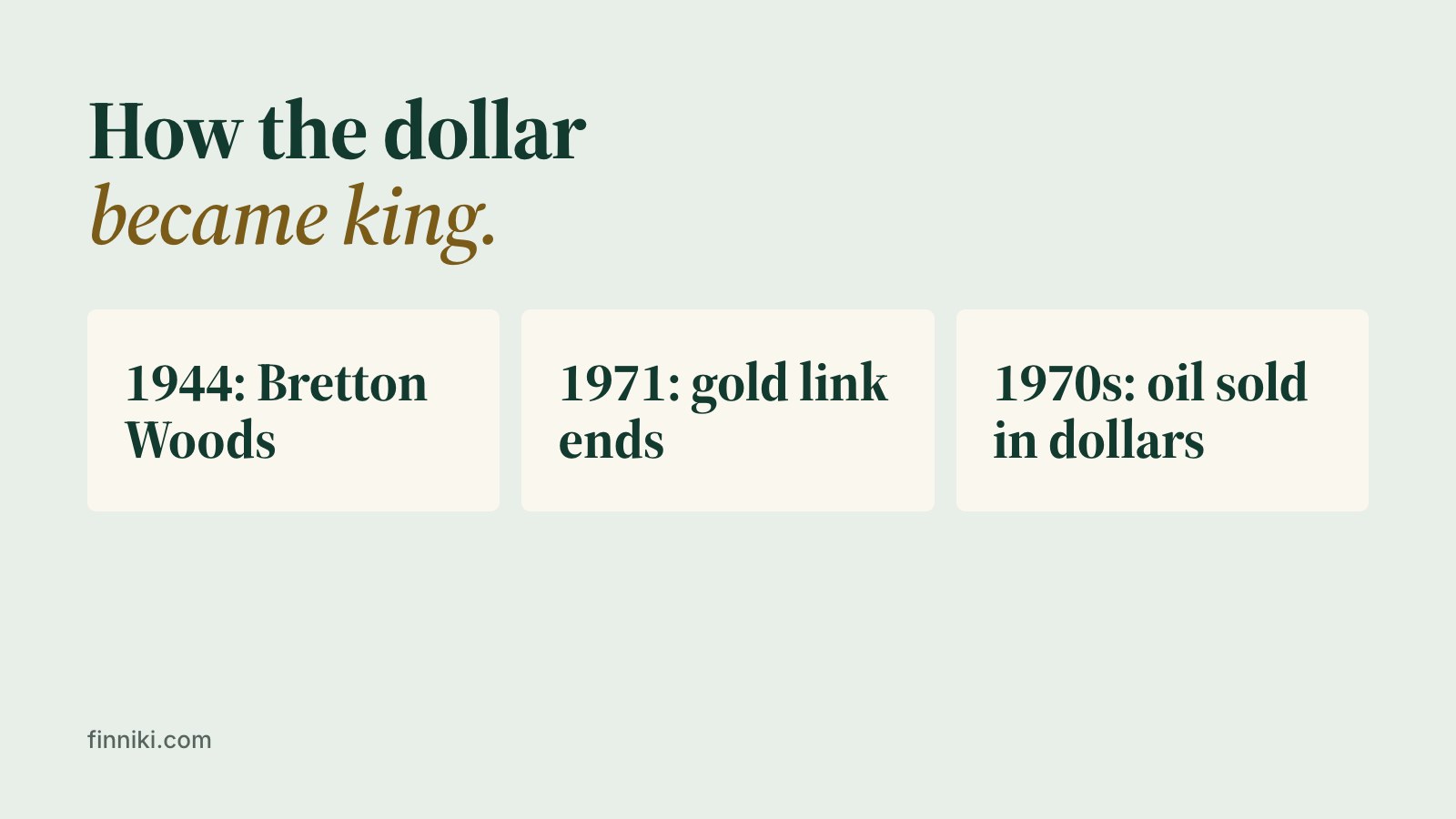
In three steps:
- 1944, Bretton Woods. After the Second World War, this agreement created the IMF and the World Bank and made the dollar the world's reserve currency, convertible into gold at $35 an ounce. The dollar became the common language of money.
- 1971, the gold link ends. President Nixon ended the dollar's convertibility into gold. The dollar became a fiat currency, valuable because people trust it.
- The 1970s, the petrodollar. Arrangements with Saudi Arabia meant oil was priced and sold in dollars. Since every country needs oil, every country needed dollars: a toll booth on the world's only highway.
What is China doing to challenge the dollar?
Building its own board instead of playing on America's. China, the world's largest oil importer, launched yuan-denominated oil futures on the Shanghai International Energy Exchange, so oil can be bought and sold in yuan. And because yuan can be used to buy gold on the Shanghai Gold Exchange, an exporter paid in yuan has a route into gold. Countries under US sanctions or wary of dollar dependence, such as Russia and Iran, have been the most willing to use these channels.
China is also working within BRICS (Brazil, Russia, India, China, South Africa and newer members), where members have discussed trading more in local currencies. Holding large gold reserves adds credibility to that effort.
Why did China speed up after 2022?
Because of the sanctions on Russia. After the invasion of Ukraine, Western countries froze Russia's central bank reserves held abroad. For China, that was a warning: assets held in another country's system can be frozen. Gold held at home cannot be frozen, sanctioned or printed by anyone else, which makes it attractive to any country worried about its relationship with the US.
What happens if more countries move away from the dollar?
If more trade is settled in yuan, gold or local currencies, demand for dollars falls over time, and with it the dollar's value. A weaker dollar can push the US to pay higher interest rates to attract buyers for its bonds, raising borrowing costs for the US government, businesses and households, and those effects spread to global markets.
As confidence in the dollar slips, gold tends to benefit as the oldest store of value, and that has been one driver of gold's record highs. Bitcoin, often called digital gold, has also attracted money from people looking for alternatives to traditional currencies, though with far more volatility.
Will the dollar collapse?
No, not soon. The dollar is still embedded in global trade, debt and central bank reserves, and no other currency comes close today. What is ending is its unchallenged dominance: the world is slowly moving towards several centres of money, with gold, other currencies and perhaps digital assets each playing a bigger role.
What does de-dollarisation mean for India?
Both good and bad:
- Possible benefits. If the dollar weakens, money can flow from the US into emerging markets such as India in search of growth, which can support the rupee and ease pressure on interest rates. A softer dollar can also make imports cheaper.
- Gold costs more. India is one of the world's largest gold buyers, and every bout of doubt about the dollar tends to lift gold prices in rupees: good if you own gold, costly if you plan to buy later.
- Crypto. If the trend continues, crypto may take a small place in diversified portfolios, with much higher risk than gold.
What should you do with your money?
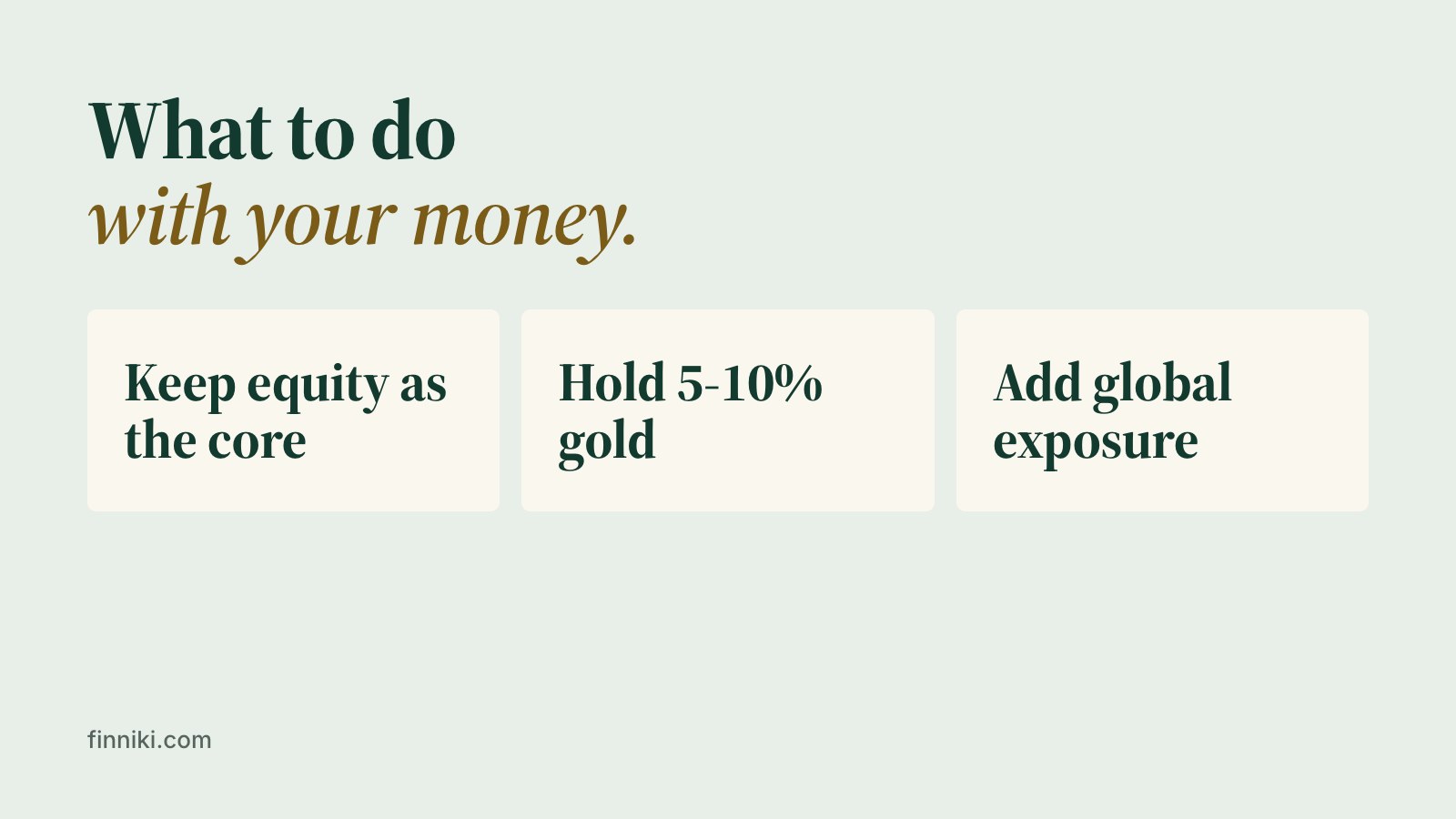
Diversify, as China is doing. Think of your portfolio as a thali that needs balance:
- Keep equity as the core of your long-term investments.
- Hold some gold, about 5 to 10%, through gold ETFs or gold funds. (New Sovereign Gold Bonds are no longer being issued, and SEBI has warned that app-based "digital gold" is not regulated by it.)
- Add global exposure, such as international funds, so not everything depends on one country or currency.
- Crypto only if you understand the risk, and only a very small amount.
FAQs
Is China dumping US Treasuries?
It has been reducing them for a decade: from about $1.3 trillion in 2013 to about $633 billion in June 2026, according to US data.
How much gold does China's central bank hold?
About 2,300 tonnes officially, after buying in most months since late 2022. Many analysts believe the true figure is higher.
What is the petrodollar?
The system, dating from the 1970s, under which oil is priced and sold in US dollars, which keeps global demand for dollars high.
Will the US dollar lose its reserve status?
Not soon. It remains dominant in trade, debt and reserves, but its share and unchallenged status are slowly eroding.
How does de-dollarisation affect gold prices?
Doubts about the dollar tend to push investors and central banks towards gold, which has been one driver of record gold prices.
What should Indian investors do?
Diversify: equity as the core, about 5 to 10% in gold through ETFs or funds, and some global exposure.
Stay diversified
Global shifts like this play out over years. Book a session to make sure your portfolio is not betting on one currency or country, or find more episodes on FinNiki videos.
General information, not advice for your situation. Rules change; check your own numbers with a CA before you act.