Direct vs Regular Mutual Funds: The ₹12 Lakh Difference
Same fund, same manager, different fee. How a 1% commission costs about ₹12.5 lakh over 20 years, when regular plans make sense, and how to switch.

Nikhil Varghese, CA · 6 min read

Quick answer: Every mutual fund comes in a Direct plan and a Regular plan: the same fund, the same manager and the same shares, but Regular plans pay a distributor commission out of your returns every year, so their expense ratio is higher, often by around 1% for equity funds. Over 20 years, ₹10,000 a month at 12% grows to about ₹98.9 lakh in a Direct plan against about ₹86.6 lakh in a Regular plan at 11%, a gap of over ₹12 lakh. Choose Direct if you can pick funds and invest steadily yourself; pay for Regular, or better a fee-only adviser, only if you get real ongoing advice.
Updated October 2026. Tax rates are those in force since July 2024. Switching from Regular to Direct is treated as selling and buying, so check tax and exit loads first (see below).
 Watch the episode: Stop losing lakhs! Direct vs Regular mutual funds explained simply
What is the difference between Direct and Regular mutual funds?
Only the cost. Both plans of a fund invest in exactly the same portfolio, run by the same manager:
- Direct plan: you buy straight from the fund house or through a platform that offers direct plans. No distributor commission, so a lower expense ratio (the annual fee).
- Regular plan: you buy through a distributor, agent or bank, who is paid a commission by the fund house every year. That commission comes out of your returns.
It is like booking a flight on the airline's website versus through an agent who adds a fee: same flight, same seat, different price.
How much do Regular plans cost you?
More than the small percentage suggests, because the fee compounds against you every year. Take two colleagues who each invest ₹10,000 a month for 20 years in the same fund:
- Aman chooses the Direct plan and earns about 12% a year: about ₹98.9 lakh.
- Rohan takes the Regular plan his bank suggested and earns about 11% after the higher fee: about ₹86.6 lakh.
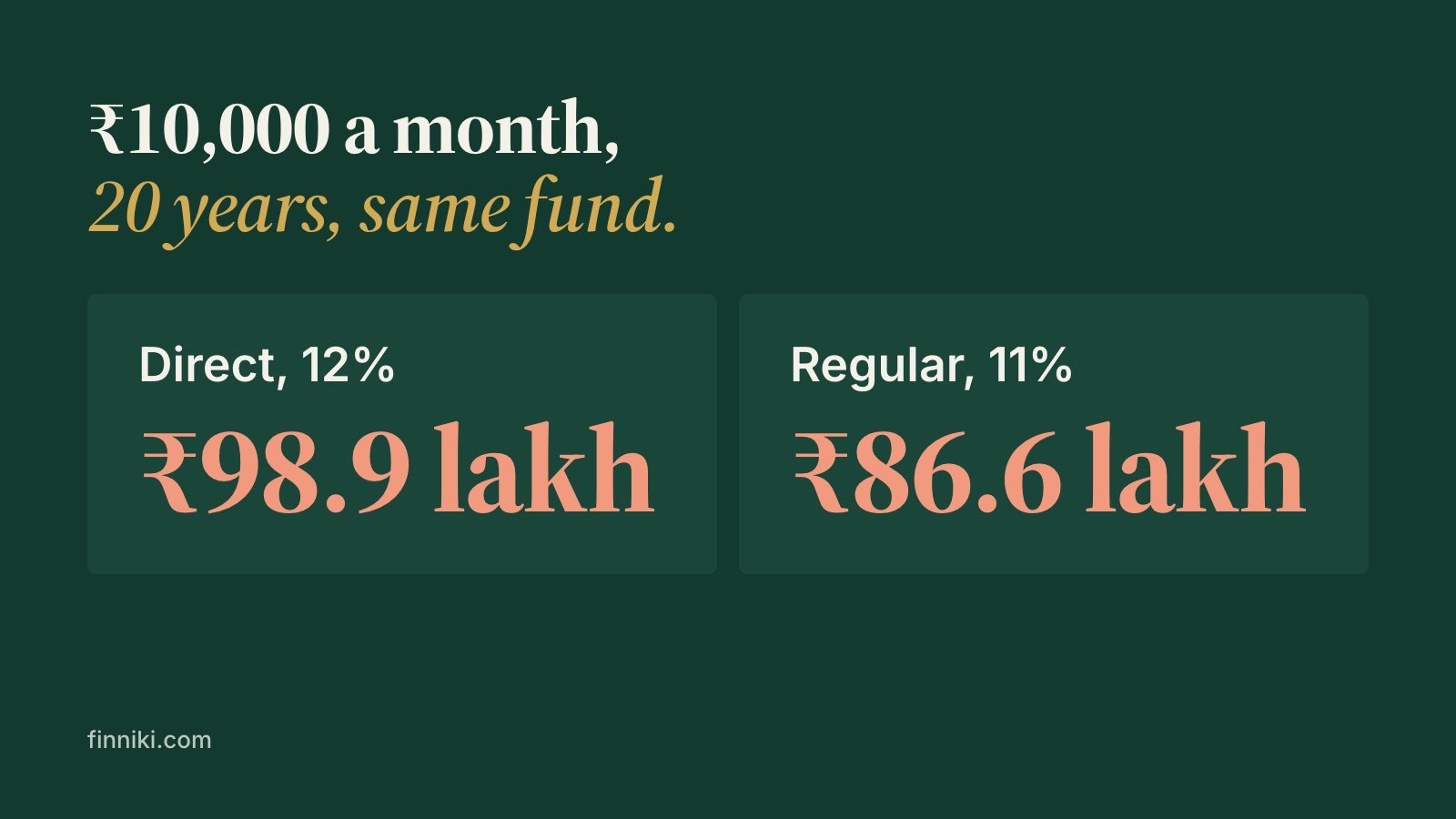
Rohan is over ₹12 lakh poorer, not from bad funds or bad timing, but from one box he ticked 20 years ago. At ₹25,000 or ₹50,000 a month, the gap runs to ₹30 to 40 lakh or more: a silent transfer of wealth from investor to intermediary.
Does Nikhil use Direct plans?
Yes. Every mutual fund in his own portfolio is a Direct plan, bought through platforms that offer Direct plans without commission. Even a 0.5% lower expense ratio adds up to a meaningful bonus over the years.
When should you choose Direct plans?
When most of these are true:
- You understand the basics: the difference between equity and debt funds, and what a SIP is.
- You can invest regularly without someone reminding you.
- You are investing for the long term, more than five years, when fees compound most.
- You are comfortable using an app or a fund house website.
You do not need to be an expert or time the market; you need to select "Direct" instead of "Regular".
When do Regular plans make sense?
When you genuinely receive advice and support for the commission: a planner who builds your whole financial plan, helps with tax and estate planning, and keeps you invested when markets crash. That is like a personal trainer who actually trains you. The trouble is that many people in Regular plans get no real service after the sale; their "adviser" appears once a year with a new product. That is not worth 1% a year for 20 years.
A middle path: pay a fee-only SEBI-registered investment adviser for advice, and invest through Direct plans. You get the advice and still avoid the commission.
What are the myths about Direct plans?
- "Regular plans give better returns because they're professionally managed." False. Both plans hold the same portfolio with the same manager; only the fee differs.
- "Direct plans are riskier." No. Risk depends on the type of fund (equity, debt or hybrid), not on how you buy it.
- "Direct plans are hard to track." Not any more: apps and fund house websites show everything in one place.
- "I need advice, so I need Regular." You can buy advice separately from a fee-only adviser and still invest Direct.
How do you invest in Direct mutual funds?
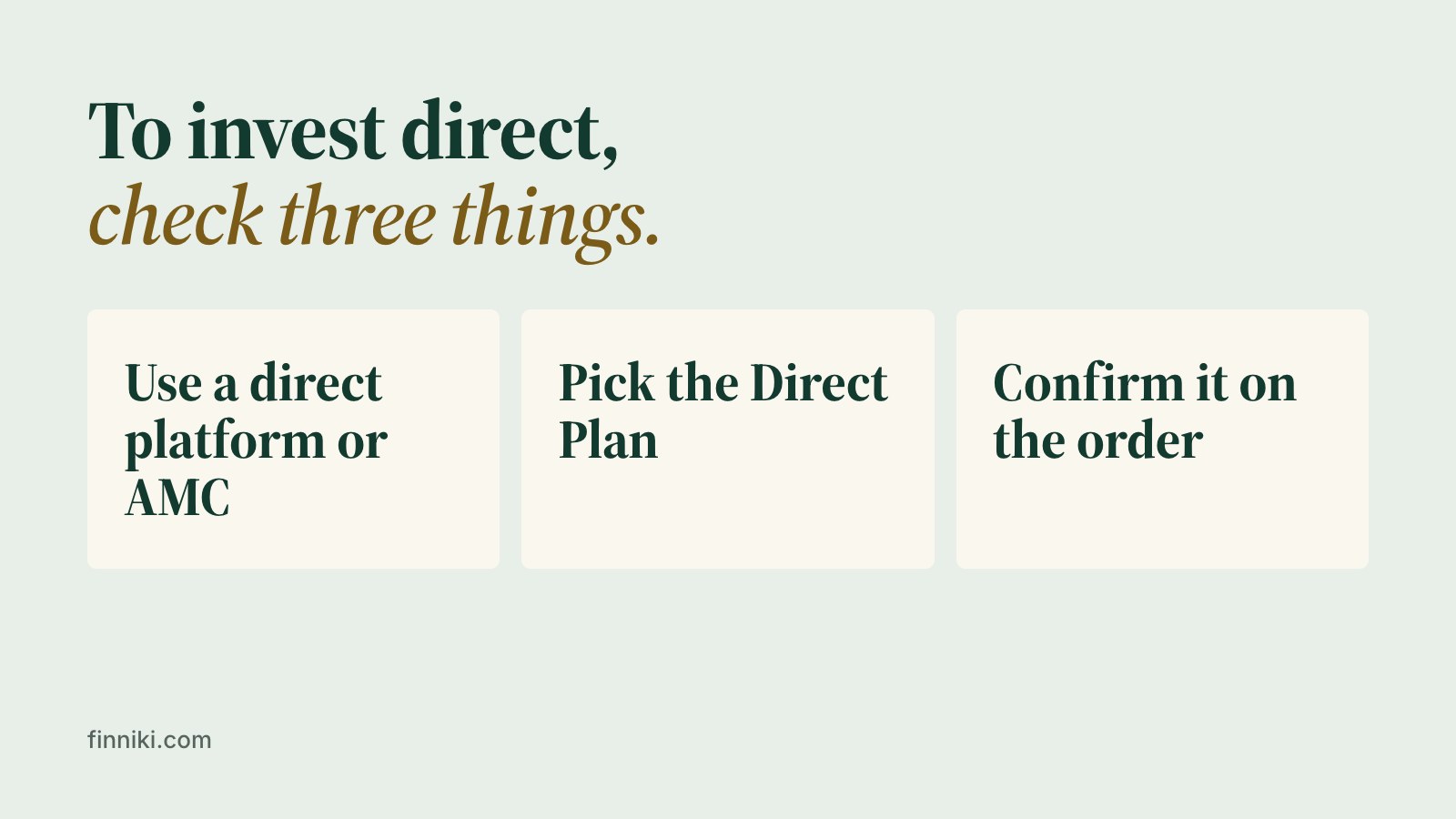
- Choose a platform that offers Direct plans, or invest on a fund house's own website or app.
- Complete eKYC with your PAN and Aadhaar, which takes minutes.
- Search for the fund and choose the option marked "Direct Plan", never "Regular Plan".
- Set up the SIP amount, date and payment by UPI or auto-debit.
- Check the order summary says "Direct Plan" before confirming.
How do you switch from Regular to Direct?
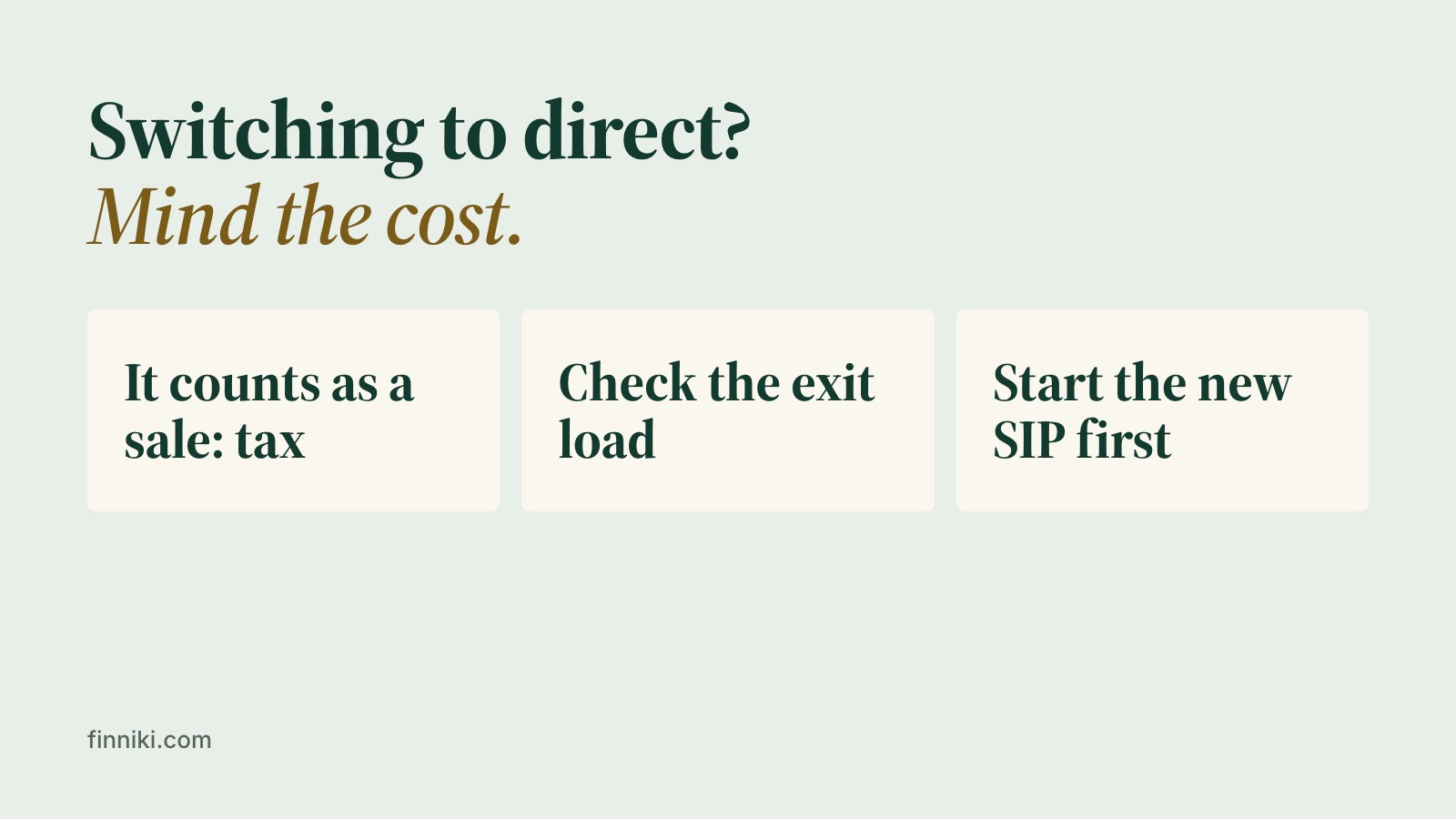
Find your folio number on your statements, then switch online on your platform if it allows, or submit the fund house's switch form. Start a new SIP in the Direct plan before stopping the old one, so you do not break the habit. Expect your distributor to argue against it; they lose their commission.
Two costs to check before you switch existing money:
- Tax. A switch is treated as selling the Regular units and buying Direct ones, so any gains are taxed in that year.
- Exit load. Units held for less than the fund's exit-load period (often one year for equity funds) may be charged.
Often the simplest approach is to send all new SIPs to the Direct plan at once, and switch older units in stages, using the ₹1.25 lakh yearly tax-free limit on long-term equity gains and waiting out any exit loads.
How are mutual funds taxed?
The same for Direct and Regular plans:
- Equity funds: gains on units held up to a year are taxed at 20%; after a year, gains above ₹1.25 lakh a year are taxed at 12.5%.
- Debt funds (invested from April 2023): gains are taxed at your income-tax slab rate.
With Direct plans your gains are higher, so you may pay a little more tax, which is a good problem to have.
FAQs
Are Direct mutual funds better than Regular?
For most investors who can choose funds themselves, yes: the portfolio is identical, and the lower expense ratio means higher returns over time.
How much difference does the expense ratio make?
About ₹12 lakh over 20 years on a ₹10,000 monthly SIP, when the Regular plan costs about 1% more a year.
Is it safe to invest in Direct plans?
Yes. They carry exactly the same risk as the Regular plan of the same fund.
Can I switch from Regular to Direct?
Yes, online or with a switch form, but it is treated as a sale, so check the capital gains tax and any exit load first.
Do Regular plans ever make sense?
If you receive genuine, ongoing advice for the commission. Otherwise, pay a fee-only adviser and invest Direct.
How do I know which plan I hold?
Check your statement or app: the scheme name says "Direct Plan" or "Regular Plan".
Keep more of your returns
A one-time check of your funds can be worth lakhs over the years. Book a session to review your portfolio, or find more episodes on FinNiki videos.
General information, not advice for your situation. Rules change; check your own numbers with a CA before you act.