EV vs Petrol Car in India 2026: Real Cost & Break-Even
EV or petrol? Nexon EV vs Nexon petrol at 2026 prices: the price gap after the GST cut, running cost per km, break-even years and the BaaS catch.

Nikhil Varghese, CA · 6 min read
Quick answer: An electric car costs more to buy but far less to run: about ₹1 per km charged at home against about ₹5.6 per km for a comparable petrol car. Since the September 2025 GST cut made small petrol cars cheaper, the gap has widened again. A Nexon EV bought outright costs about ₹3.7 lakh more ex-showroom than a Nexon petrol automatic, so at 12,000 km a year the fuel saving takes about 6.7 years to recover it, or about 4 years at 20,000 km. Tata's battery rental (BaaS) option nearly removes the price gap, but the ₹4.4 per km battery rent wipes out most of the running saving. An EV pays off for people who drive a lot, can charge at home and keep the car for years.
Updated October 2026. The episode compared prices from before the GST changes of 22 September 2025, when petrol cars attracted 28% GST plus cess. Small petrol cars now attract 18%, while EVs stay at 5%, so petrol cars got cheaper and the EV's price premium grew. The episode's ₹1.5 lakh Delhi subsidy and the EV loan-interest deduction are no longer available to new buyers; both are explained below. Prices are ex-showroom and change often, so check with a dealer.
 Watch the episode: Why I switched to an EV (and why you should too)
Should you buy an EV or a petrol car in India?
Buy an EV if you drive a lot, mostly in the city, can charge at home and plan to keep the car for several years. Buy petrol if you drive little, cannot charge at home or change cars every few years, because you may sell the EV before its fuel saving covers its higher price. The comparison below uses the Tata Nexon, which comes in both EV and petrol versions, to keep it like for like.
How much more does an EV cost than a petrol car?
About ₹3.7 lakh more for the Nexon, bought outright. At 2026 ex-showroom prices:
- Nexon petrol Smart+ AMT: about ₹8.78 lakh, after the GST cut lowered its price by roughly ₹80,000 to ₹1 lakh.
- Nexon EV, entry variant: from about ₹12.49 lakh.
In the episode the gap was about ₹2.2 lakh on-road (₹13.6 lakh for the EV against ₹11.4 lakh for the petrol AMT). The GST cut lowered the petrol car's price, while the EV's 5% GST stayed the same, so the premium for going electric is now larger. On-road prices also include registration and road tax, where many states give EVs a full or partial waiver, which narrows the on-road gap again.
How much does an EV save on running costs?
About ₹4.6 per kilometre when you charge at home. The episode's numbers:
- Petrol Nexon: about ₹5.6 per km, based on 17.4 km per litre.
- Nexon EV: about ₹1 per km on home charging.
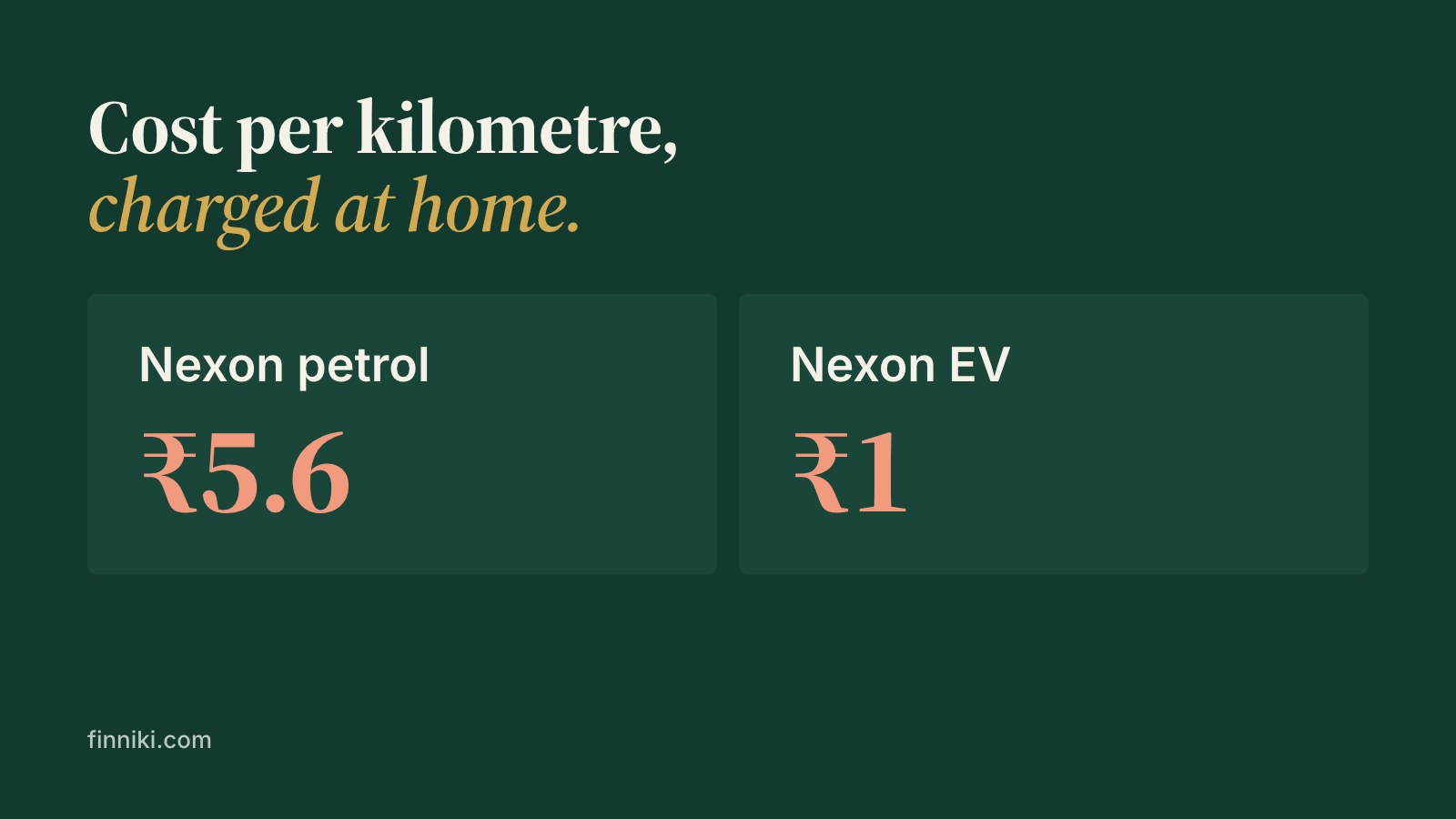
Drive 12,000 km a year and the petrol car's fuel costs about ₹67,000 to ₹70,000, against about ₹12,000 for the EV: a saving of roughly ₹55,000 a year. At 20,000 km the saving rises to about ₹92,000.
Public fast chargers cost more per unit than home electricity, so if you cannot charge at home your cost per km rises and the saving shrinks.
Maintenance adds to the saving. EVs have far fewer moving parts: no engine oil changes and no engine repairs, and regenerative braking reduces brake wear. Most servicing is basic, such as tyre rotation and brake checks.
How long does an EV take to break even?
Divide the extra price by the yearly saving. With the 2026 gap of about ₹3.7 lakh and a saving of ₹4.6 per km:
- 12,000 km a year: saves about ₹55,000, so about 6.7 years to break even.
- 15,000 km a year: saves about ₹69,000, so about 5.4 years.
- 20,000 km a year: saves about ₹92,000, so about 4 years.
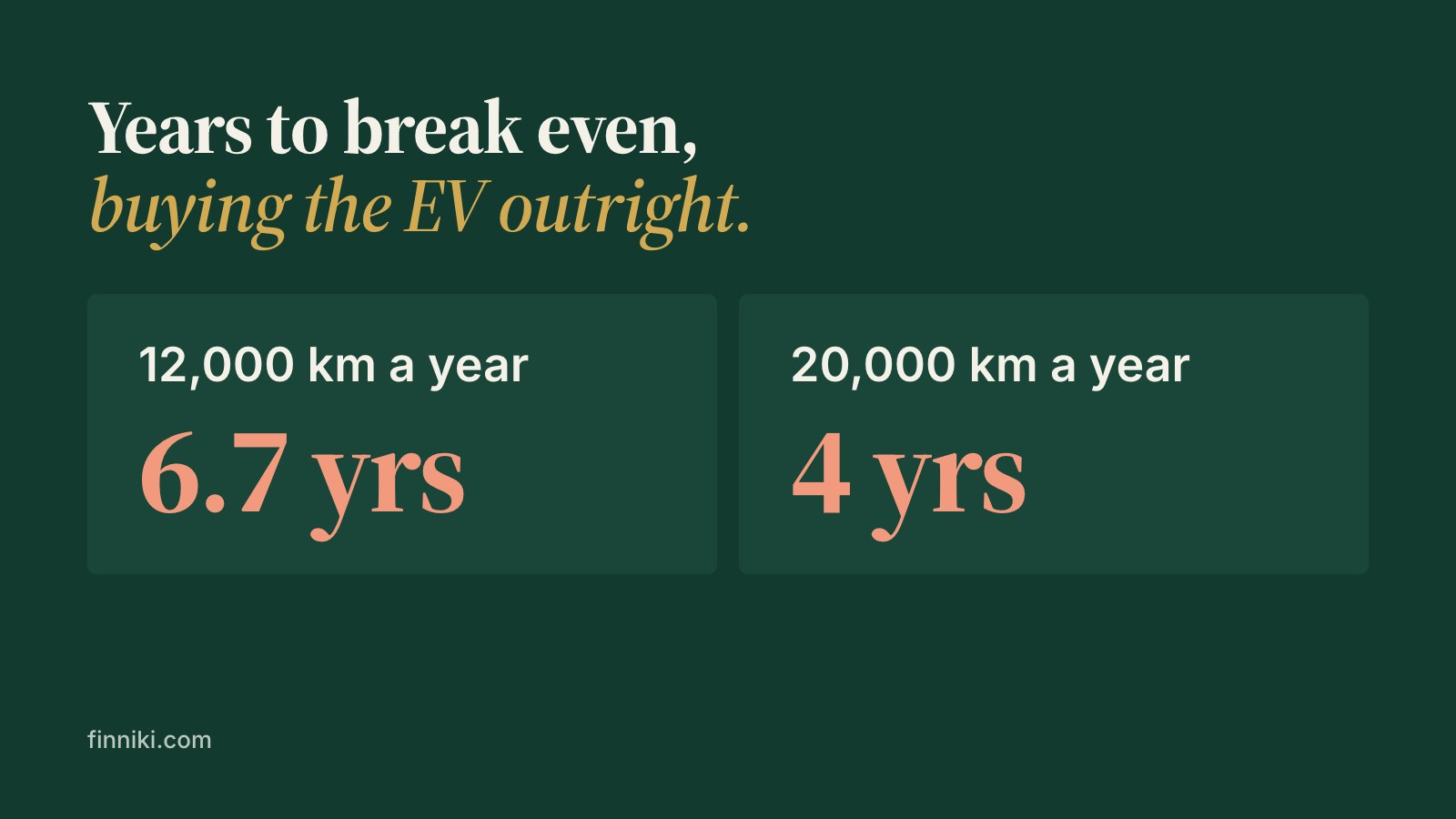
The episode's two-to-four-year break-even assumed the old ₹2.2 lakh gap. With road-tax waivers or a state incentive, your on-road gap may be smaller and the break-even faster. After break-even, every kilometre saves you about ₹4.6.
Does battery rental (BaaS) make an EV cheaper?
Cheaper to buy, not to run. Under Battery-as-a-Service, which Tata extended across its EV range in September 2026, you buy the car without the battery and pay for the battery by the kilometre:
- The Nexon EV under BaaS starts at about ₹8.99 lakh, almost the price of the petrol Smart+ AMT.
- You then pay about ₹4.4 per km for the battery, plus your charging cost of about ₹1 per km.
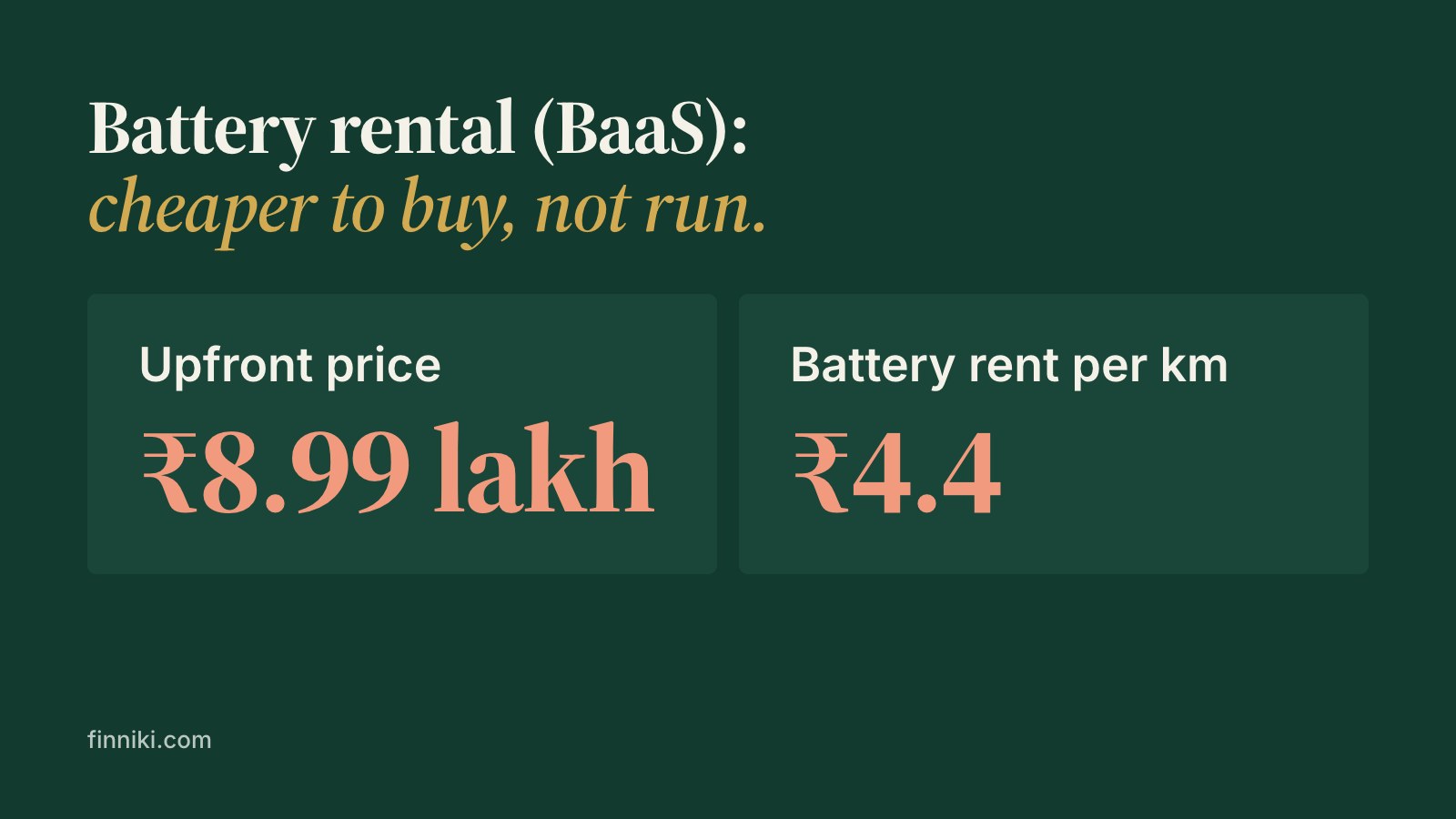
That puts the running cost at about ₹5.4 per km, close to the petrol car's ₹5.6. BaaS removes the upfront price gap but also removes most of the running saving, which was the main financial reason to choose an EV. It suits someone who wants an EV for comfort and convenience without paying more upfront; it does not make the EV a money-saver.
What government incentives are there for EVs in 2026?
Fewer than in the episode:
- Lower GST: EVs are taxed at 5%, against 18% for small petrol cars now (28% plus cess before September 2025).
- Road tax and registration: many states reduce or waive these for EVs. Under Delhi's EV Policy 2.0, in force from 1 July 2026, electric cars priced up to ₹30 lakh get a full road tax and registration fee exemption, and a ₹1 lakh scrappage bonus applies if you scrap an old petrol or diesel car and buy an EV within six months.
- Delhi's ₹1.5 lakh car subsidy, quoted in the episode, belonged to the earlier policy and is not available to new buyers.
- Interest deduction on an EV loan: the deduction of up to ₹1.5 lakh a year on EV loan interest applied only to loans sanctioned between April 2019 and March 2023, and only under the old tax regime. It does not help a new buyer.
Check your own state's current policy before you count on any incentive.
What else makes an EV worth it?
Beyond money, the episode's reasons for switching:
- Smooth to drive: EVs are automatic, so there is no clutch in stop-and-go traffic, and the ride is quiet and free of vibration. Acceleration is quick.
- Charge at home: you are not tied to petrol pumps or daily fuel prices.
- Made for the city: compact, easy to manoeuvre and efficient in traffic. With a 20 to 30 km daily commute, an EV fits easily.
- Technology: apps to monitor the battery, safety features and smart charging.
- Cleaner air: no tailpipe emissions, and the grid is adding more renewable power.
FAQs
Is an EV cheaper than a petrol car in India in 2026?
Cheaper to run, not to buy. A Nexon EV costs about ₹3.7 lakh more ex-showroom than a Nexon petrol automatic, but costs about ₹1 per km on home charging against about ₹5.6 for petrol.
How many years does an EV take to pay back its extra cost?
About 6.7 years at 12,000 km a year and about 4 years at 20,000 km, buying the Nexon EV outright at 2026 prices. Road-tax waivers can shorten this.
What is BaaS on Tata EVs?
Battery-as-a-Service: you buy the car without the battery and pay for the battery per kilometre. The Nexon EV under BaaS starts at about ₹8.99 lakh plus about ₹4.4 per km.
Is BaaS worth it?
It lowers the purchase price to near a petrol car's, but battery rent plus charging costs about ₹5.4 per km, close to petrol. Take it for the driving experience, not to save money.
What is the GST on electric cars?
5%. Small petrol cars now attract 18% GST after the September 2025 changes, down from 28% plus cess.
Can I claim a tax deduction on my EV loan?
Not on a new loan. The deduction of up to ₹1.5 lakh a year on EV loan interest applied only to loans sanctioned between April 2019 and March 2023, under the old tax regime.
Who should not buy an EV?
People who drive little, cannot charge at home or change cars every few years. They are unlikely to drive enough to recover the EV's higher price.
Make the car decision with your whole budget
A car is one of the biggest purchases most families make, and the right choice depends on how you drive and how you pay for it. Book a session to fit it into your plan, or find more episodes on FinNiki videos.
General information, not advice for your situation. Rules change; check your own numbers with a CA before you act.