Health Insurance in India: How Much Cover You Need (2026)
How health insurance works, the jargon that gets claims cut (room rent, co-pay, sub-limits), how much cover you need, and the 2025 GST change.

Nikhil Varghese, CA · 7 min read

Quick answer: Health insurance pays your hospital bills up to a yearly limit, the sum insured, either directly at a network hospital (cashless) or by reimbursing you. Buy your own policy even if your employer covers you, because company cover ends when you leave the job. Aim for at least ₹10 lakh or half your annual income, whichever is higher, and ₹10 to 20 lakh in a metro, with ₹5 to 10 lakh more per dependant. The cheapest way to get large cover is a base family floater plus a super top-up, with critical illness cover on top. Read the fine print on room rent, co-pay and sub-limits, and declare every existing condition. Since 22 September 2025, individual health insurance premiums carry no GST.
Updated October 2026. GST of 18% on individual and family health insurance premiums was removed from 22 September 2025, so the same cover now costs less. Since April 2024, insurers can make you wait at most three years for pre-existing diseases, and after five years of continuous cover they cannot reject a claim for non-disclosure except for proven fraud. From April 2026 the tax deduction for premiums, formerly Section 80D, sits in Section 126 of the Income-tax Act 2025, still under the old tax regime only.
 Watch the episode: How to choose the best health insurance after the new GST
Why do you need health insurance in India?
Because one hospital stay can wipe out years of savings. A bypass surgery in a metro costs about ₹10 to 15 lakh. Cancer or kidney failure can take ₹15 to 20 lakh in weeks. A single hospitalisation costs about ₹35,000 in rural areas and over a lakh in cities. Without the right cover, your child's education fund or your retirement savings can disappear in one emergency.
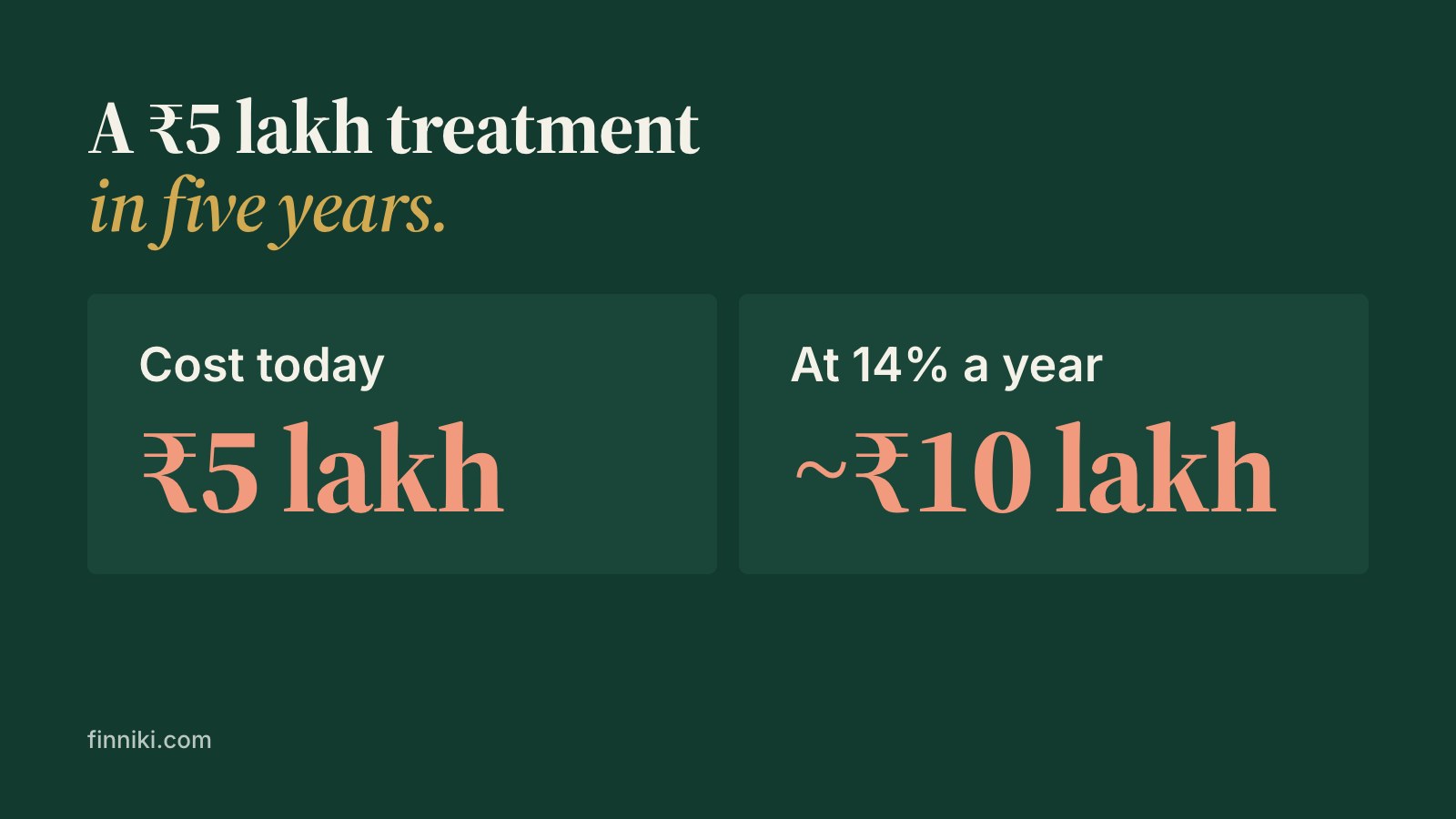
Medical costs also rise faster than salaries. Your pay may grow 6 to 7% a year, but medical costs in India rise about 14% a year, which turns a ₹5 lakh procedure today into about ₹10 lakh in five years.
Do you need health insurance if your company covers you?
Yes. Company cover is a good perk but a weak plan:
- It ends when the job ends, and often just when you need it, such as after retirement or between jobs.
- It is often too small, and may depend on your grade in the company.
- Illness does not wait for age. Even a fit 25-year-old can have an accident or a sudden diagnosis.
Take Raj, 32, fit and active, who was hospitalised after a car accident with a fractured leg and internal bleeding. His company cover paid ₹3 lakh; his bills came to ₹7 lakh. His personal policy paid the remaining ₹4 lakh. Without it, he would have had to borrow or sell investments.
How does health insurance work?
You choose a sum insured, say ₹5 lakh, which is the most the insurer pays in a year. Then:
- Network hospital: treatment is cashless. The insurer pays the hospital directly.
- Non-network hospital: you pay first, then submit the documents and the insurer reimburses you.
It works by pooling: the premiums of many people pay for the few who need treatment. A 28-year-old who needs a ₹5 lakh appendix operation walks out debt-free because the insurer pays.
What do health insurance terms mean?
Learn these and claim rejections will not surprise you:
- Waiting period: some conditions are covered only after a set time. Since April 2024 the maximum is three years for specified illnesses.
- Pre-existing disease (PED) cover: conditions you already have, such as diabetes or blood pressure, are covered after a waiting period of at most three years. Never hide them: non-disclosure is the commonest reason for rejection.
- Moratorium: after five years of continuous cover, the insurer cannot reject a claim for non-disclosure or misrepresentation, except for proven fraud.
- Room rent limit: if the policy allows ₹5,000 a day and you take a ₹10,000 room, you pay a proportionate share of the whole bill, not just the room difference.
- Co-pay: you share every claim. A 20% co-pay on a ₹5 lakh bill means you pay ₹1 lakh.
- Deductible: you pay the first part of the bill and the insurer covers the rest. With a ₹1 lakh deductible, you pay up to ₹1 lakh and the insurer pays above it. Common in top-up plans, and it lowers the premium.
- Sub-limits: caps on particular treatments, for example maternity limited to about ₹50,000.
- No-claim bonus: your cover grows for every claim-free year without extra premium; on some plans a ₹10 lakh cover can grow several times over.
What types of health insurance plans are there?
- Individual plan: covers one person. Simple, but costly for a whole family.
- Family floater: one shared sum insured for spouse, children and sometimes parents. Cheaper, but risky if several members need care in the same year.
- Critical illness cover: pays a lump sum on diagnosis of a listed illness, with no hospitalisation needed. Use it for treatment, to replace income or for rehabilitation.
- Top-up and super top-up: extra cover for large bills above a deductible. A super top-up is better: it counts your total bills in the year, not each hospitalisation separately.
- Employer cover: a useful extra layer, never the only one.
How much health insurance cover do you need?
Start from these guidelines and adjust for your family and city:
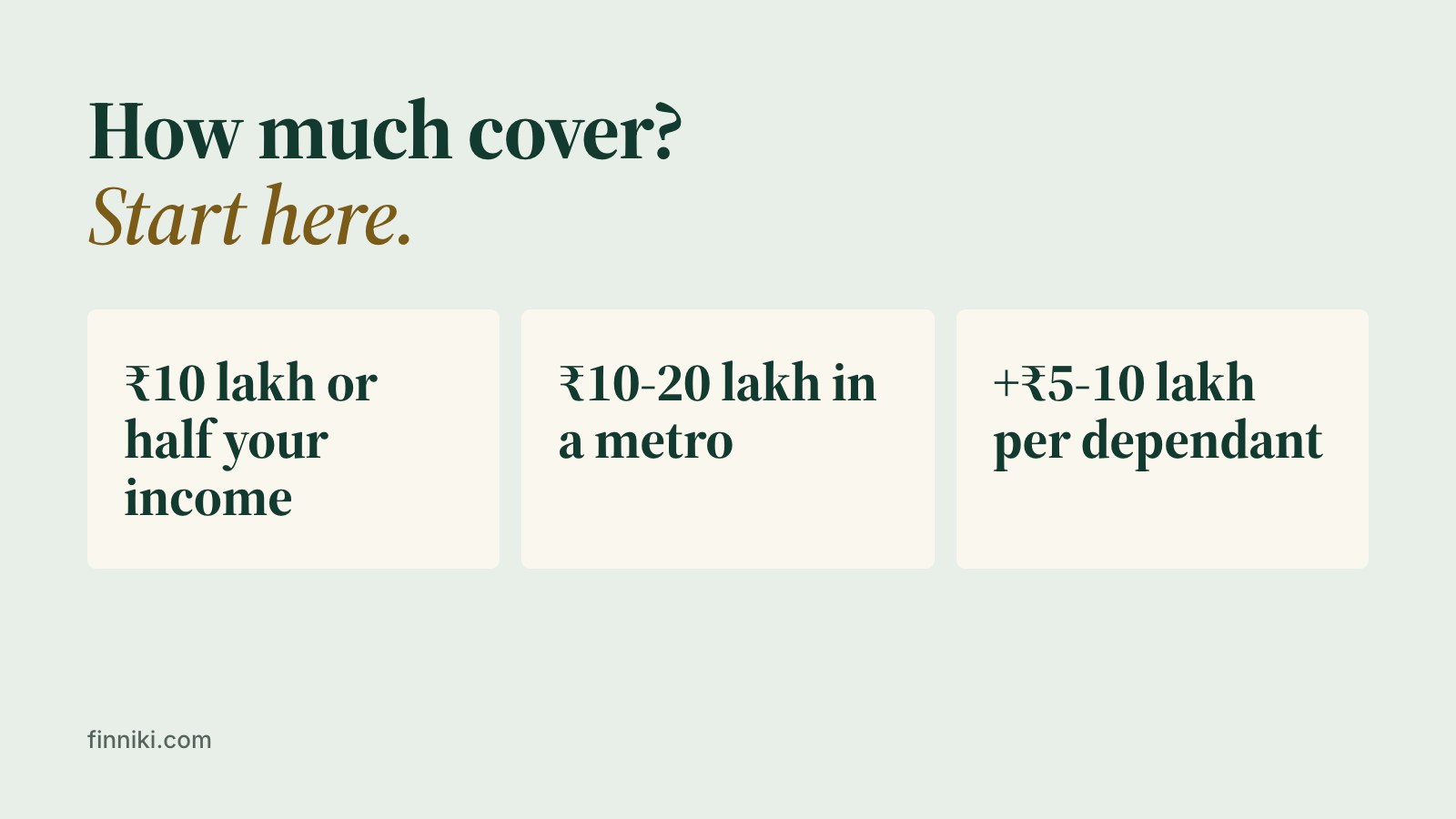
- Minimum: the higher of ₹10 lakh or half your annual income.
- Metro cities: aim for ₹10 to 20 lakh at least.
- Dependants: add ₹5 to 10 lakh for each dependant.
- Loans or a family history of illness: go up to ₹20 to 30 lakh.
How do you choose a good health insurance policy?
Do not chase the cheapest premium. Check:
- Claim settlement ratio: how often the insurer actually pays claims.
- Network hospitals in your city, especially the ones you would use.
- Sub-limits, co-pays, room rent limits and exclusions.
Then build the cover in layers for the best protection per rupee: a base family floater, a super top-up for large bills, and critical illness cover for income protection. Review it every two to three years, because medical inflation outpaces salaries.

What mistakes do people make with health insurance?
- Relying only on employer cover. It ends with the job, is often too low and depends on your grade.
- Delaying the purchase. Premiums rise with age, and by the time many people buy, often after retirement, they already have conditions that face a waiting period, and pay very high premiums.
- Buying for the tax deduction. The deduction for premiums (Section 80D, now Section 126) is a bonus, available only under the old tax regime. Buy for protection.
- Ignoring the fine print. Room rent limits, disease caps and co-pays can sharply cut a claim. Priya's gallstone claim was rejected because of a sub-limit she had not read.
How is health insurance changing?
- Faster claims: insurers increasingly use automation to approve simple claims within hours.
- Telemedicine: virtual consultations are now a common added benefit.
- Wearables and wellness: some insurers reward healthy habits and preventive check-ups with lower premiums or extra benefits.
FAQs
Is there GST on health insurance in India?
No, not on individual and family health insurance. GST of 18% was removed from 22 September 2025.
How much health insurance cover is enough?
At least the higher of ₹10 lakh or half your annual income, ₹10 to 20 lakh in a metro, plus ₹5 to 10 lakh per dependant. Go higher with loans or a family history of illness.
Is my employer's health cover enough?
Rarely. It ends when you leave the job and is often too small, so keep a personal policy as well.
What is the waiting period for pre-existing diseases?
At most three years, under IRDAI rules in force since April 2024.
What is the difference between a top-up and a super top-up?
Both pay above a deductible. A top-up applies the deductible to each hospitalisation; a super top-up adds up all your bills in the year, so it pays out more often.
Can I claim a tax deduction for health insurance?
Yes, under the old tax regime only: Section 80D for income up to March 2026 and Section 126 of the Income-tax Act 2025 from April 2026. There is no such deduction under the new regime.
What is a room rent limit?
A daily cap on room charges. Choose a costlier room and the insurer cuts your whole claim in proportion, not just the room difference.
Get your family's cover right
The right cover depends on your family, your city and your health history. Book a session to check your current policies for gaps, or find more episodes on FinNiki videos.
General information, not advice for your situation. Rules change; check your own numbers with a CA before you act.