How to Invest in Stocks in India: A Beginner's Guide
What a share is, active vs index funds, how to open a demat account and start a SIP, large vs mid vs small caps, today's tax rates, and beginner mistakes.

Nikhil Varghese, CA · 5 min read

Quick answer: To start investing in stocks in India, open a demat and trading account with a SEBI-registered broker, decide whether you want to pick shares yourself or use index funds or ETFs, and start a monthly SIP with as little as ₹1,000 to ₹5,000. A share is part-ownership of a business; you earn through price growth and dividends. Begin with large and mid caps or a Nifty 50 index fund, diversify across sectors, invest steadily through market falls, review once a year, and avoid hot tips and penny stocks. Gains on shares held over a year are taxed at 12.5% above ₹1.25 lakh a year; within a year, at 20%.
Updated October 2026. The episode quoted the old tax rates (15% short-term and 10% long-term above ₹1 lakh). Since 23 July 2024 they are 20% and 12.5% above ₹1.25 lakh. Two of its growth figures are also corrected below.
 Watch the episode: How to invest in stocks in India for beginners (step-by-step guide)
Why should you invest in stocks at all?
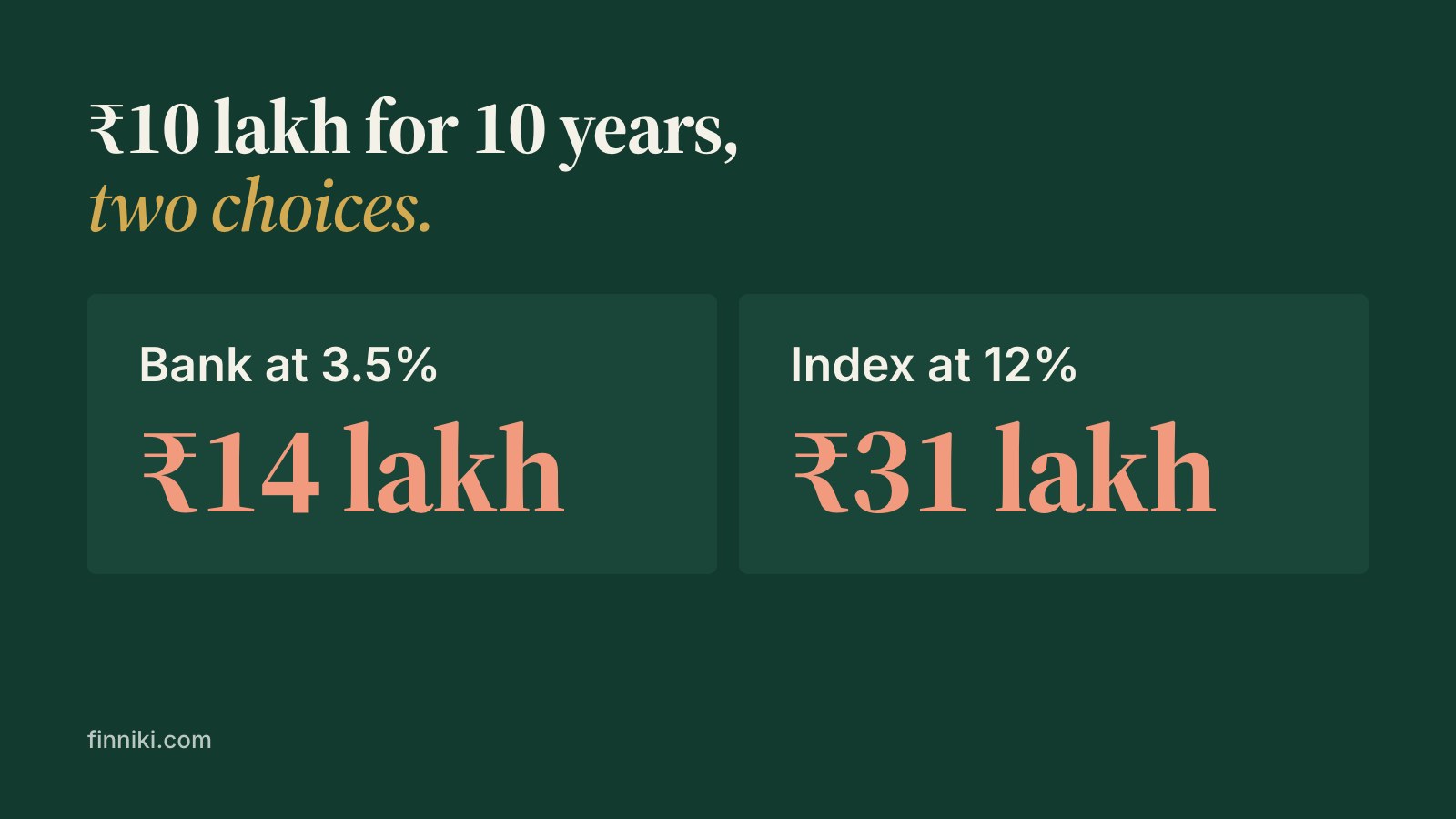
Because cash in a bank falls behind inflation. A savings account pays about 3.5% while prices rise about 6% a year. Take two friends who each save ₹10 lakh: one leaves it in the bank and after 10 years has about ₹14 lakh, which buys only what about ₹7.9 lakh buys today; the other puts it in a simple index fund earning about 12% and has about ₹31 lakh.
Think of a savings account as a broken lift that barely moves, and the stock market as an escalator: it has ups and downs, but over time it keeps going up. You do not need to run on it or time it; you need to step on and stay on.
What is a stock?
Ownership. When you buy a share of a company such as IRCTC or a Tata company, you become a small co-owner of that business. You make money in two ways:
- Capital gains: the share price rises. Buy at ₹500, and if it reaches ₹1,500, the ₹1,000 difference is your gain.
- Dividends: many companies, such as ITC and Coal India, pay part of their profits to shareholders, often several times a year.
Investing is not gambling: you become a partner in Indian businesses.
Should you choose active or passive funds?
Both have a place:
- Active funds are like hiring a chef: a fund manager researches and picks shares to try to beat the market, and charges a higher fee (the expense ratio) for it.
- Passive funds follow a recipe: index funds copy an index such as the Nifty 50 or Sensex exactly, and ETFs do the same but trade on the exchange like shares. Fees are much lower because no one is picking stocks.
For simple, hands-off growth, go passive. If you believe a manager can beat the market and are happy to pay for it, add active funds. Many successful investors use a passive core with some active funds on top.
How do you start investing in stocks, step by step?
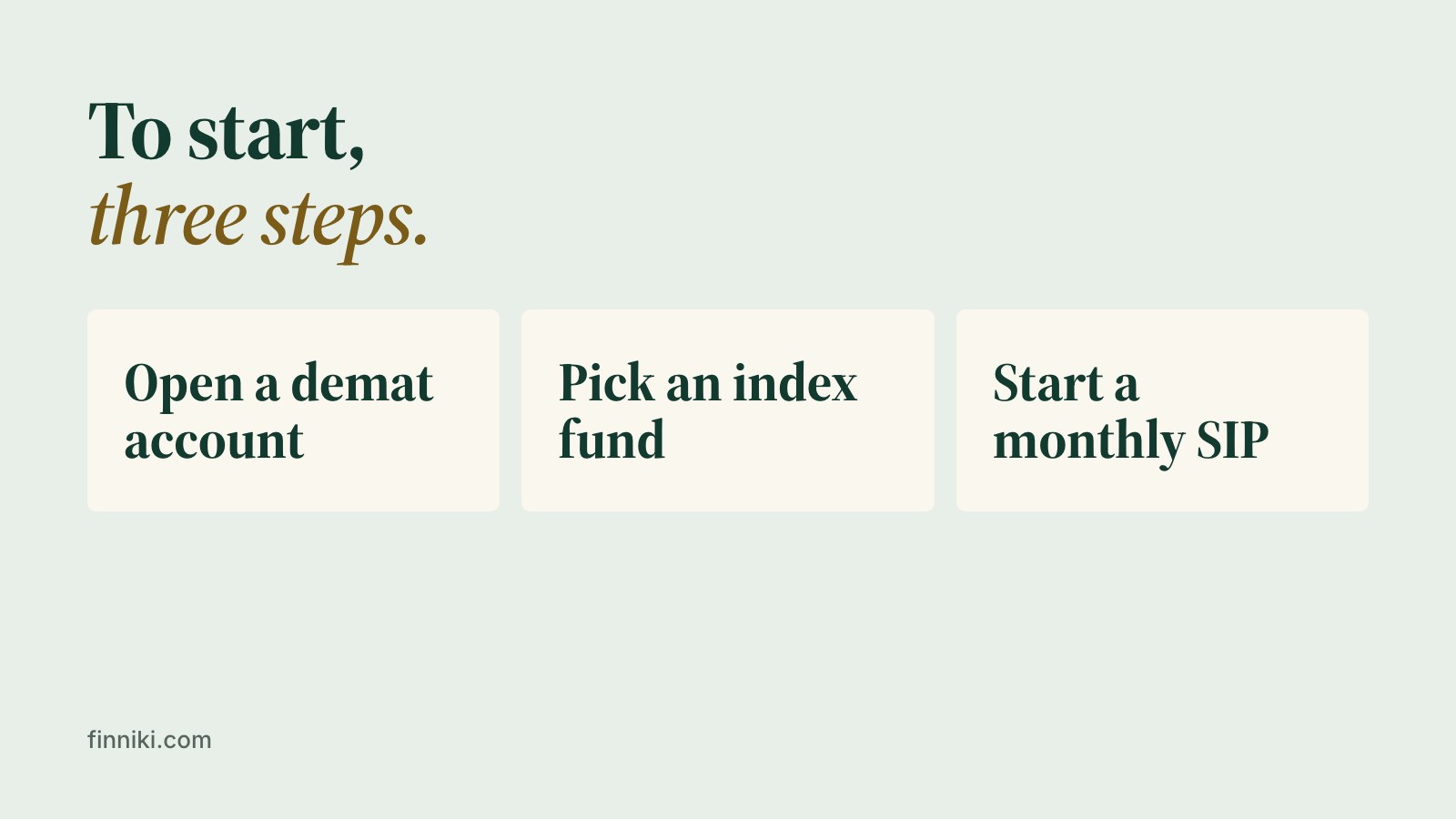
- Open a demat and trading account with a SEBI-registered broker. The demat account holds your shares; the trading account lets you buy and sell. It takes minutes online with Aadhaar-based KYC.
- Choose your approach. If you enjoy researching companies, buy shares directly. If you want it stress-free, choose index funds or ETFs.
- Start with what you know. Your first share should be a business you understand, such as a retailer you shop at or a service you use every day. Familiarity reduces fear.
- Automate with a SIP. Even ₹2,000 to ₹5,000 a month works. Rupee cost averaging means you buy more units when prices fall and fewer when they rise, with no timing stress.
What are large-cap, mid-cap and small-cap stocks?
- Large caps: the giants, such as Reliance, Infosys and HDFC Bank. Steadier, and the best place for beginners to start.
- Mid caps: growing companies with more risk and higher return potential.
- Small caps: the wildcards. They can rise sharply or fall hard.
A sensible beginner mix: about 70% in large and mid caps for stability and 30% in small caps for growth, or less in small caps if big swings would worry you.
What strategy actually builds wealth?
- Start early. ₹5,000 a month from 25 to 55 at 12% grows to about ₹1.76 crore (the episode said over ₹2 crore). Its real value will be lower because of inflation, so step up the SIP as your income grows.
- Stay consistent, especially when markets fall. Falls let you buy more at lower prices.
- Diversify across sectors such as IT, banking, FMCG, energy and pharma, so one sector's trouble does not sink you.
- Review once a year, not every day. Trim what has grown too big and top up what is behind, like tending a garden.
What mistakes should beginners avoid?
- Hot tips. By the time a "guaranteed" stock reaches your WhatsApp, the smart money has left.
- Checking prices daily. Daily moves are noise; wealth builds over years.
- Penny stocks. ₹5 or ₹10 shares that promise to reach ₹100 rarely do. They are lottery tickets disguised as investing.
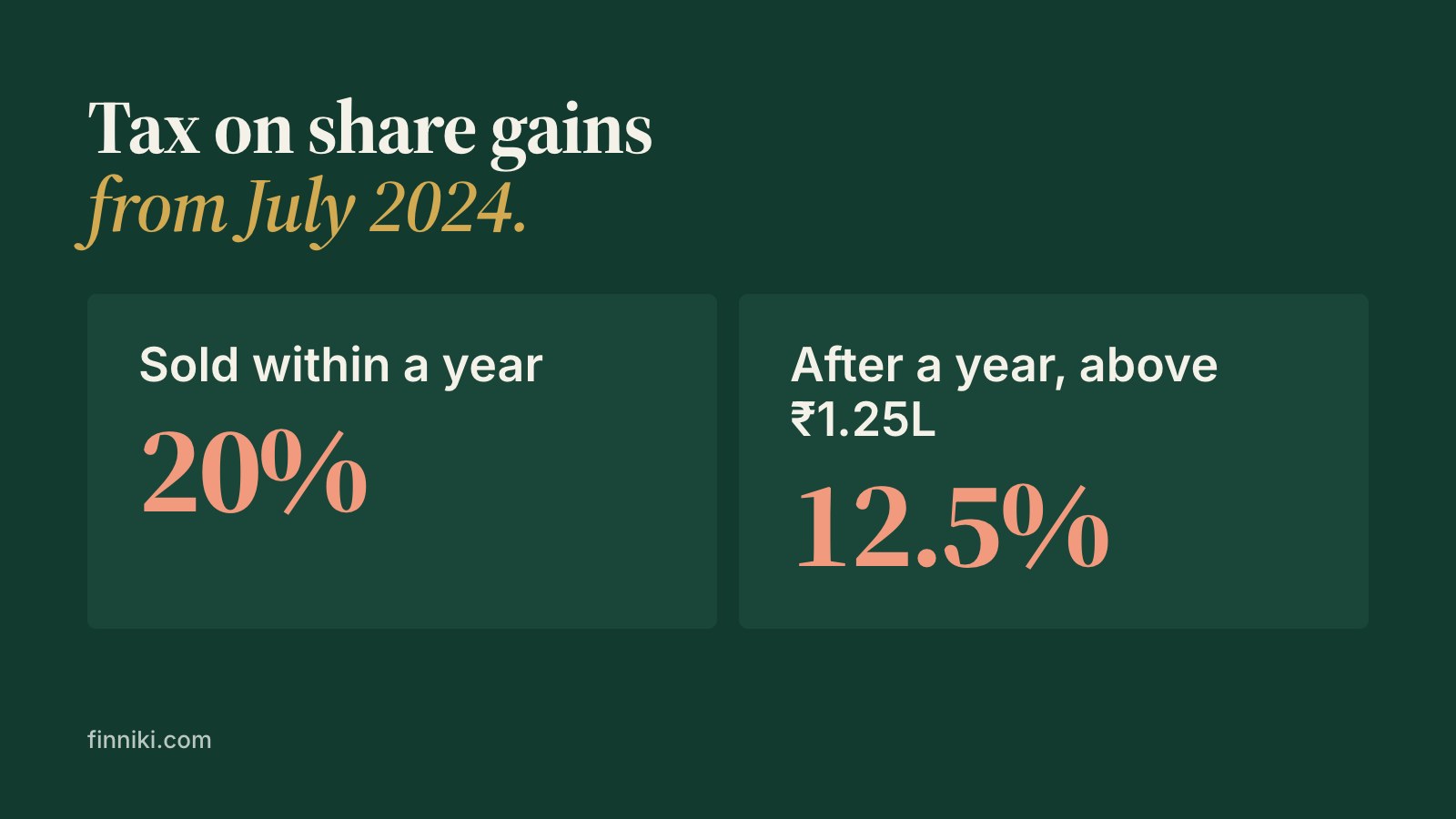
- Ignoring tax. Gains on shares and equity funds sold within a year are taxed at 20%; after a year, 12.5% on gains above ₹1.25 lakh a year.
- Stopping learning. Read classics such as The Intelligent Investor and One Up on Wall Street, and take advice only from SEBI-registered advisers.
FAQs
How do I start investing in stocks with little money?
Open a demat and trading account, then start a SIP in a Nifty 50 index fund or ETF with ₹1,000 to ₹5,000 a month.
What is a demat account?
An electronic account that holds your shares and other securities. You need it, along with a trading account, to buy shares in India.
Are index funds good for beginners?
Yes. They are low-cost, diversified and need no stock picking, which makes them a sensible core holding.
How is stock market profit taxed in India?
Gains on shares held up to a year are taxed at 20%. Gains on shares held more than a year are taxed at 12.5% on the amount above ₹1.25 lakh a year.
Should I buy penny stocks?
Generally not. Most never recover, and they behave more like lottery tickets than investments.
How often should I check my portfolio?
Review it once a year and rebalance if needed. Checking daily tempts you into emotional decisions.
Take the first step
The hardest part of investing is starting. Book a session to set up a plan that fits your goals, or find more episodes on FinNiki videos.
General information, not advice for your situation. Rules change; check your own numbers with a CA before you act.