How Inflation Eats Your Savings (and How to Beat It)
At 6% inflation, ₹1 lakh buys about ₹56,000 worth in 10 years. What that does to FDs, goals and insurance, and the portfolio mix that keeps you ahead.

Nikhil Varghese, CA · 5 min read

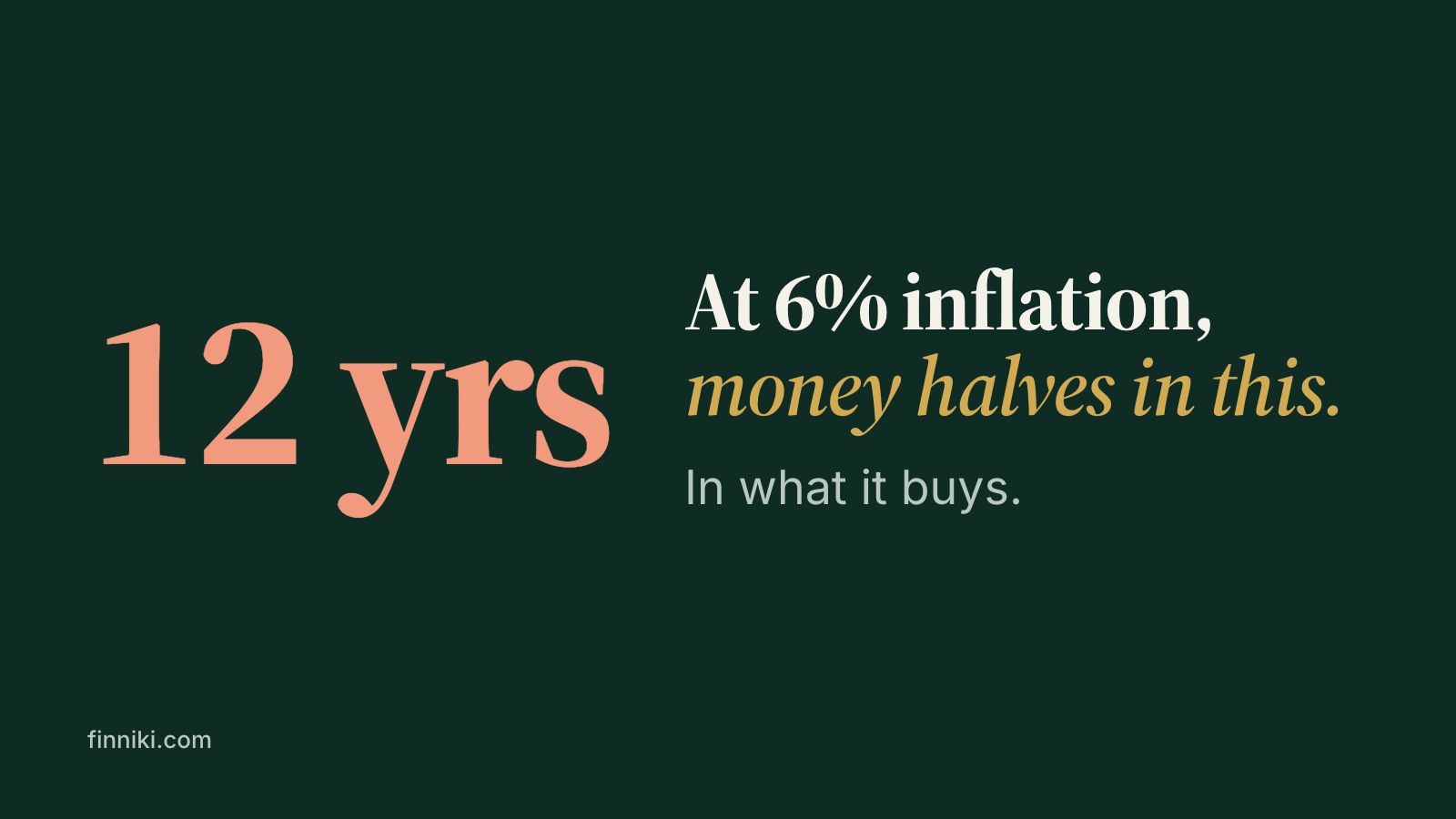
Quick answer: Inflation quietly shrinks what your savings can buy. At 6% a year, money loses half its buying power in about 12 years: ₹1 lakh left untouched buys only about ₹56,000 worth of today's goods after 10 years and about ₹23,000 after 25. Savings accounts, and FDs after tax, barely keep up or fall behind. To beat inflation, plan goals in future prices, hold growth assets such as equity alongside debt and gold (for example 60% equity, 30% debt, 10% gold), rebalance every year, and raise your insurance cover as costs rise.
Updated October 2026. India's CPI inflation was about 5.5% in September 2026. The figures below use 6% to match the episode, and correct its rounding where it was off.
 Watch the episode: Your ₹10 lakh is losing value fast (inflation explained simply)
What is inflation?
The rise in the cost of goods and services over time, which means each rupee buys less. Maggi that cost ₹5 now costs ₹15; a ₹50 film ticket is now ₹500 in many cities; petrol that cost about ₹40 a litre is over ₹100. A Maruti 800 cost about ₹1.2 lakh in 1990; a basic hatchback today costs ₹6 to 7 lakh. That is not things getting greedier; it is the cost of time.
Think of it as a treadmill that slowly speeds up: your bank balance shows the same number, so you feel you are standing still, but you are moving backwards.
How fast does inflation shrink your money?
Faster than it feels. At 6% inflation, something that costs ₹1 lakh today will cost:
- ₹1.34 lakh in 5 years
- ₹1.79 lakh in 10 years
- ₹3.2 lakh in 20 years
- ₹4.3 lakh in 25 years
Turn it around: ₹1 lakh kept in cash will buy only what about ₹75,000 buys today after 5 years, ₹56,000 after 10, ₹31,000 after 20 and ₹23,000 after 25. Your statement still says ₹1 lakh; its buying power has fallen by more than three-quarters.
Over a working life it is starker. Someone who is 30 today with ₹50 lakh in the bank will, at 60, have the buying power of about ₹8.7 lakh today. And in big cities, where rent, school fees and healthcare rise faster than the national average, the real loss is larger still.
Are savings accounts and FDs safe from inflation?
Safe from loss of the number, not of value. A savings account paying 3.5% leaves you about 2.45% after tax in the 30% bracket. Against 6% inflation, that is a real loss of about 3.5% a year: on ₹10 lakh, about ₹35,000 of buying power a year.
Our parents' generation often won the game: FDs paid 10 to 12%, even 14% in the 1990s, while inflation was 6 to 7%. Today an FD at 6 to 7% against inflation of around 6% roughly breaks even before tax, and loses after it.
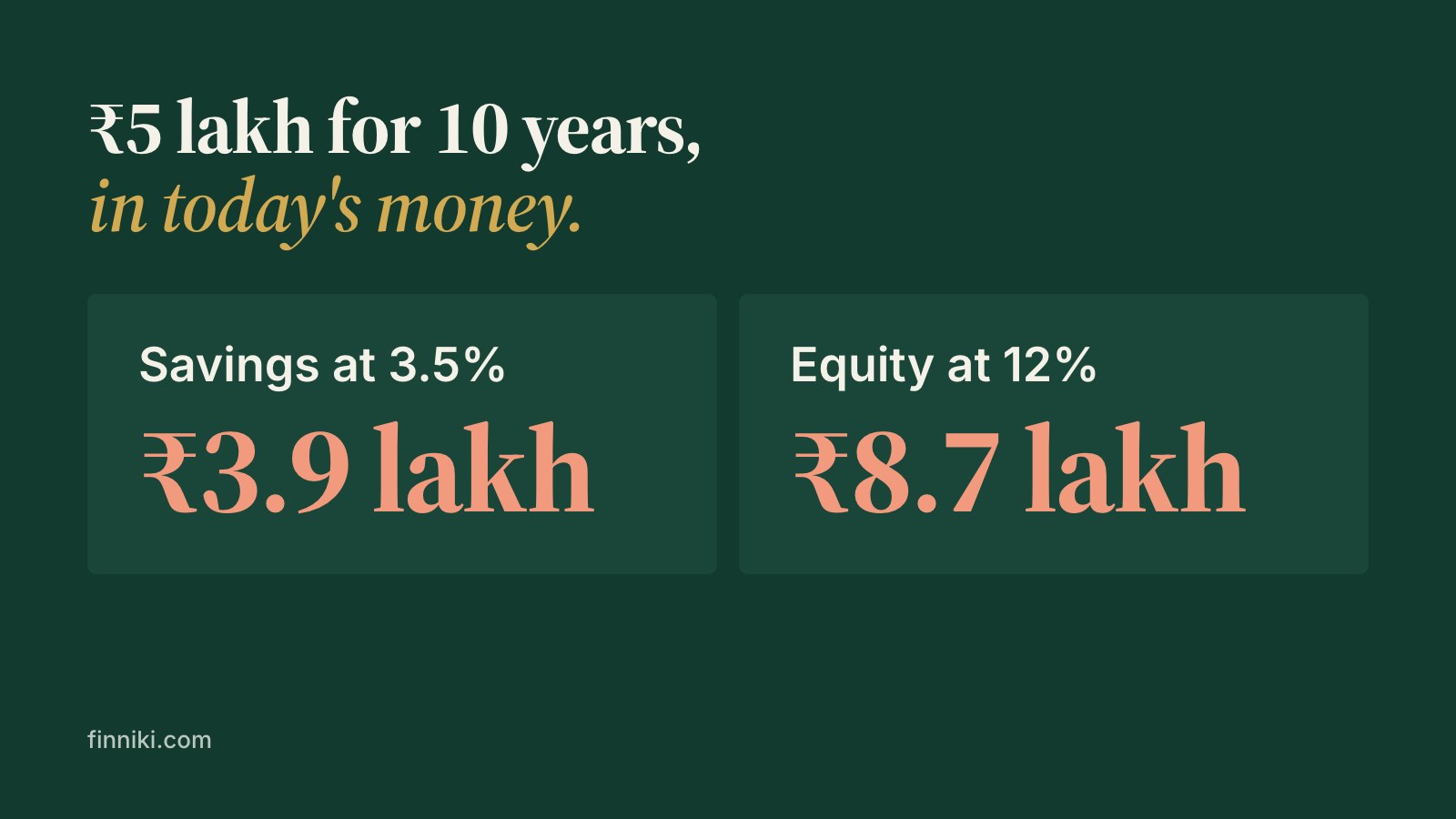
Here is ₹5 lakh left for 10 years, in today's money at 6% inflation:
- Savings account at 3.5%: grows to about ₹7.05 lakh, worth about ₹3.9 lakh today. A real loss of over ₹1 lakh.
- FD at 6%: grows to about ₹8.95 lakh, worth about ₹5 lakh today. You only stood still, and after tax on the interest you fall behind.
- Equity at 12%: grows to about ₹15.5 lakh, worth about ₹8.7 lakh today. A real gain of about ₹3.7 lakh.
How do you beat inflation?
Three strategies:
1. Plan in future prices, not today's
Never plan a goal at today's cost. If an engineering degree costs ₹30 lakh today, plan for about ₹54 lakh in 10 years at 6%. If you are 35 and spend ₹1 lakh a month, at 60 the same lifestyle will cost about ₹4.3 lakh a month.
2. Own assets that grow faster than prices
- Equity: the Nifty 50 has historically returned about 10 to 12% a year over long periods, beating inflation by 4 to 6%. It is volatile in the short run but your strongest tool over 10 years or more.
- Gold (and some silver): tends to do well when inflation and currency worries rise. Hold about 10%; some investors include a small amount of bitcoin in this slice.
- Real estate: can offer price growth plus rent that rises with inflation, but should not be your only investment.
- Inflation-indexed bonds: returns that adjust with inflation, where available.
3. Keep a balanced mix and rebalance
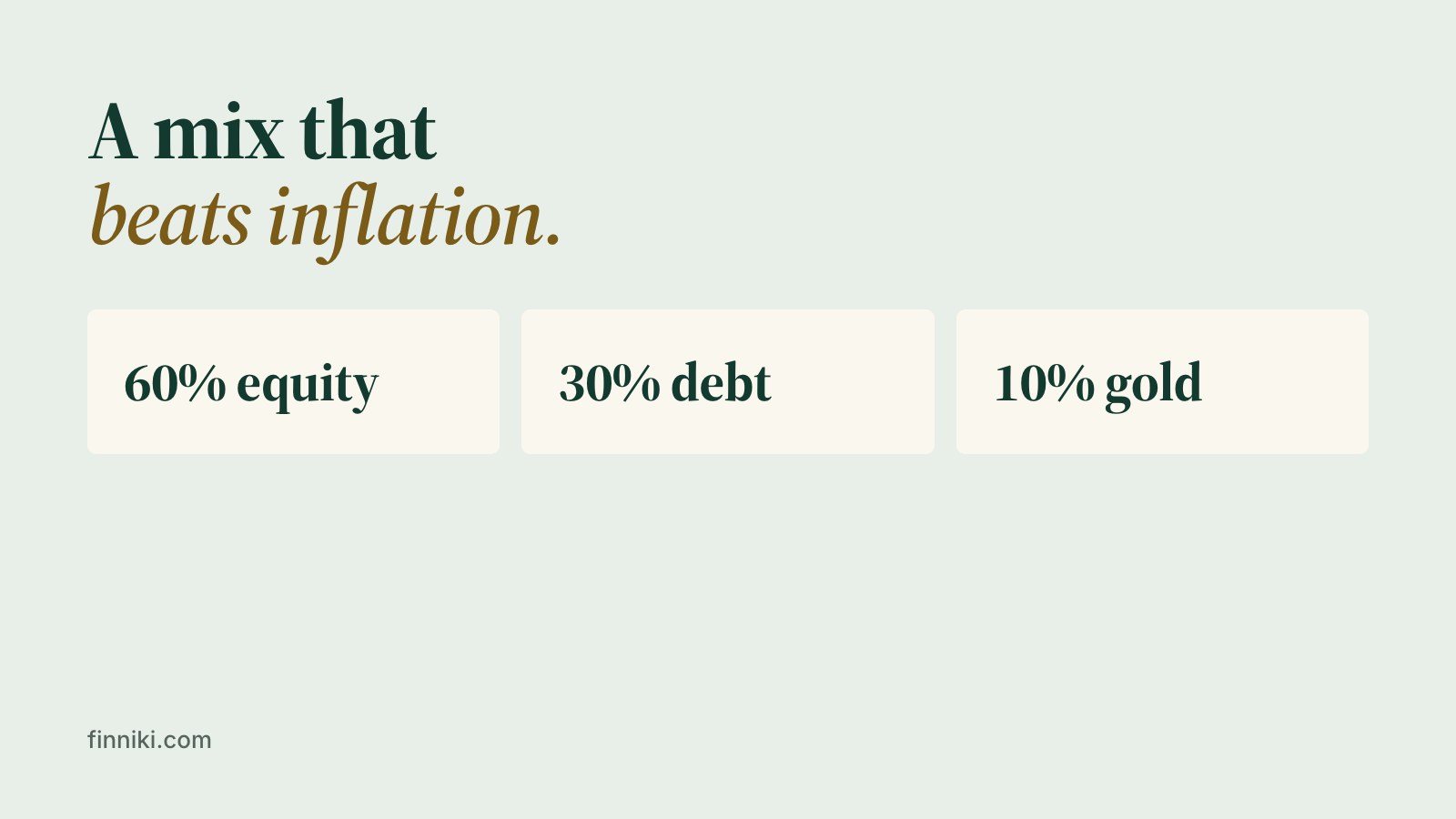
A mix that has worked for Nikhil, shared as his own approach rather than advice: 60% equity for growth, 30% debt for stability and 10% gold (or a little bitcoin) for protection. Review it every year and rebalance: if good markets push equity to 70%, sell some and top up debt and gold to get back to the target.
Does inflation affect your insurance too?
Yes, and most people forget it. A ₹20 lakh life cover bought 15 or 20 years ago might once have bought a house; today it may not cover a year of family expenses. A ₹5 lakh health cover that felt generous can be used up by one heart procedure. Review your life and health cover every three years, and if your income has doubled but your cover has not, increase it.
FAQs
How much does inflation reduce the value of money?
At 6% a year, money loses half its buying power in about 12 years. ₹1 lakh buys about ₹56,000 worth of today's goods after 10 years.
Do FDs beat inflation?
Rarely after tax. An FD at about 6% roughly matches 6% inflation before tax, and loses value once the interest is taxed.
What investments beat inflation in India?
Over the long term, equity has beaten inflation by about 4 to 6% a year. Gold, real estate and inflation-indexed bonds can also help, as part of a mix.
How do I account for inflation in my goals?
Grow today's cost by the expected inflation rate for each year to the goal. At 6%, a cost roughly doubles in 12 years.
How often should I review my insurance for inflation?
Every three years, or whenever your income or family responsibilities change significantly.
What is the 60-30-10 allocation?
60% in equity, 30% in debt and 10% in gold, rebalanced every year. Adjust it for your age, goals and risk appetite.
Make your money outrun prices
The right mix depends on your goals and how far away they are. Book a session to plan your goals in future prices, or find more episodes on FinNiki videos.
General information, not advice for your situation. Rules change; check your own numbers with a CA before you act.