Moving to Dubai from India 2026: Salary, Costs & Catches
Is moving to Dubai from India worth it? Real take-home pay at today's rates, rent and school costs, visa limits, and who should and should not move.

Nikhil Varghese, CA · 9 min read

Quick answer: Moving to Dubai from India is a good idea if you have a confirmed job offer of roughly AED 15,000 a month or more, a buffer fund and the discipline to save. The pull is real: no personal income tax, so the same job can leave you with about double the take-home pay. The catches are real too: Dubai is expensive, your right to stay is usually tied to your job and visa, and there is no permanent residency or citizenship for most expats. Move with a plan, not just a pay slip.
Updated October 2026. The episode used AED 1 = ₹23.16; the dirham is now about ₹26.2, so every rupee figure below uses today's rate. India's tax figures use the new tax regime slabs that apply for FY 2026-27.
 Watch the 10-minute episode: Moving to Dubai from India? Here is everything you need to know
Is moving to Dubai from India a good idea?
Yes, for the right person. Dubai rewards mid-to-senior professionals and business owners who arrive with a confirmed offer, understand the cost of living and keep their spending in check. It is not a shortcut for freshers hoping to "make it big", for people moving without a job offer or savings, or for anyone who struggles to save. Dubai gives you freedom, and with it the responsibility to plan.
Why do so many Indians move to Dubai?
Four reasons come up again and again:
- No income tax. In India, a salary of ₹20 to 25 lakh a year costs about ₹2.6 to 3.4 lakh in income tax under the new regime, and more as the salary rises into the 30% slab. In Dubai, personal income tax is zero, so more of your salary stays in hand.
- Close to home. Dubai is a three to four hour flight from Mumbai or Delhi, which makes family visits and business trips easy.
- A large Indian community. The UAE is home to more than 3.5 million Indians, with temples, Indian food and festivals, so you will not feel out of place.
- Global exposure. Whether you work in finance, tech, construction or hospitality, you work in a multicultural, globally connected market.
How much more do you take home in Dubai?
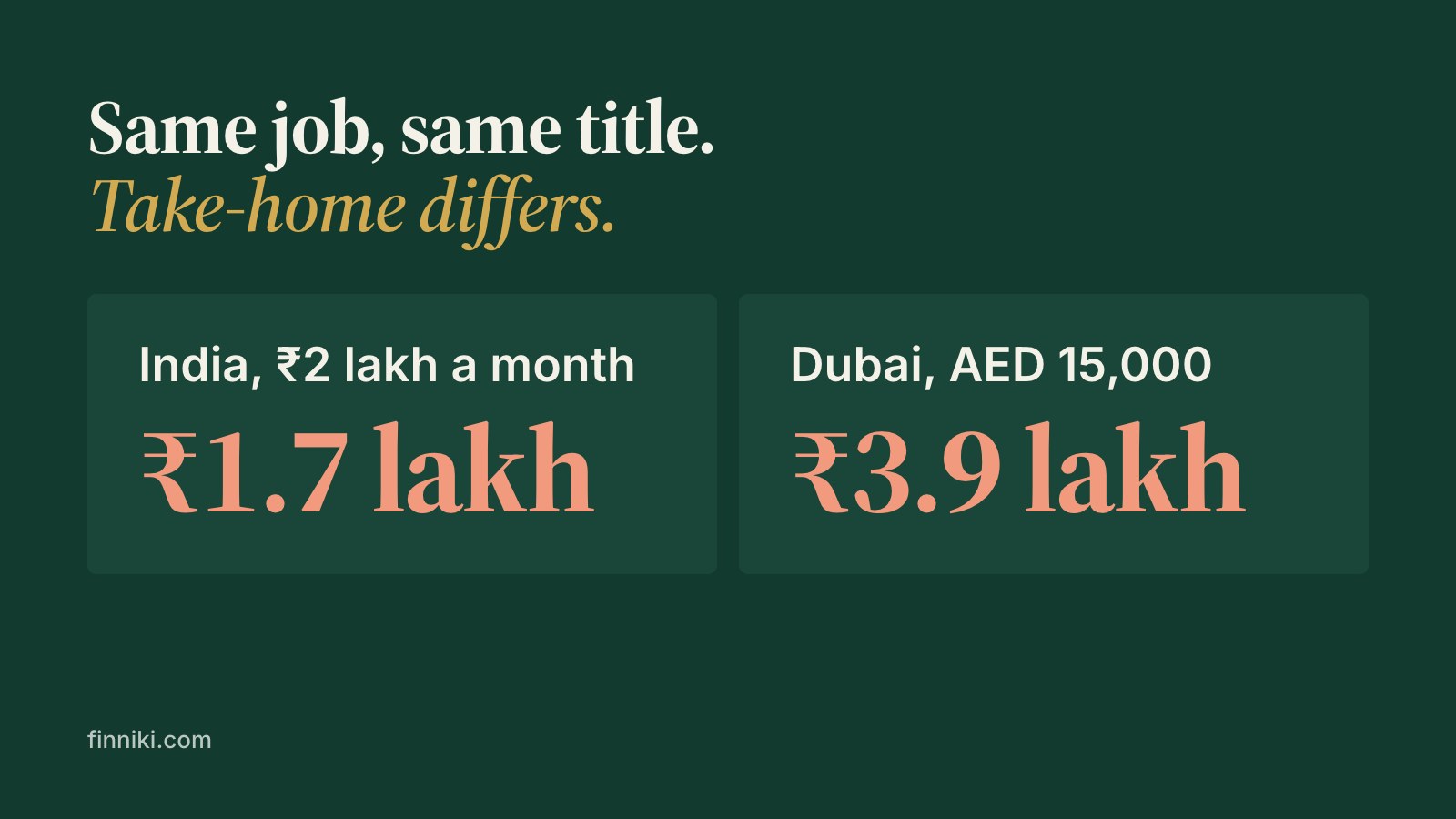
Often about double for a similar role, because nothing is deducted. Take a professional earning ₹2 lakh a month in India, which is about AED 7,600 at today's rate:
- India: after income tax and provident fund, the ₹2 lakh becomes roughly ₹1.6 to 1.75 lakh in hand, depending on deductions.
- Dubai: a similar role offering AED 15,000 a month keeps all AED 15,000, with no income tax, no professional tax and no PF deduction. That is about ₹3.9 lakh a month.
On paper the Dubai salary is about twice the Indian one in rupees, but because the Indian salary loses tax and PF, the take-home gap is wider still.
At a higher level the tax saving alone is large. AED 20,000 a month is about ₹5.2 lakh. Earning ₹5.2 lakh a month in India puts you in the 30% slab with a 10% surcharge, so tax and PF take well over ₹1.3 lakh a month. In Dubai you keep the full AED 20,000. That difference is worth more than ₹15 lakh a year, from tax alone.
The other side: if your Dubai salary converts to only ₹1 to 2 lakh a month, you will find it hard to live there, let alone send money home, because of the cost of living.
How expensive is it to live in Dubai?
Expensive enough to eat the tax advantage if you are careless. The main costs:
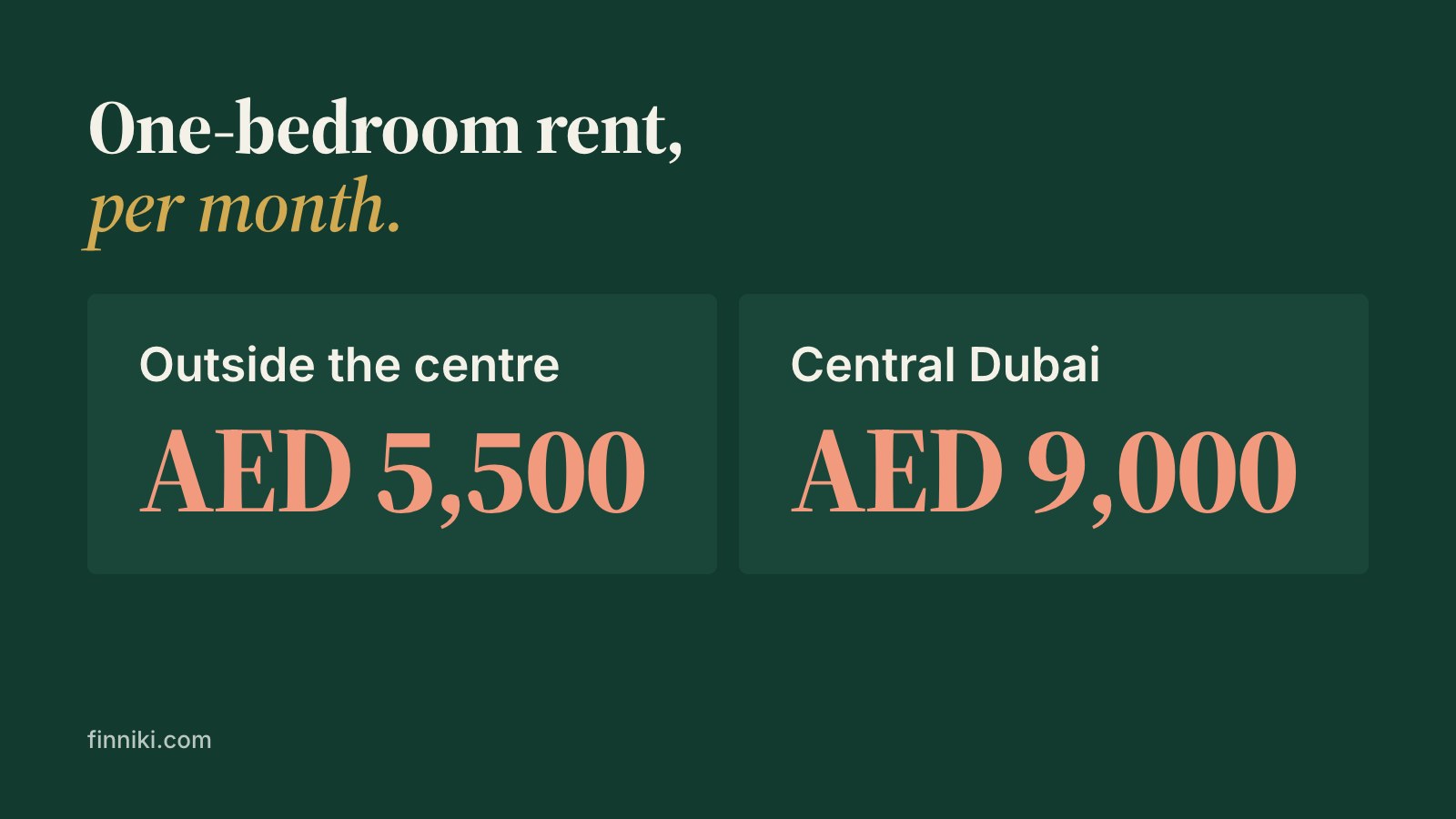
- Rent: a one-bedroom apartment costs about AED 5,500 a month outside the centre and around AED 9,000 in a central area, and much more in premium neighbourhoods. Rents rose sharply after the episode, which assumed AED 4,000 to 6,000.
- Groceries and dining: slightly higher than in India, and manageable with a budget.
- School fees: international schools cost about AED 20,000 to 40,000 a year at many schools, and far more at premium ones. With children this is often the biggest line in the budget.
- Medical insurance: your employer must insure you, but cover for your family is often your cost. A family plan can run to AED 5,000 to 10,000 a year.
An employer that provides housing or a school allowance softens this a lot, and such allowances are common in many roles. Check what the housing actually is, though: employer accommodation is often a small shared space, which does not work if you plan to bring your family.
What jobs are there in Dubai for Indians?
The job market is growing in IT and tech, banking and finance, healthcare, construction and real estate, and hospitality and retail. Dubai Internet City and Dubai Silicon Oasis host tech start-ups and global IT firms, and companies such as SAP, Oracle and IBM, as well as Indian unicorns, hire skilled professionals from India, especially in cloud, cybersecurity, fintech and AI.
Indians are one of the largest groups in Dubai's professional workforce, thanks to technical skills, adaptability and fluent English. Salaried roles in tech and finance commonly start at AED 12,000 to 25,000 a month, depending on experience.
Can you start a business or freelance in Dubai?
Yes. The UAE offers freelance visas and business set-ups in free zones such as Dubai Media City or Dubai Design District, where you do not need a local Emirati partner. You get 100% ownership, access to office space and a route to sponsor your own visa.
One update since the episode: the UAE now has a corporate tax of 9% on business profits above AED 375,000, while qualifying income in free zones can still be taxed at 0%. Personal income stays tax-free, but a business owner should check how the company's profits will be taxed before calling Dubai a tax-free base.
What is life like in Dubai beyond the money?
For many Indians, the quality of daily life is the surprise:
- Safety: Dubai consistently ranks among the safest cities in the world. Strict laws and wide surveillance can feel intense, but they keep the city secure, especially for families.
- Infrastructure: the Dubai Metro is clean, efficient and affordable, the roads are excellent, and private hospitals often match or beat those in Indian metros.
- Global access: Europe, Africa, South-East Asia and India are all within about six to seven hours.
- Order: no potholes, little chaotic traffic and clean streets. A city that works is a refreshing change for many people used to urban clutter.
What are the downsides of moving to Dubai?
There are five that people ignore when they are dazzled by the skyline and the tax-free salary:
- No permanent residency or citizenship for most expats. Unlike Canada, Australia or the UK, the UAE does not offer PR or citizenship as a normal route. For most employees, the right to stay depends on the job and the visa it comes with. Lose the job and the visa is cancelled, after which you have a grace period to find new work or leave: typically 60 days on a standard residence visa, and up to 180 days for some categories, such as Golden Visa holders. Long-term visas such as the Golden Visa are not tied to one employer, but they are still residence visas, not citizenship. Check your own deadline in your immigration record.
- Job security can be thin. Layoffs can be sudden, and fighting a wrongful termination is harder than many people expect.
- Cultural adjustment. Dubai is modern and liberal for the region, but it is still an Islamic country. Alcohol is restricted, public displays of affection are frowned upon, and some clothing or behaviour can lead to legal trouble. Learn and respect the norms.
- Lifestyle inflation. With luxury malls, fine dining and no tax, many people overspend and end up saving less in Dubai than they did in India.
- Medical costs for your family. Read the insurance section of your offer letter carefully; healthcare is expensive without cover.
Who should move to Dubai, and who should not?
Dubai makes most sense for:
- Mid-to-senior professionals earning AED 15,000 a month or more.
- Business owners who want an international base and have checked the corporate tax position.
- People who want global exposure and higher savings without moving far from India.
It is not ideal for:
- Freshers expecting to make it big without experience.
- People moving without a confirmed job offer or backup funds.
- Anyone who is not financially disciplined.
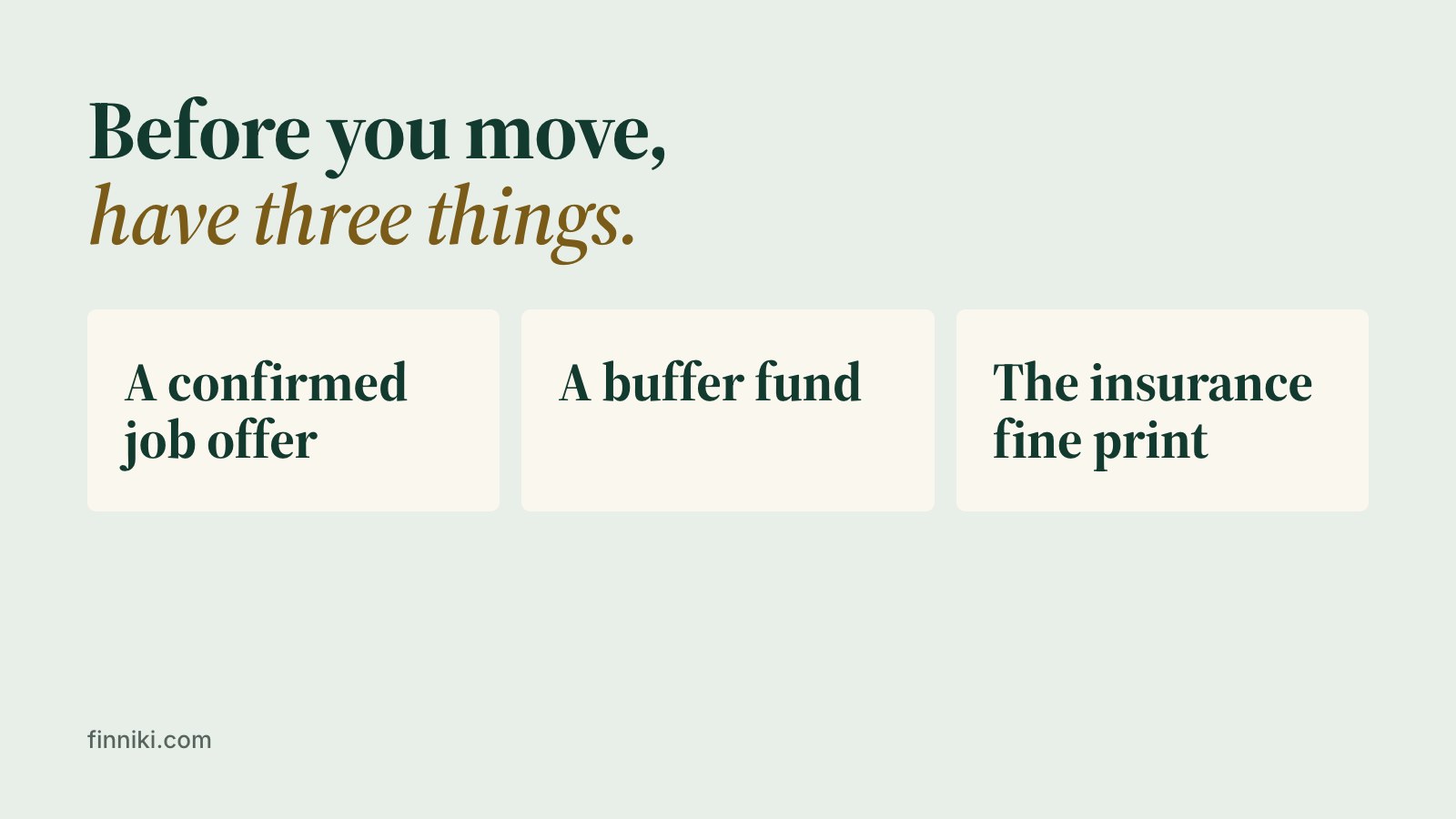
How do you decide whether to move to Dubai?
Answer four questions honestly before you resign:
- Do you have a plan? A confirmed offer, the salary after rent and school fees, and a monthly savings target.
- Do you have a buffer fund? Enough to cover the grace period and a job search if the role ends.
- Do you understand the culture? The rules on alcohol, dress and behaviour are not optional.
- Are you ready to work, not just to flex? Dubai is a well-run system that rewards skill, hard work and discipline.
If the answer to all four is yes, Dubai can be one of the best decisions you make.
FAQs
Do you pay income tax in Dubai?
No. The UAE does not tax personal income, so salaries are paid without income tax, professional tax or provident fund deductions. Business profits above AED 375,000 are subject to 9% corporate tax.
What salary do you need to live comfortably in Dubai?
The episode's guide is about AED 15,000 a month or more for a mid-to-senior professional. If your salary converts to only ₹1 to 2 lakh a month, Dubai's costs make it hard to live well and save.
How much does a one-bedroom flat cost in Dubai?
About AED 5,500 a month outside the centre and about AED 9,000 in a central area, and more in premium neighbourhoods. Employer housing allowances can offset much of this.
Can Indians get permanent residency in Dubai?
Not in the usual sense. The UAE does not offer PR or citizenship as a normal route for expats; long-term options such as the Golden Visa give residence for years at a time, but not citizenship.
What happens if you lose your job in Dubai?
Your employment visa is cancelled and a grace period starts: typically 60 days on a standard residence visa and up to 180 days for some categories, such as Golden Visa holders. Within it you must find a new sponsor or leave.
How much are school fees in Dubai?
Many international schools charge about AED 20,000 to 40,000 a year, and premium schools charge far more. Check whether your employer pays a school allowance.
Is it cheaper to live in Dubai than in India?
No. Rent, schools and medical cover cost more in Dubai, and groceries and dining are slightly higher. The tax-free salary is what makes Dubai pay, and only if you control your spending.
Get your move planned properly
A move abroad changes your residency, your Indian accounts and your tax position, and the order you do things in matters. Book a session to plan your move with the numbers in front of you, or find more episodes on FinNiki videos.
General information, not advice for your situation. Rules change; check your own numbers with a CA before you act.