Why Wealth Grows Faster After Your First ₹1 Crore
Your first crore comes mostly from saving; later crores come from compounding. The maths after ₹1 crore, the rule of 72, and three mistakes that stall it.

Nikhil Varghese, CA · 5 min read

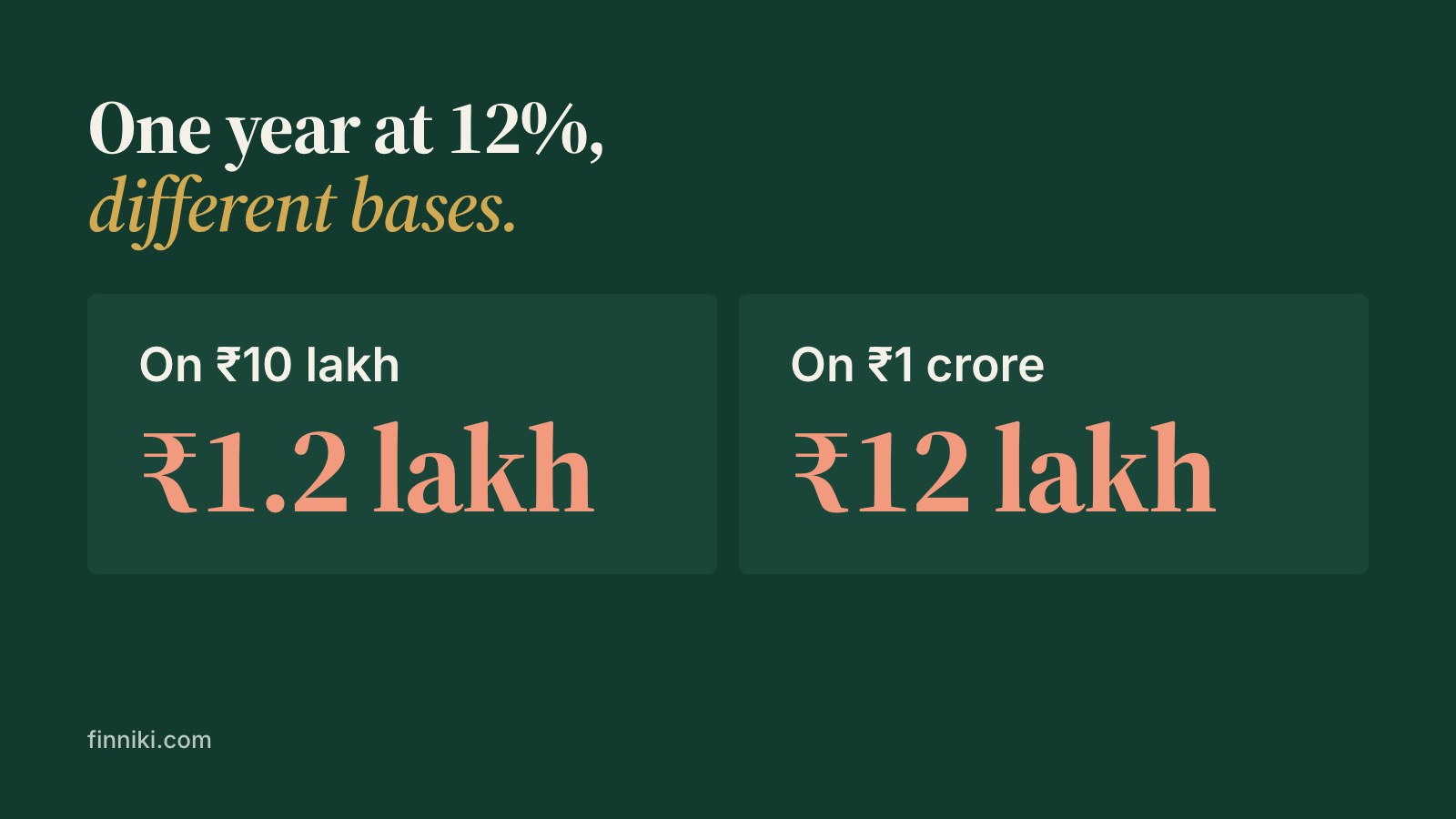
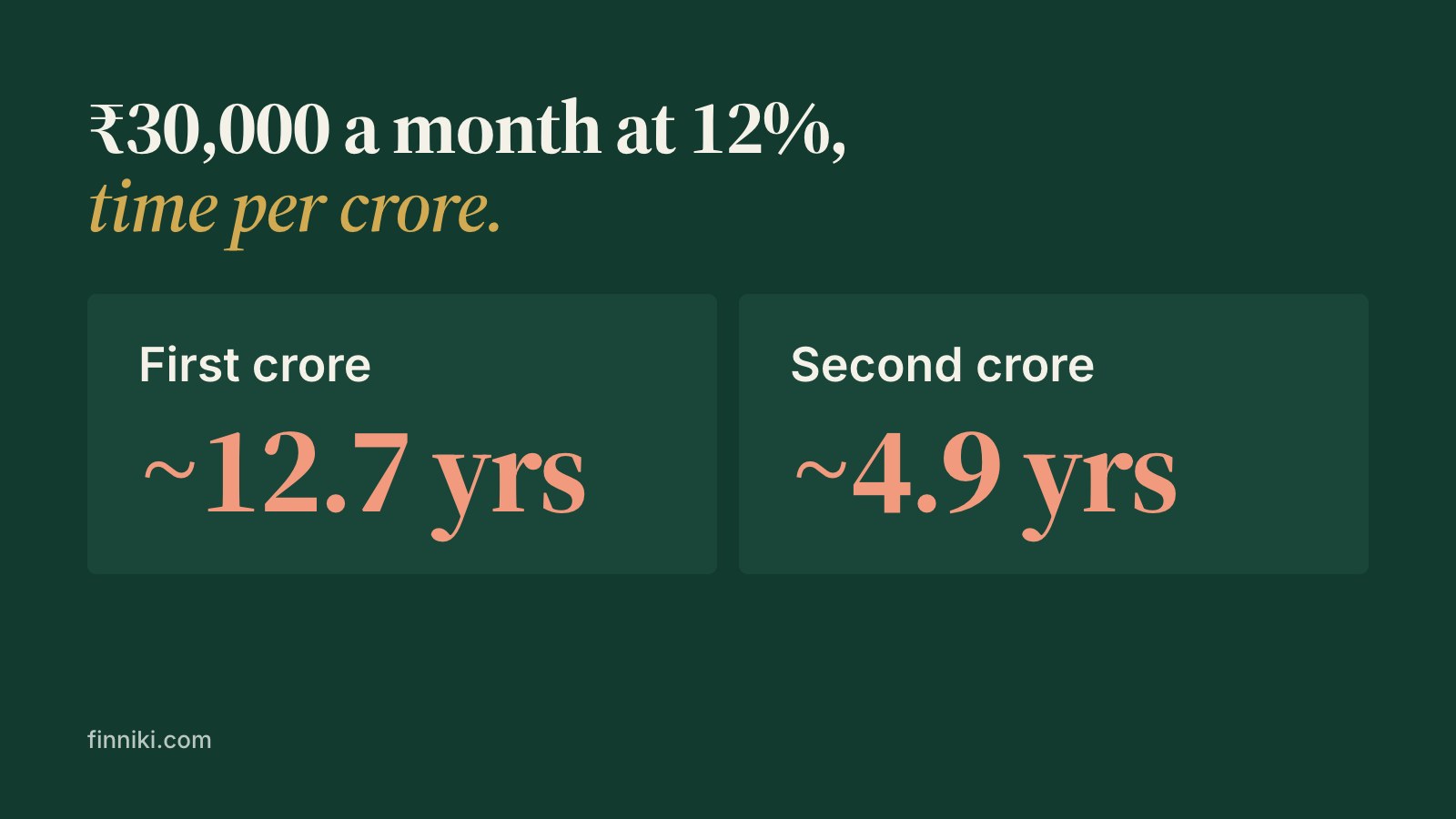
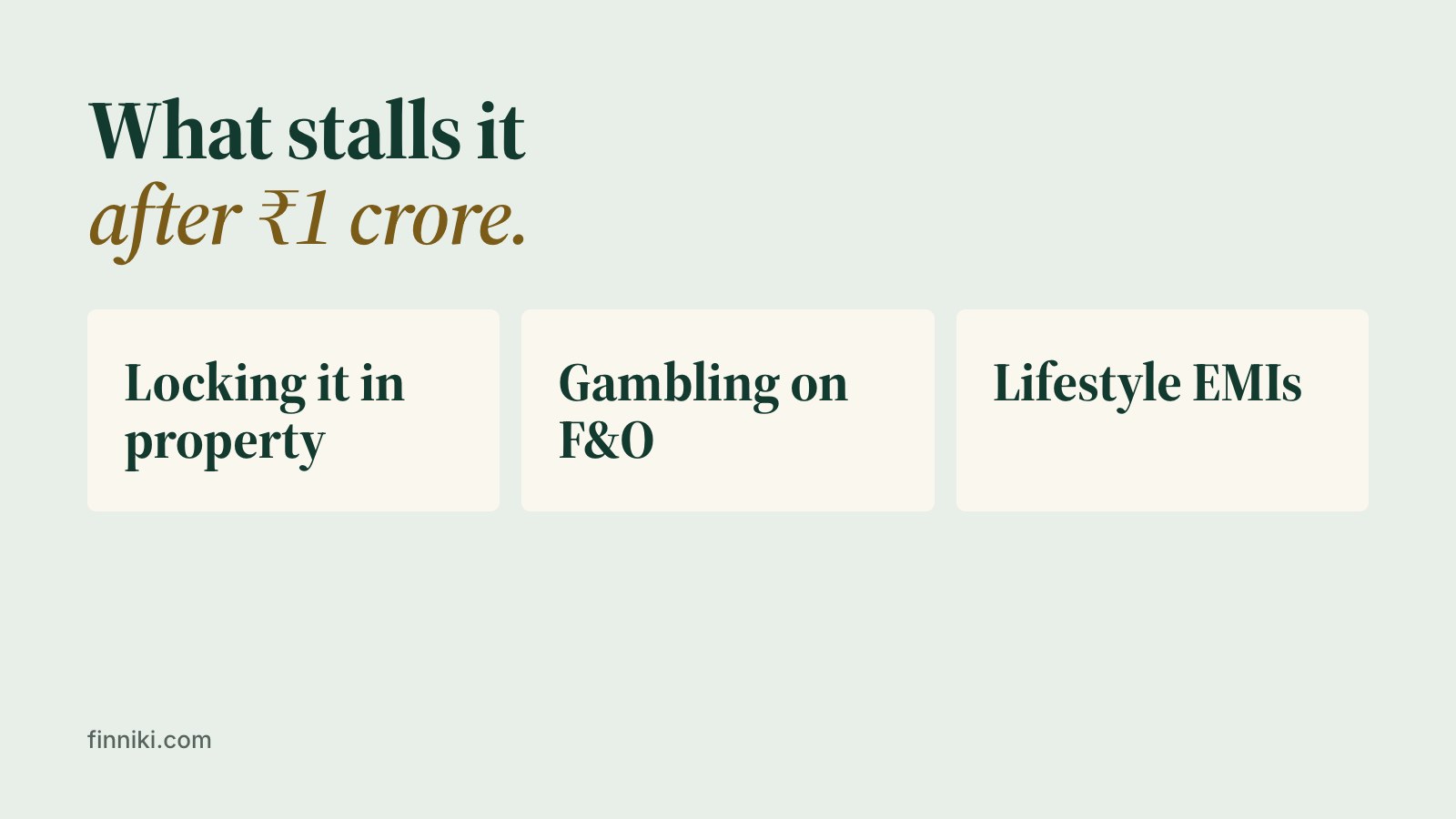
Quick answer: Wealth grows faster after your first ₹1 crore because returns are a percentage of your base. At 12%, ₹10 lakh earns ₹1.2 lakh a year; ₹1 crore earns ₹12 lakh, as much as many people's salary. Your first crore comes largely from what you save; later crores come increasingly from compounding. Investing ₹30,000 a month at 12%, the first crore takes about 12.7 years and the second only about 4.9. The three things that stall it are locking the money in property, gambling on F&O or hype, and lifestyle EMIs.
Updated October 2026. Debt funds no longer get indexation benefit (removed from April 2023), and from April 2026 the Section 80C deduction sits in Section 123 of the Income-tax Act 2025. Some of the episode's timing figures have been recalculated below.
 Watch the episode: Why your net worth explodes after ₹1 crore (the real reason)
Why does money grow slowly at first?
Because compounding has little to work with. Invest ₹10,000 a month and after a year your ₹1.2 lakh may be ₹1.3 lakh: nice, not life-changing. Even after three or four years, many people wonder why their portfolio barely moves. The base is too small. Wealth building is like pushing a snowball up a hill: at first it barely moves, but once it crosses the top, it rolls and grows on its own. For most people, that top is the first ₹1 crore.
How much does ₹1 crore earn in a year?
At 12%, about ₹12 lakh, against ₹1.2 lakh on ₹10 lakh. The percentage is the same; the rupees are ten times larger. At 15%, ₹1 crore earns ₹15 lakh. Your money starts earning as much as you do.
Why is the first crore the hardest?
Because you save your way to the first crore and compound your way to the next ones. How much of the first crore is your own money depends on how much you invest each month: at ₹10,000 a month, about a quarter; at ₹50,000 a month, more than half. Either way, contributions do much of the early lifting.
Investing ₹30,000 a month at 12%:
- First crore: about 12.7 years.
- Second crore: about 4.9 years.
The first crore also trains you: to budget while friends spend, delay gratification, stay invested through crashes, stay boring while others chase hype, and avoid panic and shortcuts. Those habits make the next crores calmer.
How fast does ₹1 crore grow on its own?
At 12%, without adding a rupee:
- Year 1: ₹1.12 crore
- Year 3: ₹1.40 crore
- Year 5: ₹1.76 crore
That is ₹76 lakh in five years. Keep a SIP running and you pass ₹2 crore sooner. And each additional crore needs a smaller percentage gain: ₹1 crore to ₹2 crore is 100%; ₹4 crore to ₹5 crore is just 25%.
What is the rule of 72?
A shortcut for how long money takes to double: 72 ÷ annual return = years to double. At 10%, about 7.2 years; at 12%, 6 years; at 15%, 4.8 years. At 12%, ₹1 crore becomes ₹2 crore in about 6 years, ₹4 crore in about 12 and ₹8 crore in about 18. Three doublings put you in financial-freedom territory, if you avoid the mistakes below.
What mistakes stop wealth from compounding after ₹1 crore?
Three:
- The property trap. On reaching a crore, many people rush into a second home, a plot or "some land". Property locks up capital, usually grows more slowly than equity, adds maintenance and taxes, and is hard to sell quickly.
- The greed gamble. After one big win, people think they are experts and turn to F&O, options, leverage, crypto hype and tips. One bad F&O bet can wipe out years of compounding. Slow is smooth, and smooth is fast.
- Lifestyle creep. Luxury car EMIs, club memberships, first-class travel. Enjoying wealth is fine; recurring expenses are the problem. A ₹50,000 monthly EMI for 20 years is money that, invested at 12%, could have grown to about ₹5 crore.
Why does tax planning matter more after ₹1 crore?
Because every rupee saved in tax is a rupee that compounds. Common tools:
- Harvesting equity gains each year within the ₹1.25 lakh tax-free limit on long-term gains.
- ELSS, PPF and NPS deductions, which apply only under the old tax regime (the 80C deduction is now Section 123 of the Income-tax Act 2025).
- Using a spouse's lower slab for income-generating investments, where the rules allow.
- Planning when you realise long-term gains.
(Indexation on debt funds, once a popular tool, was removed for investments made from April 2023.)
What changes once you have ₹1 crore?
Your options and your mindset. You can keep ₹20 to 25 lakh in safe assets and invest the rest confidently in equity, and add REITs, international funds and selected small caps, so wealth grows from several engines. And your thinking shifts: market falls stop frightening you, shortcuts lose their appeal, quiet confidence replaces anxiety, and you think in decades instead of days.
Is ₹1 crore enough?
No, it is a milestone, not the finish line. A decent home can cost ₹1 to 3 crore, healthcare can take lakhs overnight, education costs keep rising and inflation erodes everything. Real comfort tends to start at about ₹4 to 5 crore of invested assets, and true freedom at about ₹8 to 10 crore. The good news: once you have the first crore and the habits that built it, the path to the next ones is much faster.
FAQs
Why does wealth grow faster after ₹1 crore?
Because returns are a percentage of a much larger base: 12% of ₹1 crore is ₹12 lakh a year, ten times what ₹10 lakh earns.
How long does it take to make the first ₹1 crore?
About 12.7 years investing ₹30,000 a month at 12%, or about 21 years at ₹10,000 a month.
How long does the second crore take?
About 4.9 years at ₹30,000 a month and 12%, and about 6 years with no further investment.
What is the rule of 72?
Divide 72 by your annual return to estimate how many years your money takes to double: 6 years at 12%.
Should I buy property after reaching ₹1 crore?
Be careful. Property locks up capital, adds costs and often grows more slowly than equity, which can slow your compounding.
How much do I need for financial freedom?
As a rough guide, about ₹8 to 10 crore of invested assets, depending on your expenses and city.
Get to your first crore, and beyond
The habits that build the first crore are the ones that build the rest. Book a session to plan your path, or find more episodes on FinNiki videos.
General information, not advice for your situation. Rules change; check your own numbers with a CA before you act.