11 Personal Finance Mistakes to Avoid in 2026
Eleven everyday money habits that quietly drain wealth, from announcing payday and early upgrades to ignoring debt, insurance, tax and inflation.

Nikhil Varghese, CA · 5 min read

Quick answer: The money mistakes that cost the most in 2026 are everyday habits that feel normal: announcing payday, sharing your salary, upgrading your lifestyle too soon, not tracking spending, investing while carrying costly debt, buying because of sales, skipping insurance, not delaying gratification, last-minute tax planning, having no long-term goals and ignoring inflation. Fix them with privacy, a monthly spending review, clearing high-interest debt first, adequate health and term cover, tax planning in April, written goals, and growth assets that beat inflation.
Updated October 2026. Tax deductions such as 80C apply only under the old tax regime, and from April 2026 they sit in Section 123 of the Income-tax Act 2025. Two of the episode's figures are corrected below.
 Watch the episode: 11 personal finance mistakes to avoid in 2026
Why are everyday money habits so costly now?
Because spending has become invisible and constant. Algorithms predict what you want, UPI and one-click checkouts remove the pain of paying, salaries grow slowly, inflation is sticky, and nearly every app is built to make you spend. These eleven mistakes feel harmless, even responsible, which is exactly why they cost so much.
Mistake 1: Why shouldn't you tell people when you get paid?
Because it shapes others' expectations. Outings get planned around payday, relatives mention things they need, and you feel pressure to spend because "it's payday anyway". Even ₹4,000 extra spent each payday is about ₹48,000 a year that could have been compounding. Financial privacy is not about hiding money; it gives your money room to grow.
Mistake 2: Why keep your income private?
Because comparison drives spending. Hear that someone earns more and your salary suddenly feels inadequate; hear that someone earns less and you feel pressure to look successful with upgrades. Social media and salary screenshots make it worse. Your income is personal data, not an announcement.
Mistake 3: Why is upgrading too early a mistake?
Because each upgrade delays compounding and raises the minimum you need to feel comfortable. When income rises, a new phone, bigger home, better car and more trips follow, and the raise is gone before it can work for you. Lifestyle inflation is a treadmill that speeds up each time you think you are ahead. Stay a little uncomfortable for longer while your income grows quietly.
Mistake 4: Why do you need to track your money?
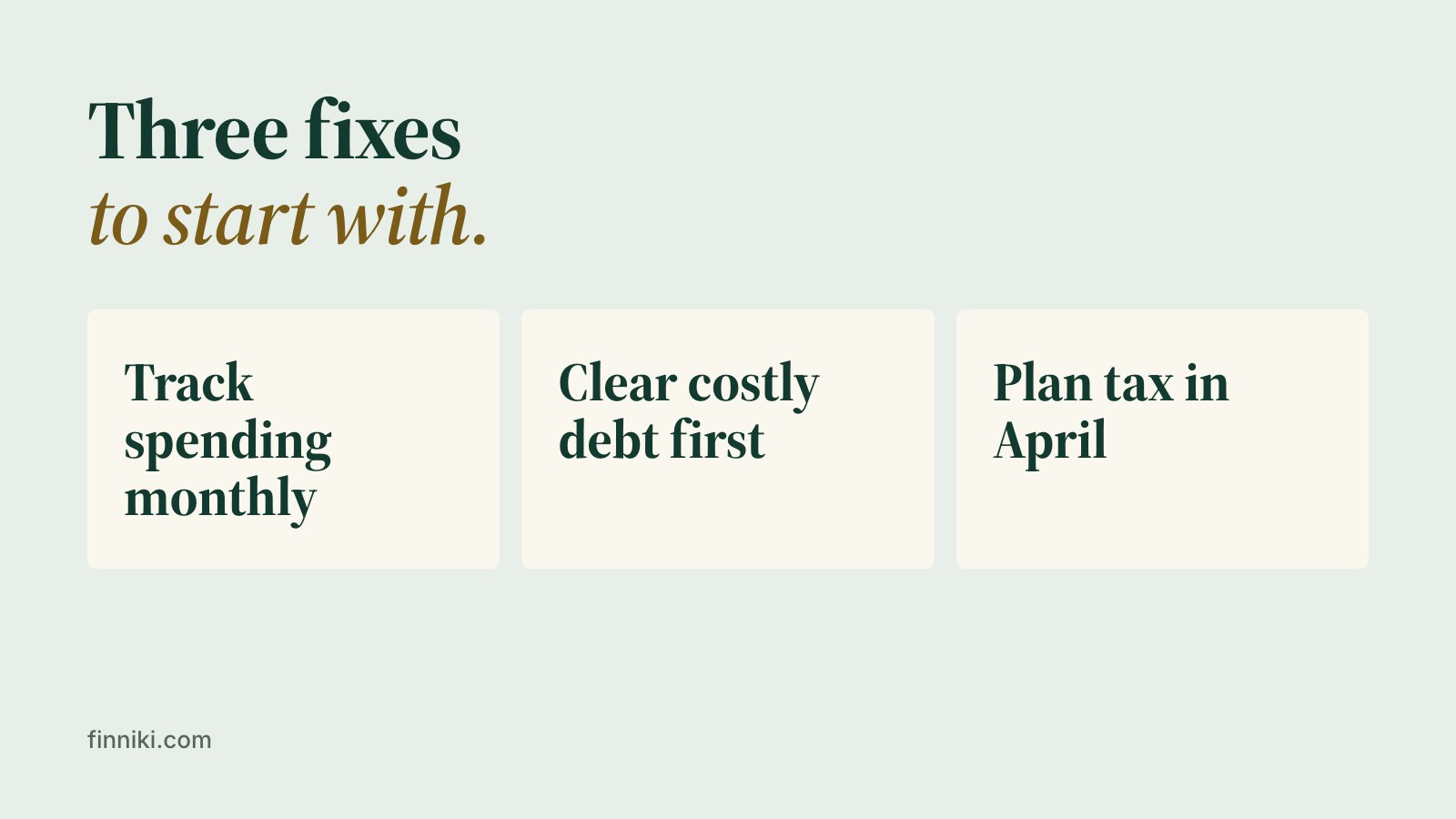
Because spending has become invisible: UPI, cards, subscriptions, auto-debits, food delivery. Small daily amounts add up to a serious monthly leak. People who track expenses tend to save noticeably more without earning more, because awareness changes behaviour. A simple monthly view of fixed costs, variable spending and savings is enough.
Mistake 5: Should you invest while carrying debt?
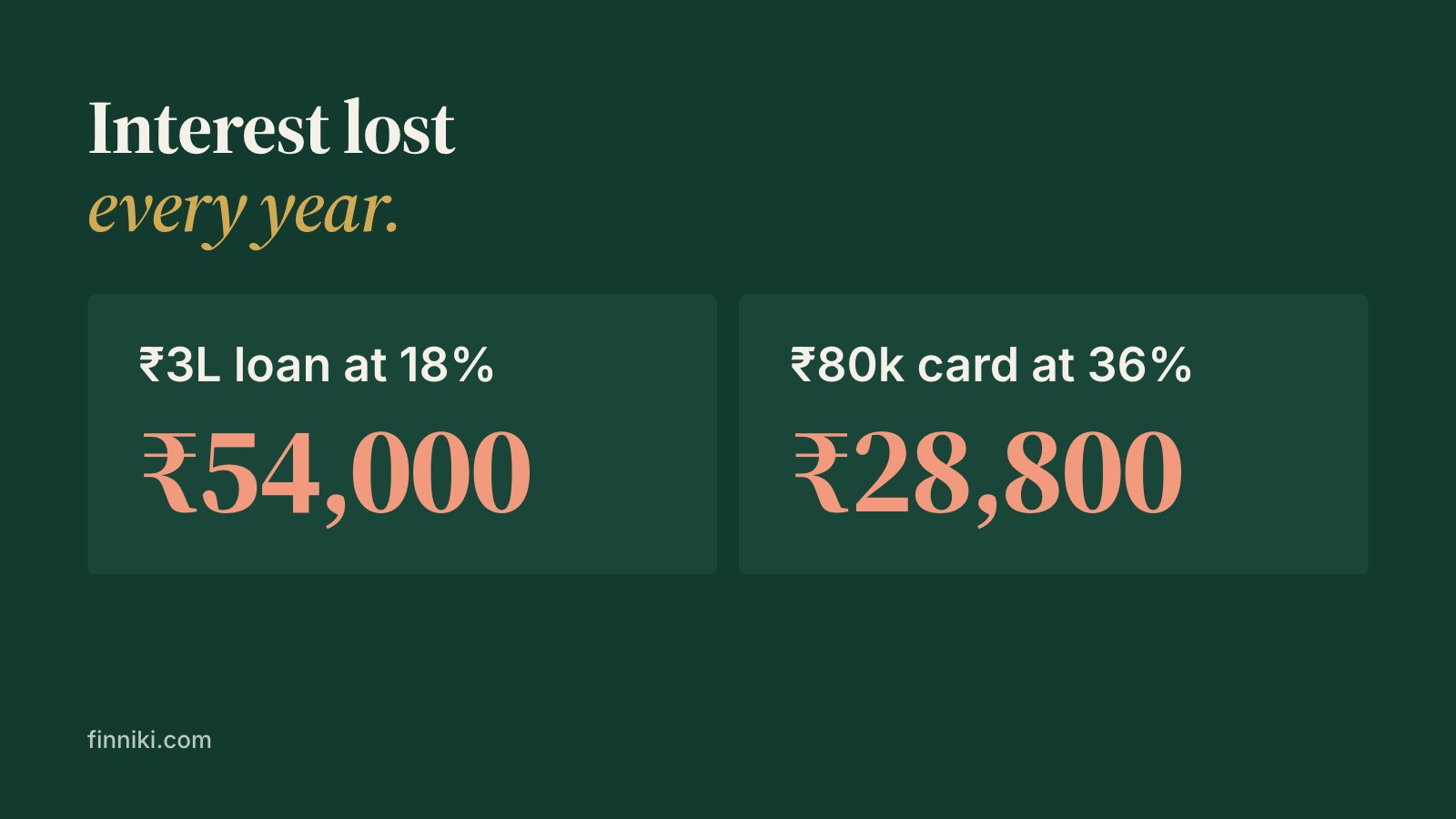
Not while you carry high-interest debt. Running SIPs while paying 30 to 40% on credit cards is growing money with one hand while losing it faster with the other. A ₹3 lakh personal loan at 18% costs about ₹54,000 a year in interest; an ₹80,000 card balance at 36% adds about ₹28,800. That is over ₹80,000 a year for nothing new.
List your loans by interest rate, clear the most expensive first with bonuses or a cut expense, then move to the next.
Mistake 6: Why are sales a trap?
Because they are designed to make spending feel like saving. Flash discounts, limited-time offers and buy-now-pay-later trigger urgency and bypass careful thinking, and many sale purchases turn out to be unnecessary. Ask one question: would I buy this without the offer? If not, the discount is irrelevant. Empty your cart and stop browsing.
Mistake 7: Why is skipping insurance a mistake?
Because one emergency can undo years of planning. A single private hospital stay can easily cost ₹4 to 6 lakh, and critical illness far more; without health insurance, that comes from savings or expensive loans. If anyone depends on your income, you need term life cover too. Insurance does not build wealth; it protects everything you are building.
Mistake 8: Why does delaying gratification matter?
Because wealth grows slowly in an instant world. Delaying gratification is not living miserably; it is choosing long-term freedom over short-term pleasure. Try waiting six months for that new phone: either you still want it and buy it guilt-free, or you forget about it. Either way, you win.
Mistake 9: What is wrong with last-minute tax planning?
It leads to bad products. People panic in March and buy random ELSS funds or insurance policies they do not need, locking money into poor choices. Plan in April instead: decide which tax regime suits you (the new regime makes income up to ₹12 lakh effectively tax-free after the rebate, but allows few deductions), use deductions such as HRA, Section 123 (formerly 80C) and NPS properly if you choose the old regime, and automate tax-saving investments monthly.
Mistake 10: Why do you need long-term goals?
Because without them, money decisions follow mood and peer pressure. Most people know exactly which phone they want next but not what retirement needs. Give your money jobs: simple buckets for retirement, an emergency fund, a home and children's education. Even a rough target like "₹5 crore in 15 years" makes unnecessary spending feel expensive. Write three goals, set timelines and review them every six months.
Mistake 11: Why can't you ignore inflation?
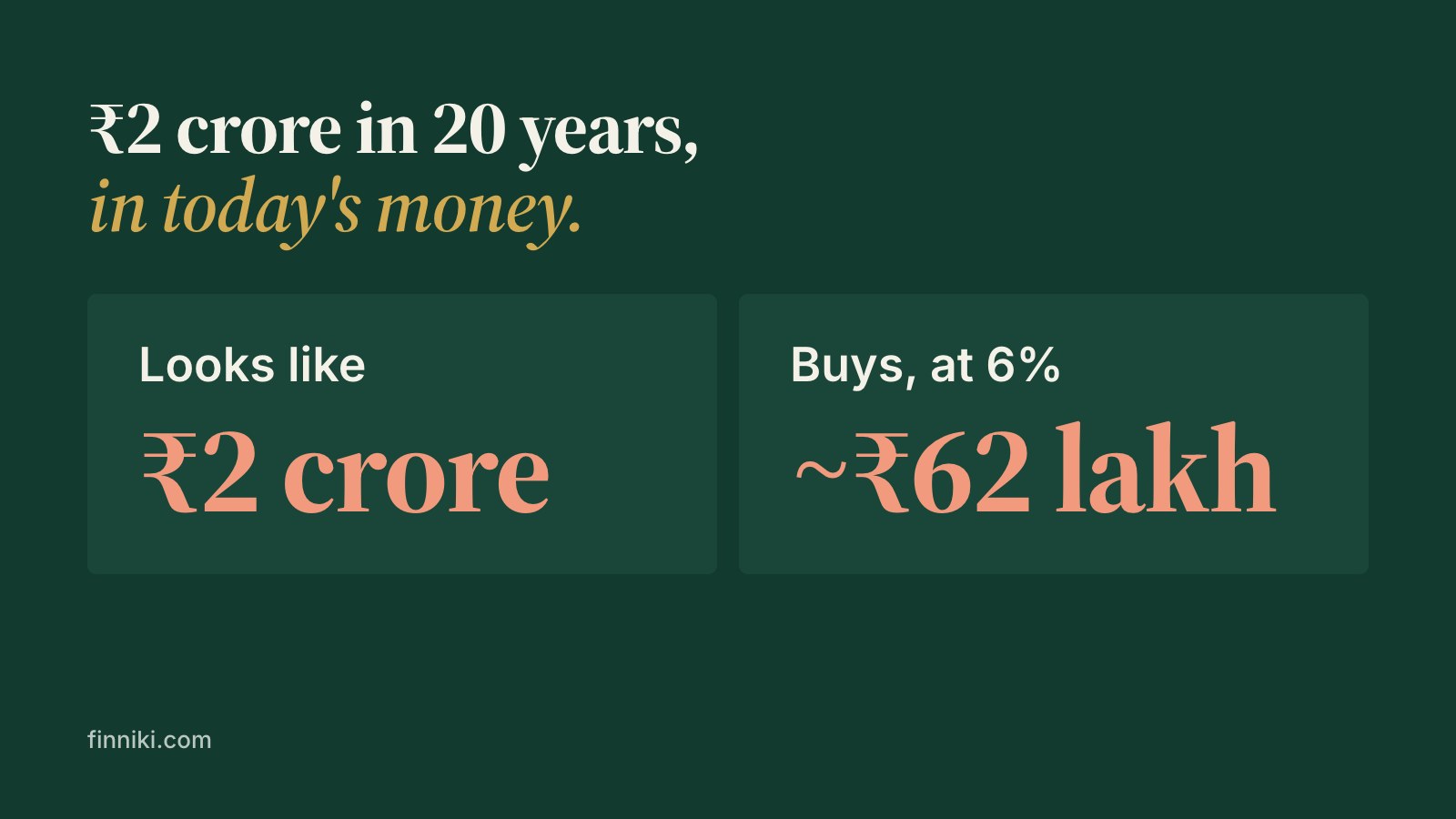
Because at 6% inflation, prices double about every 12 years: ₹50,000 a month of expenses today could be ₹1 lakh by your late forties. A ₹2 crore retirement fund 20 years from now would buy only what about ₹62 lakh buys today.
Think in real returns: a 10% return with 6% inflation is only about 4% real growth. Match long-term goals with growth assets such as equity, and review every two to three years.
Which fixes should you start with?
Personal finance is not about perfection but awareness and consistency. The biggest damage rarely comes from bad luck; it comes from normal habits repeated for long enough.
FAQs
What are the biggest personal finance mistakes?
Lifestyle inflation, not tracking spending, investing while carrying high-interest debt, skipping insurance, last-minute tax planning and ignoring inflation.
Should I invest or pay off debt first?
Clear high-interest debt such as credit cards and personal loans first; its cost is usually far higher than investment returns.
How much health insurance do I need?
Enough to cover a major hospital stay in your city; a single private hospitalisation can cost ₹4 to 6 lakh or more.
When should I do my tax planning?
At the start of the financial year, in April, by choosing a regime and automating any tax-saving investments.
How does inflation affect my retirement?
At 6% inflation, ₹2 crore in 20 years buys only what about ₹62 lakh buys today, so plan in future prices.
Why should I keep my salary private?
Because comparing salaries pushes people into lifestyle spending, whether they earn more or less than others.
Start with one fix
Pick the mistake that costs you most and fix it this month. Book a session for a full money check-up, or find more episodes on FinNiki videos.
General information, not advice for your situation. Rules change; check your own numbers with a CA before you act.