Retirement Income: The Three-Bucket Plan That Lasts
Retirements fail when income collapses in a market fall, not because the corpus is small. The Income Stability Ratio and a three-bucket plan that fixes it.

Nikhil Varghese, CA · 5 min read

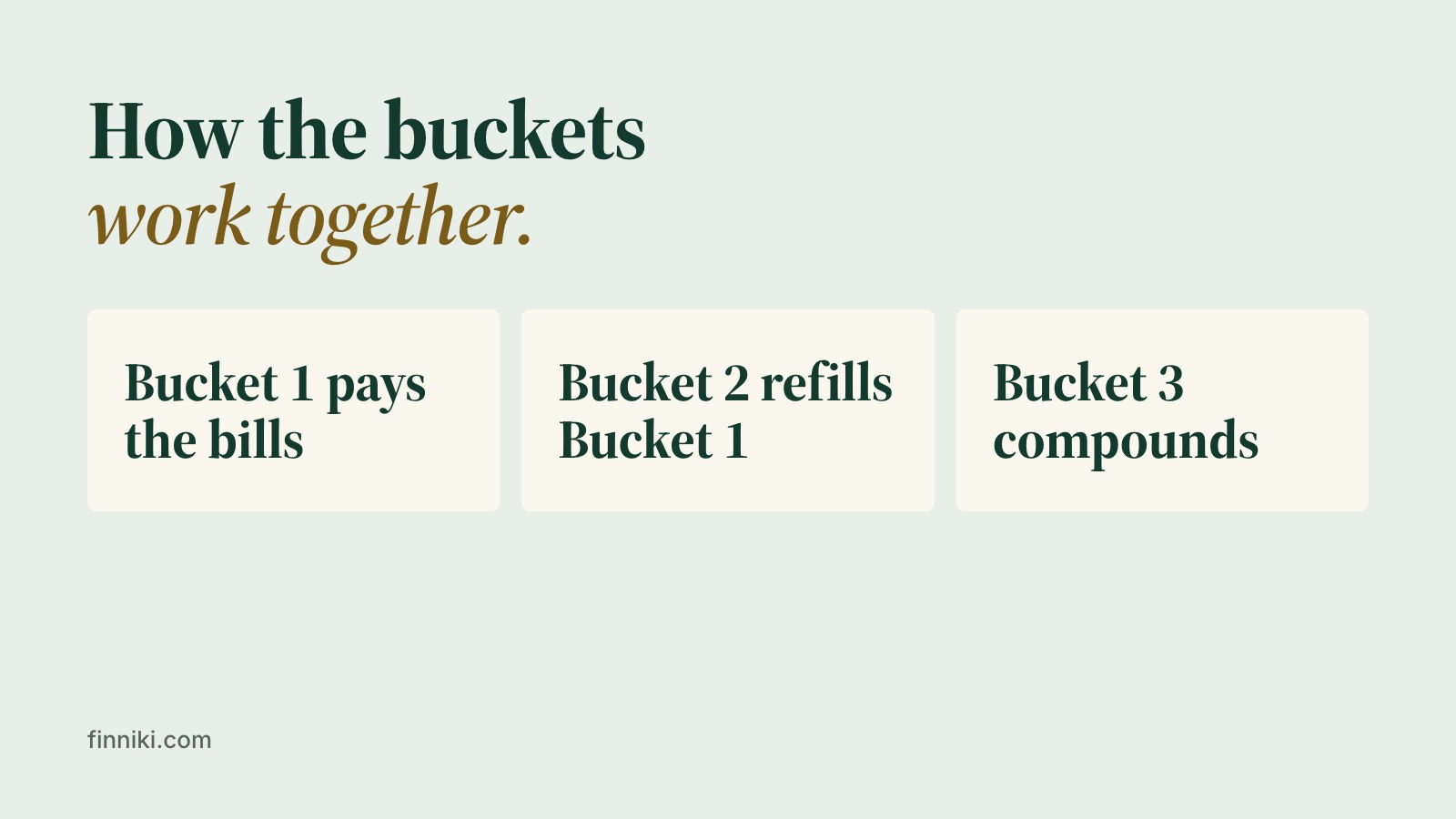
Quick answer: Retirements rarely fail because the corpus is too small; they fail when monthly income collapses during a market fall and you are forced to sell investments at low prices. Measure your Income Stability Ratio (ISR): how many years of expenses you hold in safe, low-risk money. With ₹1 lakh a month of expenses (₹12 lakh a year), ₹36 lakh of safe money is an ISR of 3. Then split your corpus into three buckets by time: an income bucket for the next 3 to 5 years, a support bucket for the following 3 to 4 years, and a growth bucket you do not touch. Bucket 1 pays the bills, Bucket 2 refills it, and Bucket 3 compounds.
 Watch the episode: The real retirement problem nobody talks about in India
Why do retirement plans fail even with a big corpus?
Because markets do not care that you have retired. While you work, your salary arrives every month and market falls are background noise. The day the salary stops, your investments become your salary, and every correction feels personal. Bills, groceries and medical expenses do not pause for bear markets. Most retirements do not break overnight; they crack slowly when withdrawals during a fall do permanent damage. So the better question is not "how big should my corpus be?" but "how stable is my retirement income?"
What is the Income Stability Ratio?
A measure of how many years your lifestyle can continue without stress if markets do badly:
ISR = safe, low-risk money ÷ annual expenses.
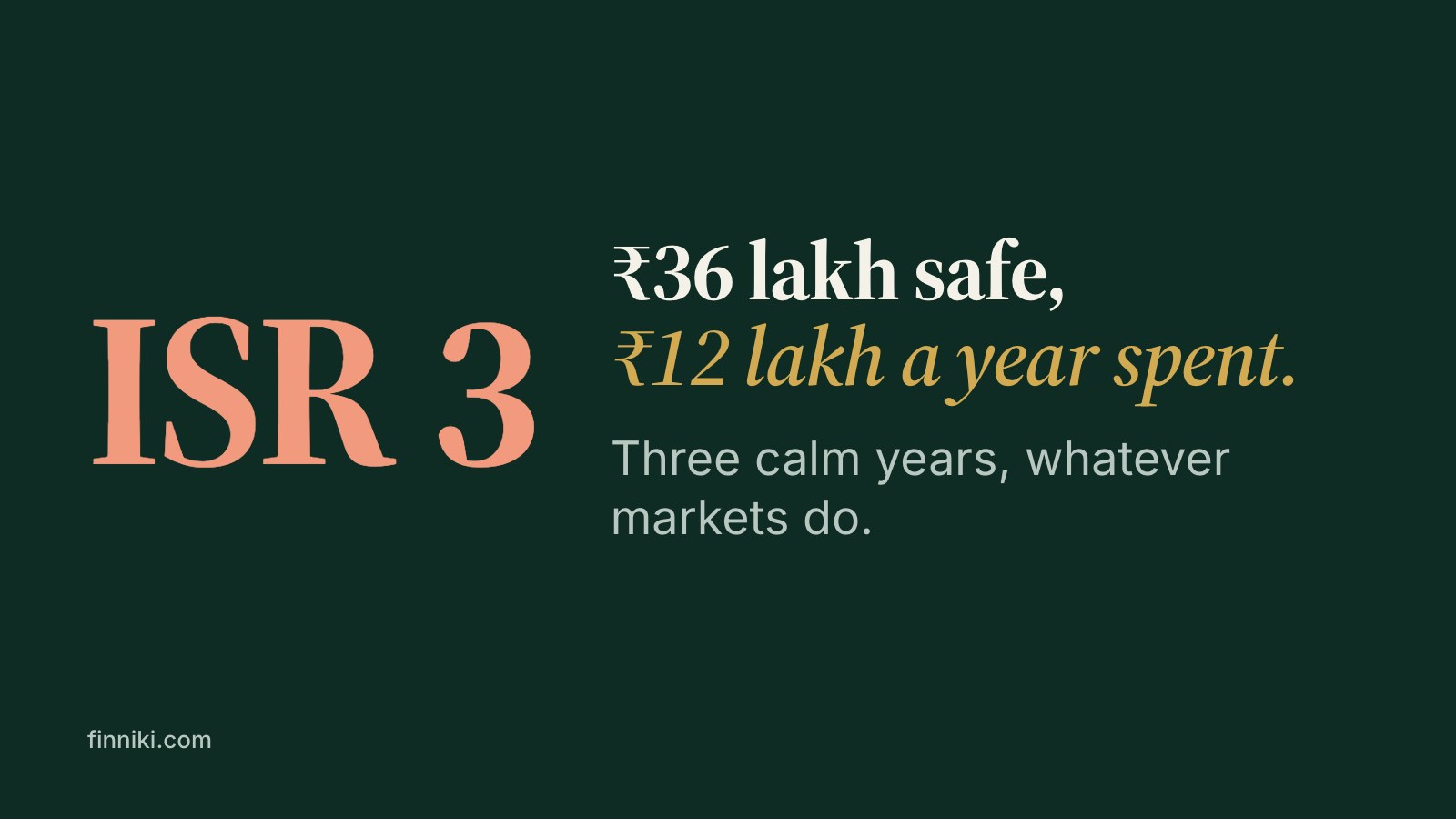
If you spend ₹1 lakh a month (₹12 lakh a year) and hold ₹36 lakh in safe money, your ISR is 3: three years of groceries, rent and medical bills covered, whether markets fall, go flat or recover slowly. A higher ISR does not make you richer; it makes you calmer, and calm is the most undervalued asset in retirement.
Can someone with ₹3 crore be better off than someone with ₹5 crore?
Yes, in how retirement feels. Net worth looks impressive, but net worth does not pay the electricity bill; cash flow does. Someone with ₹5 crore can be more stressed than someone with ₹3 crore if more of their money is exposed to volatility and their income depends on selling it in bad years. At that point the risk is not just financial but behavioural, and behavioural mistakes are what destroy retirement plans.
What goes wrong when retirees withdraw straight from equity?
People invest well for decades, build equity-heavy portfolios, then retire and start withdrawing directly from equity. In rising markets that feels fine. Then a long bear market arrives and they must sell at low prices just to live. That loss is permanent: they lose not just the money but its future compounding. Income has to be protected from volatility.
What is the three-bucket retirement plan?
Divide the corpus by when you will need the money, not as one pool:
- Bucket 1: income protection. Covers 3 to 5 years of expenses, in low-risk instruments such as liquid funds, ultra-short debt funds and arbitrage funds. Its only job is certainty, not growth. This bucket sets your ISR.
- Bucket 2: medium-term support. Covers the next 3 to 4 years, with moderate risk. Its job is to refill Bucket 1 when markets are good.
- Bucket 3: long-term growth. Equity and other growth assets, not touched for current spending, funding the later decades of retirement.
Most people fail this structure by mixing everything, chasing returns everywhere and then expecting stability when they withdraw. Separate growth from stability and decisions become calm.
How does the three-bucket plan work in practice?
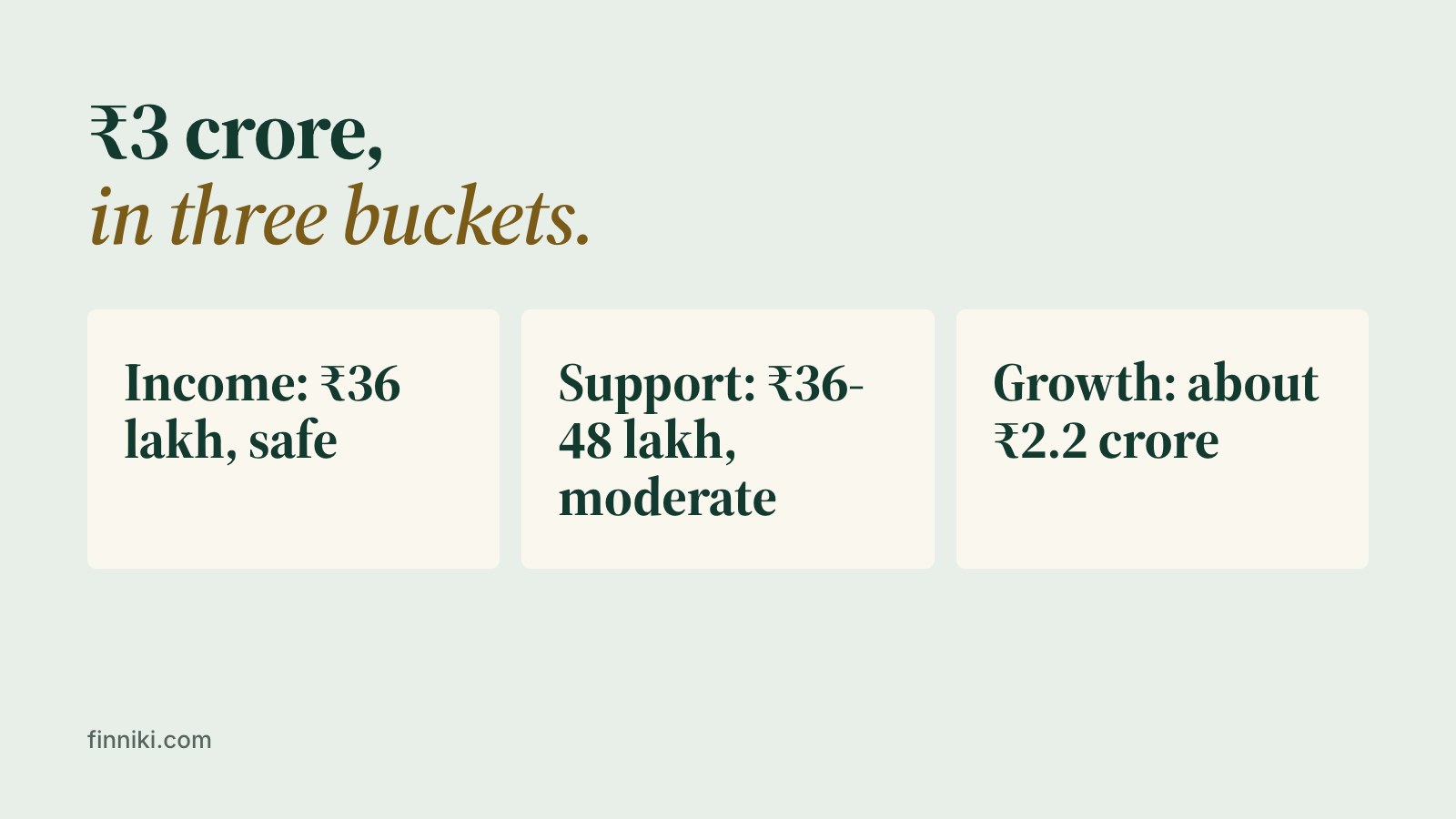
Take monthly expenses of ₹1 lakh (₹12 lakh a year), a target ISR of 3 and a total corpus of ₹3 crore:
- Bucket 1: ₹36 lakh, three years of expenses, in safe instruments.
- Bucket 2: ₹36 to 48 lakh, three to four more years.
- Bucket 3: the rest, about ₹2.2 crore, invested for long-term growth.
You no longer have a pile of money; you have a system.
Does the Income Stability Ratio matter before retirement?
Yes. If you lost your job tomorrow, how many months could your lifestyle continue without panic? That is your ISR today. A higher one gives you confidence and flexibility, and lets you make career and money decisions from strength rather than desperation.
Why do traditional retirement models fail?
Because they assume 8 to 10% returns every year in smooth, straight lines. Real markets have bad years, flat years and long recoveries. The ISR approach accepts volatility, buys you time and prevents forced selling.
Is an SWP a bad idea in retirement?
No, but structure matters. A Systematic Withdrawal Plan works best when withdrawals come from stable money, not from volatile assets during bad years. Draw your income from Bucket 1, and move money from equity to the safer buckets in good years. A slightly lower return with high income stability beats a high-return plan that collapses under pressure.
How does your ISR improve over time?
With discipline, equity grows, expenses settle and the buckets refill, so your ISR rises naturally. You do not need perfection; you need structure. Freedom comes not from a big number on paper but from knowing your monthly life is protected.
FAQs
What is the Income Stability Ratio?
The number of years of expenses you hold in safe, low-risk money. ₹36 lakh against ₹12 lakh of yearly spending is an ISR of 3.
What is the bucket strategy for retirement?
Splitting your corpus into an income bucket for the next 3 to 5 years, a support bucket for the next 3 to 4, and a long-term growth bucket.
What should go in the first bucket?
Low-risk, easily accessible instruments such as liquid funds, ultra-short debt funds and arbitrage funds.
How much should I keep in safe investments in retirement?
At least three years of expenses, and ideally three to five, so you never have to sell equity in a falling market.
Can I use an SWP in retirement?
Yes, preferably drawing from the safe bucket rather than straight from equity during market falls.
Is a bigger corpus always better?
Not on its own. A smaller corpus with stable income can feel safer than a larger one fully exposed to market swings.
Build your retirement income system
The right bucket sizes depend on your expenses and corpus. Book a session to set up yours, or find more episodes on FinNiki videos.
General information, not advice for your situation. Rules change; check your own numbers with a CA before you act.