Retirement in India: Why Savings Run Out (and the Fix)
Why so many Indians run out of money within 10 years of retiring: longer lives, medical inflation, smaller families. How big your corpus should be.

Nikhil Varghese, CA · 5 min read
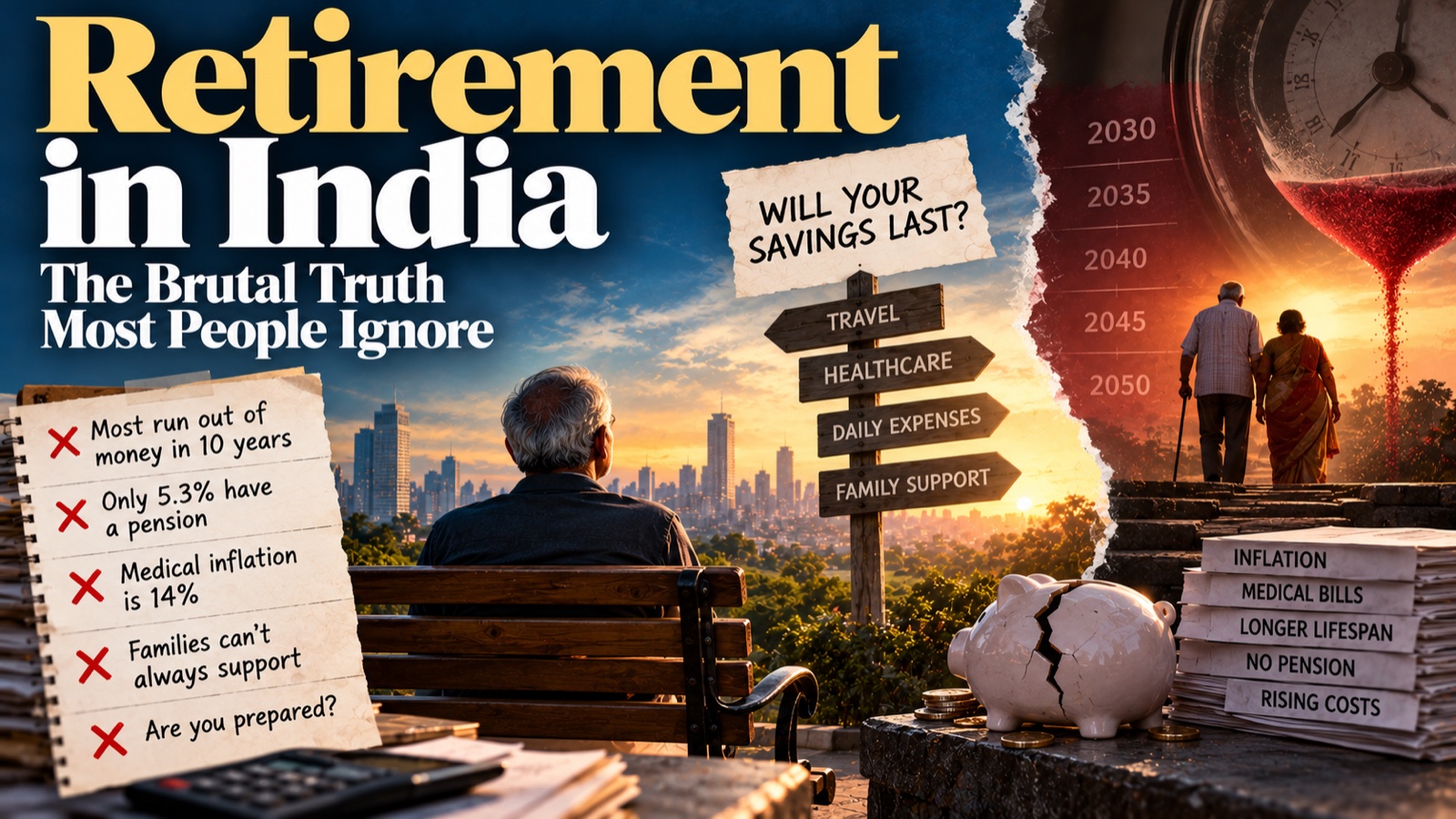
Quick answer: Many Indians retire with ₹30 lakh to ₹1 crore and run short within about 10 years, because they live 20 to 25 years after retiring, costs rise every year, medical bills rise faster still, and few have a pension. ₹1 crore spending ₹80,000 a month, earning 7% while costs rise 6%, lasts only about 11 years. Work out your number from your expenses, inflation and life expectancy (₹1 lakh a month of spending today points to a corpus of roughly ₹4 to 5 crore), start early, and build it with EPF and PPF, NPS, equity SIPs and, later, an SWP. Keep health insurance after 60 and plan for two people.
Updated October 2026. The episode's SIP growth figures and medical cost example have been corrected below.
 Watch the episode: Retirement in India, why most Indians run out of money and how to avoid it
Why do so many Indians run out of retirement money?
Because retirement now lasts far longer than the plans made for it. Surveys such as the India Retirement Index Study suggest about half of urban Indians expect their savings to run out within 10 years of retiring. India's pension system scores poorly in international comparisons (a D grade, about 44 out of 100, in the Mercer CFA Global Pension Index), and only a small share of Indians, roughly 5%, have a structured pension.
The system was built for a different India:
- Then: most people had government jobs with pensions, families lived together, and life expectancy was around 60.
- Now: the private sector dominates with no guaranteed pension, families are smaller and spread out, and many people live to 75 or 80.
That makes retirement a 20 to 25 year phase, almost as long as a working life.
How long will ₹1 crore last in retirement?
Less than most people think. Spend ₹80,000 a month (₹9.6 lakh a year) from ₹1 crore:
- If the money earned nothing and prices never rose, it would last about 10 years.
- Earning about 7%, with expenses rising 6% a year, it lasts about 11 years.
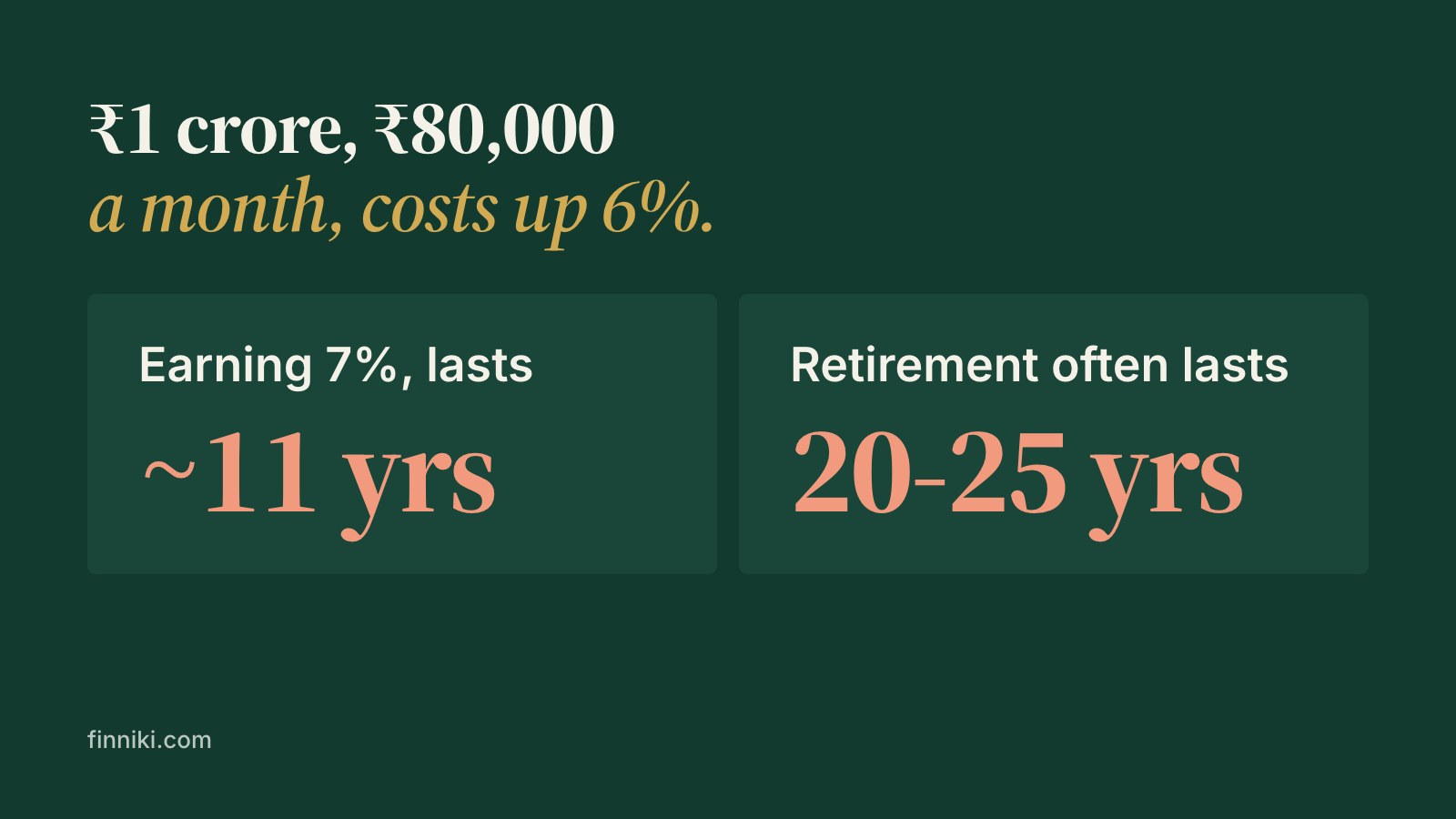
A retirement that starts at 60 and lasts to 80 or 85 needs far more. It is like setting off on a 1,000 km trip with enough fuel for 400.
The same applies at smaller sums. Retire at 60 with ₹50 lakh and ₹50,000 a month of spending: at 6% inflation that becomes about ₹1 lakh a month by 72, and the money runs out in about nine years.
Why is medical inflation the biggest risk?
Because it is the cost people forget. Retirement plans usually cover food, rent, travel and daily expenses, but not healthcare, where costs in India have been rising at about 14% a year, roughly twice general inflation. At that rate a treatment that costs ₹10 lakh at 65 would cost about ₹71 lakh by 80. At 70, most people will choose a private hospital, and cancer, heart surgery or a long illness can consume years of savings in months. India also lacks good elderly care, assisted living and comprehensive health cover after 60, so every medical event hits the retirement fund directly.
Can you rely on your children in retirement?
Not financially. Families are smaller and children have their own costs, while India's elderly population is growing fast, from about 149 million in 2022 to a projected 347 million by 2050, according to the UN Population Fund's India Ageing Report. Emotional support from children, yes; financial dependence, not guaranteed. Build your retirement yourself.
Why does starting early matter so much?
Because time beats income. ₹10,000 a month at 12% a year, invested until 60:
- From 25: about ₹6.5 crore
- From 35: about ₹1.9 crore
- From 45: about ₹50 lakh
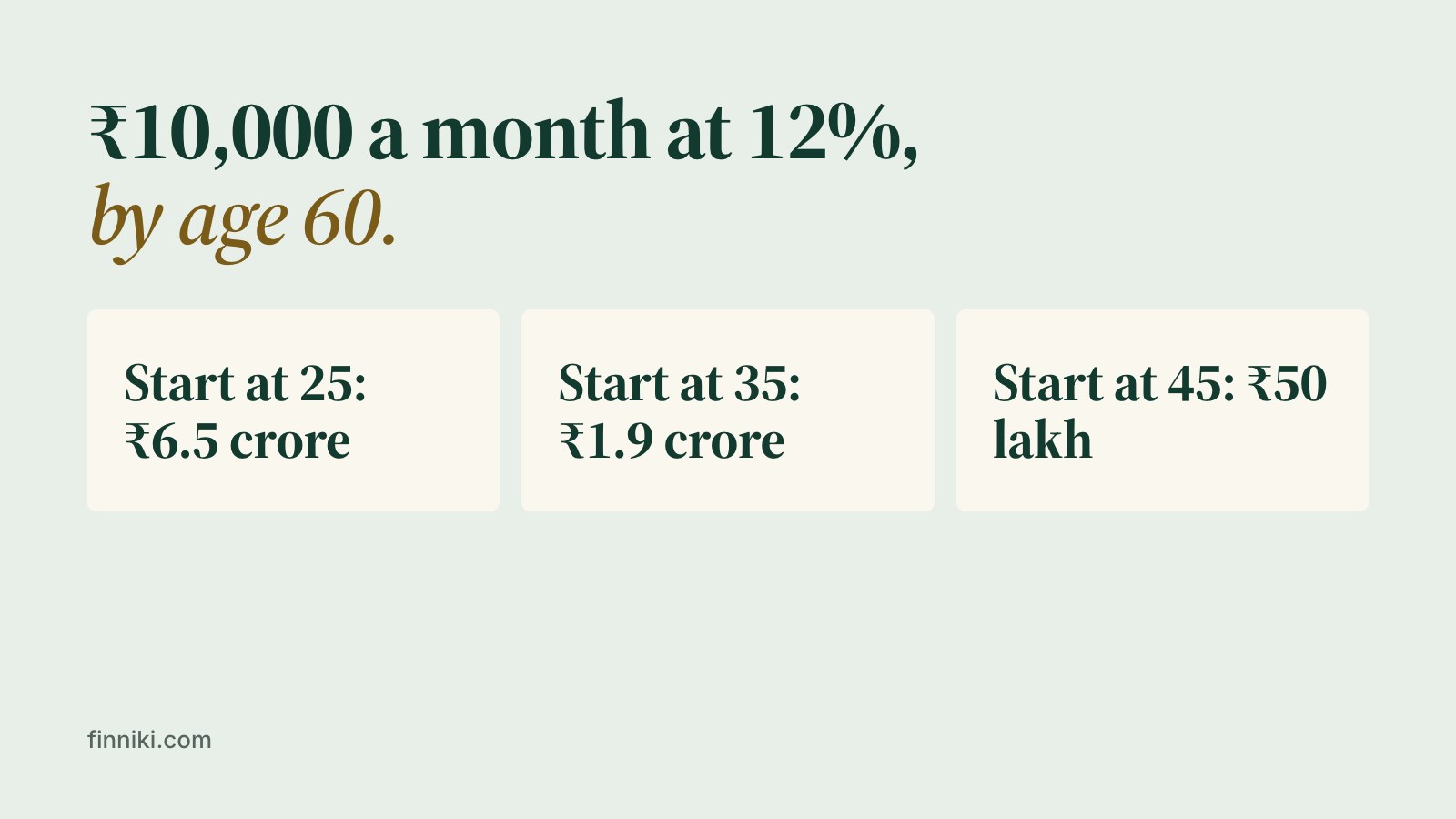
Same monthly amount; the only difference is when you start. Waiting is the most expensive mistake in retirement planning. (The episode's figures understated the gap; these are recalculated.)
How much do you need to retire in India?
Work it out in five steps:
- Note your current annual expenses.
- Plan for about 25 years of retirement.
- Grow expenses by inflation: about 6 to 7% for regular costs and up to 14% for medical costs.
- Add a 20 to 25% buffer.
- Allow for the return the corpus will earn after retirement, about 7 to 8%.
As the episode's example, if you spend ₹1 lakh a month (₹12 lakh a year), your retirement corpus should be roughly ₹4 to 5 crore. Retiring years from now, the figure will be higher, because today's expenses will have grown by then.
How do you build a retirement corpus?
Use a mix of tools:
- EPF and PPF for safety and stability.
- NPS for long-term, tax-efficient saving.
- Equity mutual funds through SIPs for growth and compounding.
- An SWP in retirement, to draw a regular income while the rest stays invested.
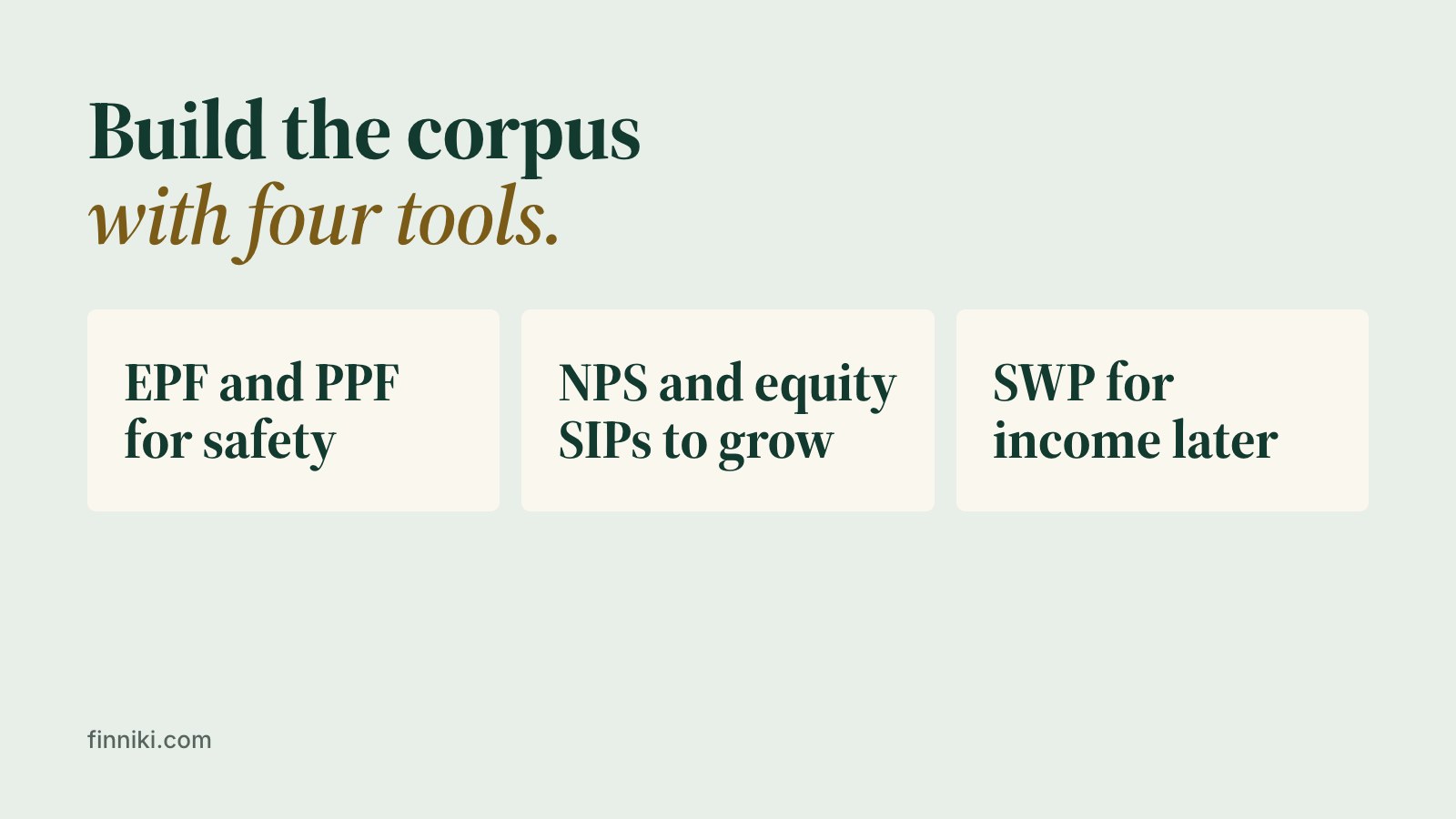
Your money must keep growing after your salary stops.
How do you keep a retirement plan on track?
Review it regularly, not once:
- Update your portfolio and asset allocation, shifting gradually from equity to debt as you age.
- Keep health insurance after 60, and enough of it.
- Plan for two people, including your spouse's retirement.
- Keep a contingency fund for emergencies.
Retirement is not the end of working life but the start of living it, with dignity and without dependence. Make sure your money never retires before you do.
FAQs
How much money do I need to retire in India?
It depends on your expenses. As a rough guide, ₹1 lakh a month of spending today needs a corpus of about ₹4 to 5 crore if you retired now; more if retirement is years away.
How long will ₹1 crore last after retirement?
At ₹80,000 a month, earning 7% while costs rise 6% a year, about 11 years.
Why is medical inflation important in retirement planning?
Medical costs in India have been rising at about 14% a year, twice general inflation, and they rise just when you have stopped earning.
When should I start saving for retirement?
As early as possible. ₹10,000 a month from 25 can grow to about ₹6.5 crore by 60, against about ₹50 lakh if you start at 45.
What are the best investments for retirement in India?
A mix: EPF and PPF for safety, NPS and equity SIPs for growth, and an SWP for income after you retire.
Should I depend on my children after retirement?
Not financially. Plan to fund your own retirement and treat any family support as a bonus.
Find your retirement number
The right corpus depends on your spending, your age and how long you might live. Book a session to work out yours, or find more episodes on FinNiki videos.
General information, not advice for your situation. Rules change; check your own numbers with a CA before you act.