7 Signs You're Getting Rich (Even If You Don't Feel It)
Wealth whispers. Seven quiet signs your finances are improving, from rising income and a positive net worth to insurance, skills and money talk.

Nikhil Varghese, CA · 5 min read

Quick answer: You may be getting richer than you feel. Your brain quickly gets used to good things (psychologists call it hedonic adaptation), so progress stops registering. Seven quiet signs that you are building wealth: your income is growing, you invest before you spend, your net worth is rising, you choose freedom over things, you are learning new skills, you are protecting what you have with insurance and an emergency fund, and you are comfortable talking about money. Three of these means you are building; five or more means you are well on your way.
 Watch the episode: 7 signs you're getting rich without noticing it
Why don't you feel richer when you are?
Because your brain adapts. Your first ₹40,000 salary felt like wealth; at ₹60,000 it feels normal. It is like a bath that warms slowly: you do not notice the temperature until someone else gets in. Real wealth does not shout on social media; it builds quietly in your accounts, habits and decisions.
Sign 1: Is your income growing?
Probably more than you think. Priya, a graphic designer, felt she was going nowhere. In 2022 she earned ₹40,000 a month; now she earns ₹55,000. That is a 37.5% rise in two years, or ₹1.8 lakh more a year, enough for a year of SIPs that could grow to a large sum over two decades. She did not feel it because lifestyle inflation absorbed it: a better phone, nicer restaurants, a few more subscriptions.
Try this: compare your salary credit from two or three years ago with last month's. Any increase means your career is compounding.
Sign 2: Do you invest before you spend?
This sign separates future wealth from permanent struggle. Earning money is filling a bucket; expenses are holes in it. Patch even one hole and start investing, and things change. Nikhil learned this at 26, when a lakh-rupee expense arrived and he had no savings to meet it.
A SIP of just ₹5,000 a month at 12% grows to about ₹50 lakh in 20 years. It may feel small, and inflation will reduce what it buys, but it is far better than nothing. Warren Buffett made most of his fortune after 50, because he started early and let time do the work. If you feel short of cash because you are investing, that is not poverty; it is paying your future self first.
Sign 3: Is your net worth rising?
Your net worth is the score most people never check: everything you own minus everything you owe. Rohit felt poor after buying a home with a ₹1 crore loan. Then he added it up:
- Home worth ₹1.25 crore, loan outstanding ₹81 lakh
- Savings ₹15 lakh and investments ₹18 lakh
- Net worth: about ₹77 lakh, positive and climbing
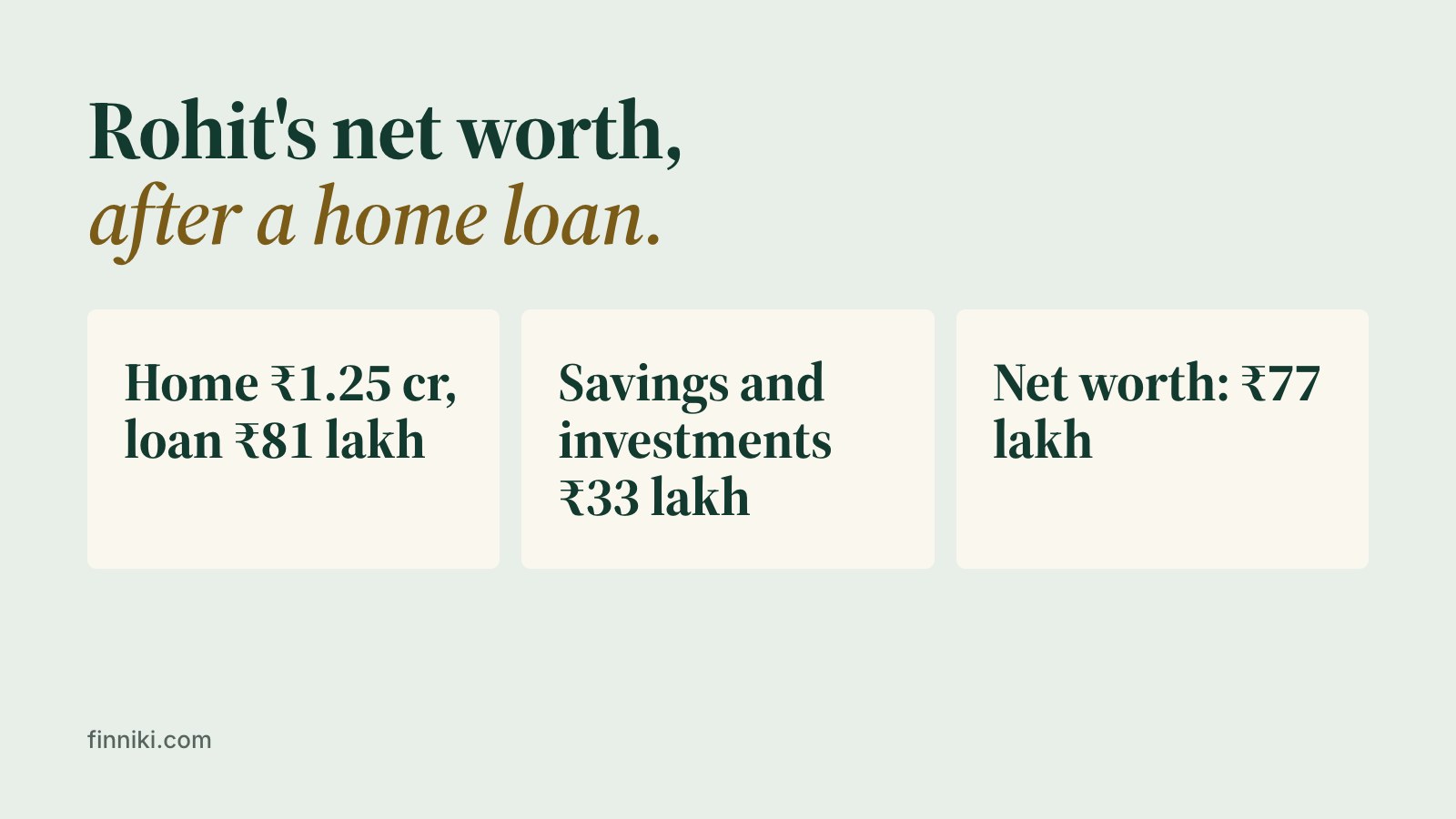
Every EMI, SIP and paid-off card adds to your score. Feelings mislead; the arithmetic does not.
Sign 4: Are you buying freedom instead of things?
Once money stops meaning "what can I buy?" and starts meaning "what can I choose?", your thinking has changed. Nikhil once walked away from a ₹1.85 lakh watch because it was a few months of financial cushion, and felt richer leaving with nothing. Saying no to a stressful project, taking a day off without checking your balance first, or choosing the job with better balance over 20% more pay are all signs of the same shift. The richest person is the one who can say no without fear and yes without permission.
Sign 5: Are you investing in your skills?
Your income can only grow as fast as you do. Compare two people over 10 years:
- Person A saves ₹10,000 a month: about ₹12 lakh saved, before returns.
- Person B spends that ₹10,000 a month on courses and skills, and earns ₹30,000 a month more as a result: about ₹36 lakh extra.
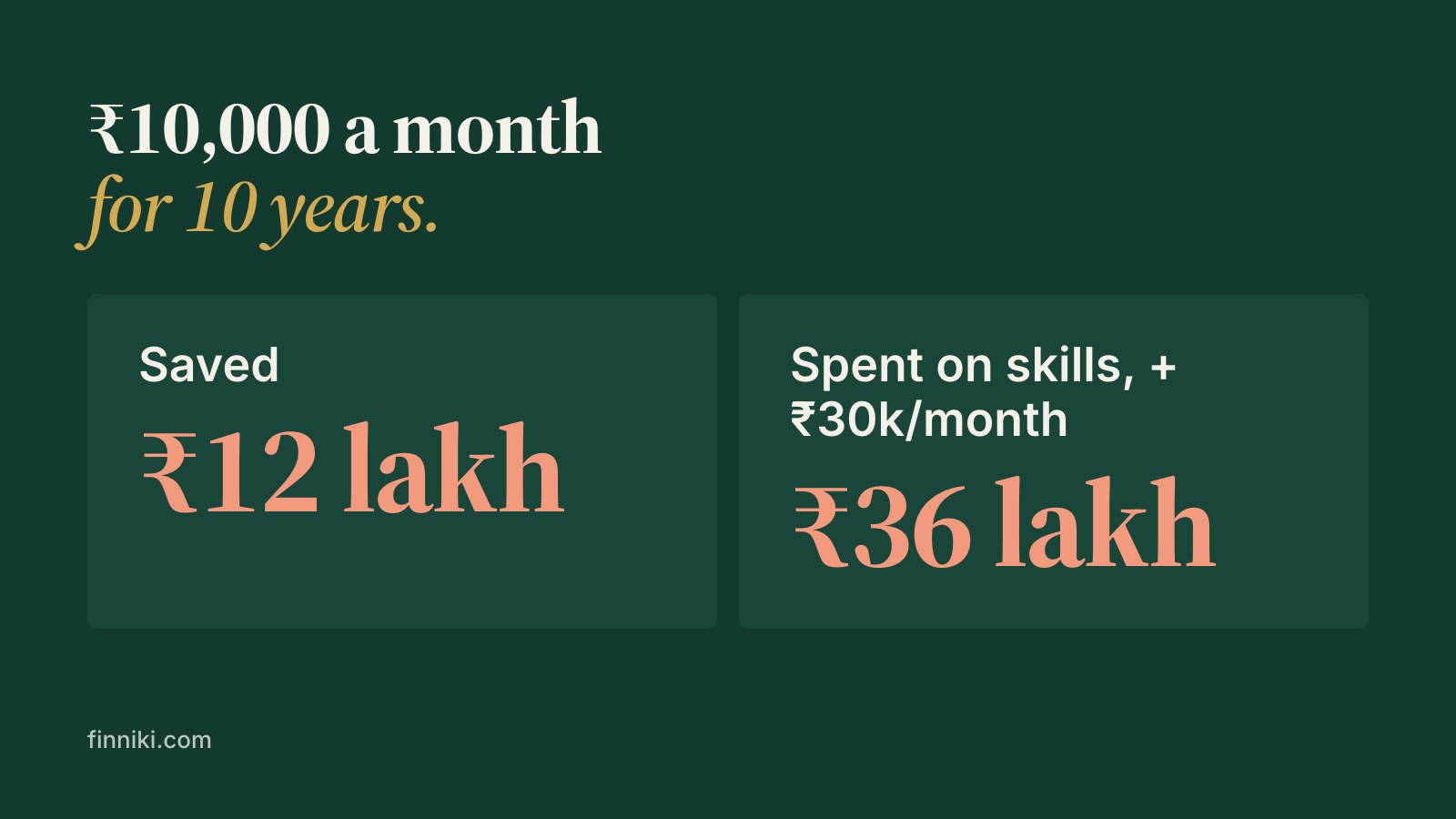
Every book you read and skill you add raises your earning power. Treat your brain like a start-up: the more you invest in it, the higher its value.
Sign 6: Are you protecting what you have built?
This separates temporary wealth from lasting wealth. Amit earned ₹1.5 lakh a month and invested well, until his father needed ₹35 lakh of treatment with no health insurance. Eight years of savings went in eight months. A family health policy could have paid most of that bill.
You are playing defence as well as offence if you have:
- An emergency fund of at least three months' expenses.
- Term insurance; a ₹1 crore cover often costs about the same as a few streaming subscriptions a month for a young non-smoker.
- Health insurance for your family.
- Credit cards used for rewards, not for emotional spending.
- The habit of reading the fine print before you sign.
Sign 7: Are you comfortable talking about money?
If you once changed the subject when salaries or investments came up, and now ask friends which broker they use, compare card rewards, negotiate your salary and say "let me understand this" instead of "I'm bad with numbers", you have moved from financial childhood to adulthood. Talking about money brings better information, fewer costly mistakes and the sense that money is a tool you can master.
How many signs do you have?
Count them:
- Your income is growing, even slowly.
- You are investing something, even if it feels small.
- Your net worth is positive and rising.
- You choose freedom over flash.
- You are learning and upgrading.
- You are protecting what you have built.
- Money conversations no longer scare you.
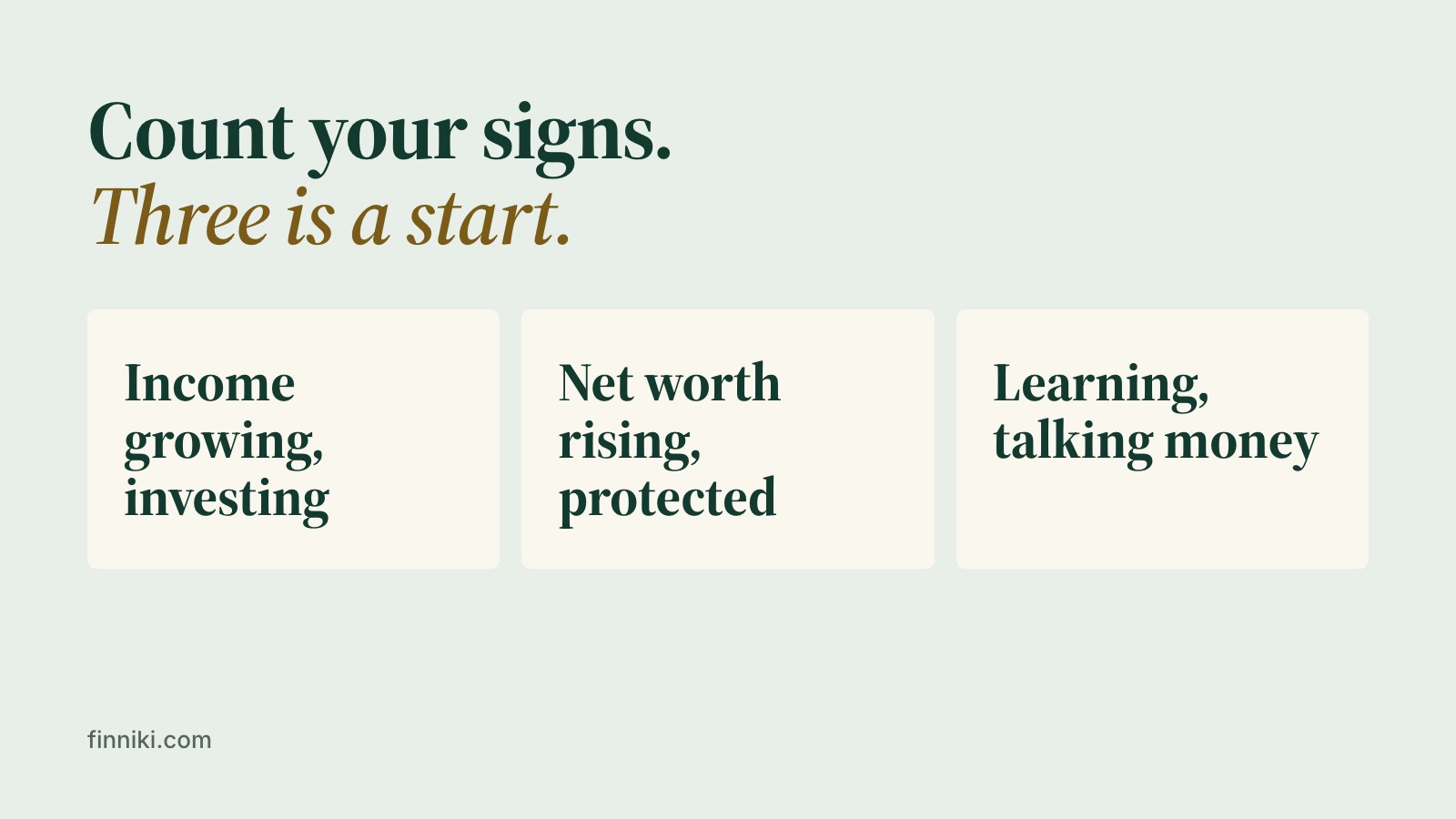
Three of these means you are not stuck; you are building. Five or more means you are well ahead, whether you feel it or not. Wealth grows like a tree: for years you water it and see nothing above ground while the roots spread. Roots come before fruit.
FAQs
How do I know if I am getting richer?
Check your net worth (what you own minus what you owe) once or twice a year. If it is rising, along with your income and investments, you are getting richer.
What is hedonic adaptation?
The tendency to get used to improvements quickly, so a higher income or better life soon feels normal and stops feeling like progress.
How much will a ₹5,000 monthly SIP grow to?
About ₹50 lakh in 20 years at 12% a year, before inflation.
How do I calculate my net worth?
Add the value of everything you own (home, savings, investments) and subtract everything you owe (loans, card balances).
Is spending on skills better than saving?
Often, early in your career. Skills that raise your income by ₹30,000 a month are worth more over 10 years than saving ₹10,000 a month.
What protection should I have in place?
An emergency fund of at least three months' expenses, term insurance, family health insurance, and no high-interest card debt.
Check your score
Most people are further along than they think. Book a session to work out your net worth and next steps, or find more episodes on FinNiki videos.
General information, not advice for your situation. Rules change; check your own numbers with a CA before you act.