What Is an STP? Invest a Lump Sum Without the Stress
How a Systematic Transfer Plan moves a lump sum from a liquid fund into equity month by month: types, rules, exit loads, tax, and STP vs SIP.

Nikhil Varghese, CA · 6 min read
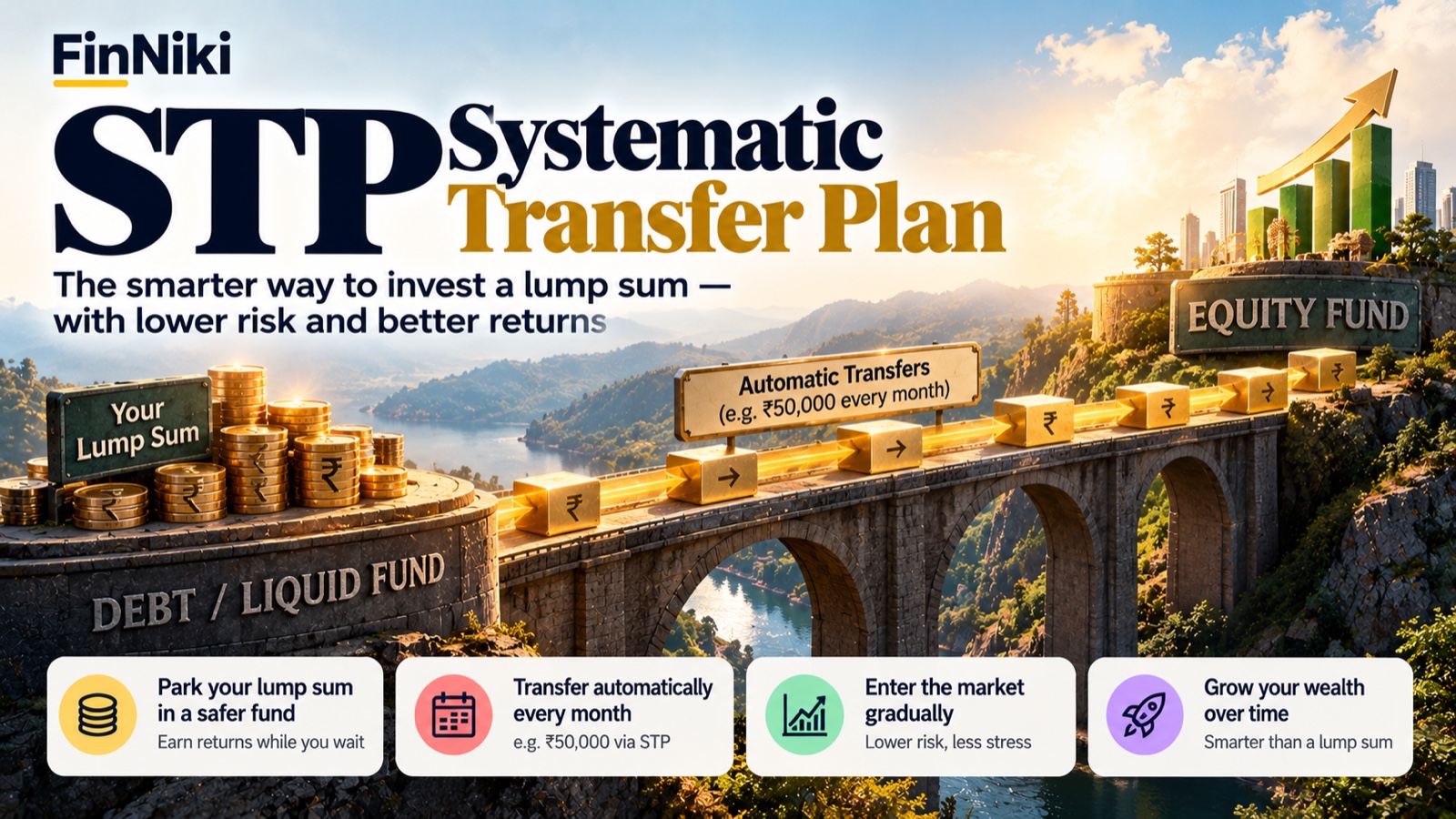
Quick answer: A Systematic Transfer Plan (STP) moves money automatically, in fixed instalments, from one mutual fund to another in the same fund house, usually from a liquid or debt fund into an equity fund. It suits anyone with a lump sum, such as a bonus, a matured FD or sale proceeds, who does not want to put it all into the market on one day. Park ₹6 lakh in a liquid fund and transfer ₹50,000 a month into equity: you enter gradually, buy more units when prices dip, and the money still waiting earns returns. Each transfer is a redemption, so it can be taxed, and it does not remove market risk; it manages it.
Updated October 2026. Tax rates are those for equity and debt mutual funds after the July 2024 changes, still in force for FY 2026-27.
 Watch the episode: The smarter way to grow your lump sum, STP vs SIP
What is an STP in mutual funds?
A bridge between two funds. You invest a lump sum in one scheme, usually a liquid or debt fund (the safe zone), and instruct the fund house to transfer a fixed amount at regular intervals into another scheme, usually an equity fund (the growth zone). The transfers happen inside your mutual fund account, not from your bank, and only between funds of the same fund house.
How does an STP work?
In three steps:
- Park the lump sum in a liquid or debt fund, where it is relatively stable and earns modest returns while it waits.
- Set up the transfer, for example ₹25,000 or ₹50,000 every month on a fixed date, into the equity fund you have chosen.
- Let it run. Month by month, the money moves from safety into growth, without your whole capital being exposed to a sudden fall.
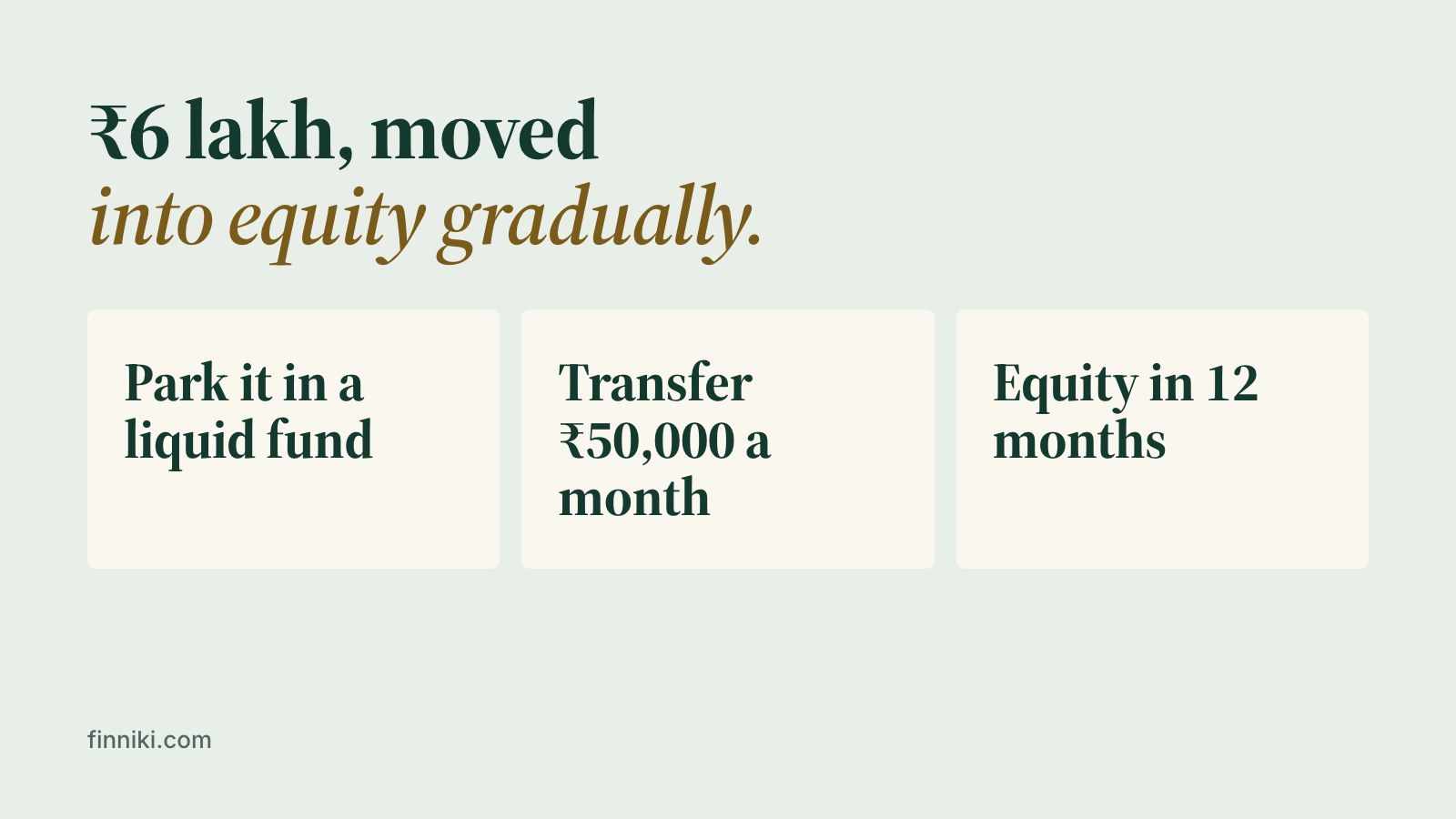
Take ₹6 lakh: park it in a liquid fund and transfer ₹50,000 a month into equity. In about 12 months it is all invested. If the market falls after the first transfer, later transfers buy more units at lower prices; if it rises, you are already partly in.
What are the types of STP?
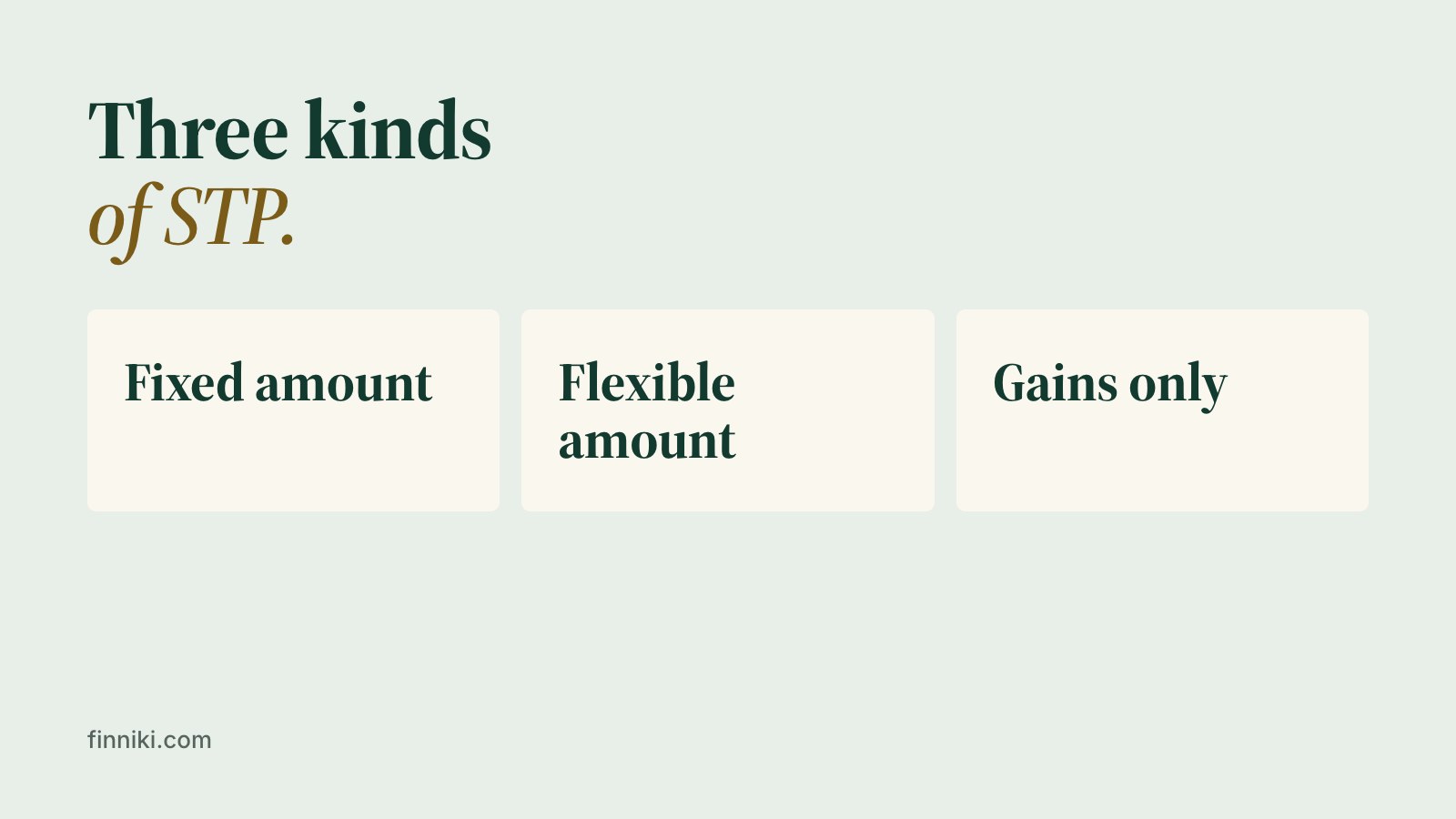
Three:
- Fixed STP: the same amount moves every month. Simple and predictable, and the most common.
- Flexible STP: you change the amount, transferring more when markets fall and less when they look overheated.
- Capital appreciation STP: only the gains move. Invest ₹5 lakh in a debt fund; if it grows to ₹5.2 lakh, only the ₹20,000 gain transfers to equity, while the ₹5 lakh stays in debt. Your gains take the risk while your capital stays put.
What rules apply to an STP?
They vary by fund house, so check yours, but typically:
- Minimum amounts: SEBI sets no minimum, but many fund houses ask for a minimum balance in the source fund (often around ₹12,000) and a minimum per transfer.
- Minimum number of transfers: commonly six.
- No entry load.
- Exit loads: liquid funds charge only a very small graded exit load, and only if units are redeemed within seven days of investing, so start the transfers a week or more after you invest. Some other debt funds charge higher exit loads for short holdings, and equity funds commonly charge about 1% if you redeem within a year, which matters if you later move money back out.
Why do investors use STPs?
- Smooth entry into the market. Spreading the investment averages your cost (rupee cost averaging) and removes the need to guess the right day.
- The waiting money earns. Funds in a liquid or debt fund typically earn more than a savings account while they wait.
- Risk management. Near a goal, or when markets look stretched, a reverse STP moves money from equity back into debt to protect gains.
- Portfolio balance. Regular transfers between debt and equity help keep your target mix.
What is the difference between an STP and a SIP?
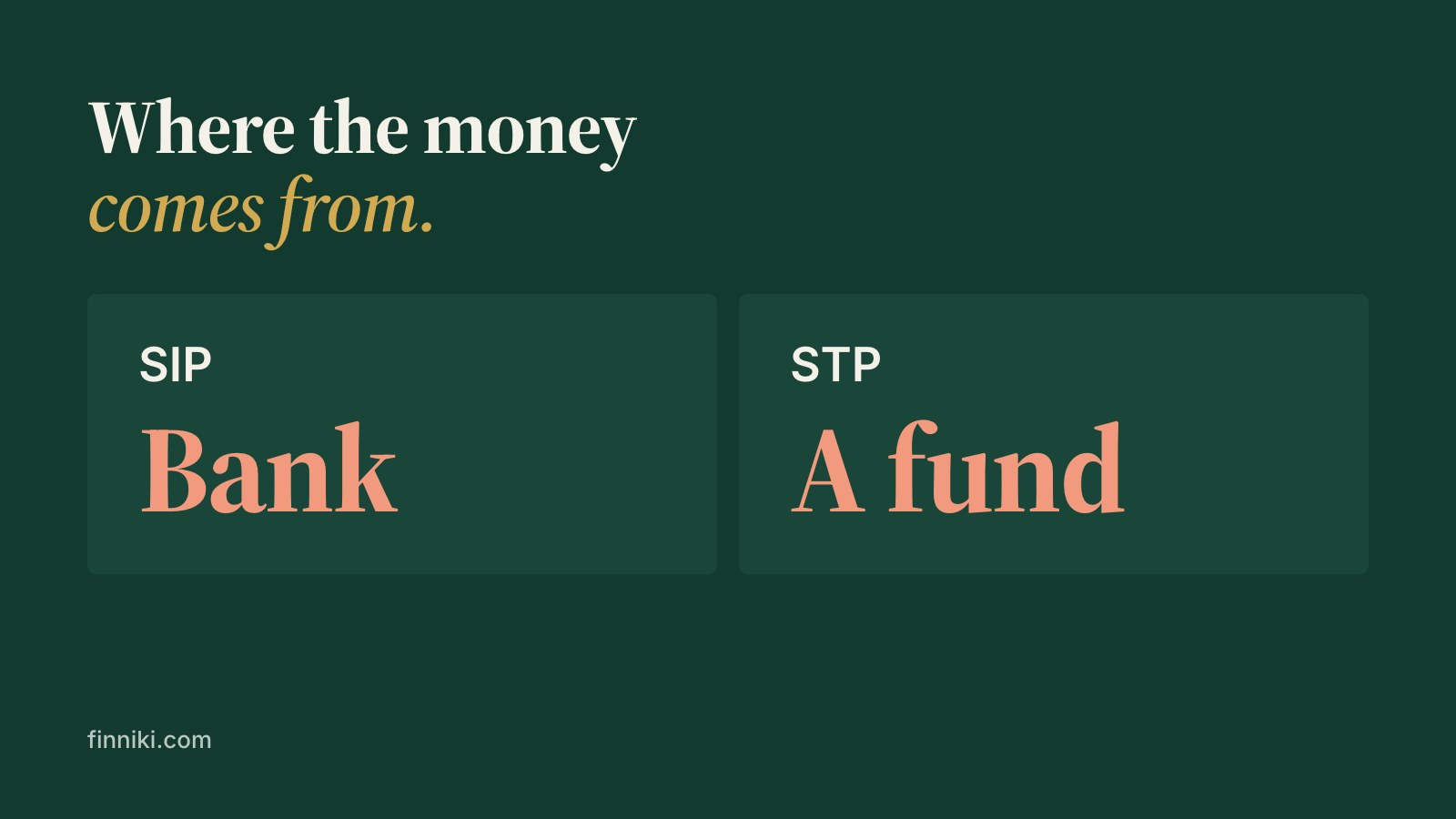
Where the money comes from:
- SIP: money comes from your bank account every month into a mutual fund. Suits salaried people building wealth from income.
- STP: money moves from one mutual fund to another, usually debt to equity. Suits someone deploying a lump sum gradually.
The tax treatment differs too: a SIP is taxed only when you sell, while every STP transfer is a redemption from the source fund. A SIP helps you start investing; an STP helps you manage money you already have.
How is an STP taxed?
Each transfer counts as a sale of units in the source fund:
- Debt and liquid funds (for investments made from April 2023): gains are added to your income and taxed at your slab rate, whatever the holding period. There is no separate long-term rate any more. In an STP the gain on each transfer is usually small, because the money has only waited a few months.
- Equity funds, when you later sell: gains on units held up to a year are taxed at 20% (short-term). Gains on units held more than a year are taxed at 12.5% (long-term), and only on gains above ₹1.25 lakh a year. For example, ₹2 lakh of long-term gains means tax on ₹75,000 at 12.5%.
An STP is smart, but not tax-free. Plan the transfer frequency and holding periods with tax in mind.
Who should use an STP?
- People with a lump sum, such as a bonus, retirement money or property or car sale proceeds, who want to invest it gradually.
- Cautious investors who prefer steady entry to investing everything at once.
- Anyone rebalancing between debt and equity.
- Investors protecting gains by moving money from equity to debt as a goal approaches.
Sold a car for ₹10 lakh? Park it in a liquid fund and set up a ₹50,000-a-month STP: you enter the market steadily over the year and earn on the cash that is waiting.
What are the limits of an STP?
It is not magic. It will not make you rich overnight or remove risk; it gives structure and keeps you from emotional decisions in volatile markets. Use funds from the same fund house, watch exit loads and tax on each transfer, and choose a duration that suits the amount and the market. A SIP teaches consistency; an STP adds strategy.
FAQs
What is an STP in mutual funds?
A plan that transfers a fixed amount at regular intervals from one mutual fund to another in the same fund house, usually from a liquid or debt fund into an equity fund.
Is an STP better than investing a lump sum at once?
It is less risky if markets fall soon after you invest, because you enter gradually. In a steadily rising market, investing the whole amount at once can earn more.
Is an STP taxable?
Yes. Each transfer is a redemption from the source fund, and any gain is taxed; for liquid and debt funds, at your income-tax slab rate.
Can I do an STP between two fund houses?
No. An STP works only between schemes of the same fund house.
Is there an exit load on an STP from a liquid fund?
Only a very small one, and only on units redeemed within seven days of investing. Starting transfers after a week avoids it.
What is a reverse STP?
Moving money from an equity fund back to a debt fund in instalments, to lock in gains as a goal approaches or when markets look overheated.
Put your lump sum to work
How fast to move a lump sum into equity depends on the amount, your goals and the market. Book a session to set up a plan for yours, or find more episodes on FinNiki videos.
General information, not advice for your situation. Rules change; check your own numbers with a CA before you act.