Tier-2 Cities vs Metros 2026: Should You Leave Yours?
Earn 30% less in Indore and keep more than in Bengaluru? Tier-2 vs metro costs, property, jobs, schools, and an 8-question scorecard to decide.

Nikhil Varghese, CA · 11 min read

Quick answer: Leaving a metro for a fast-growing tier-2 city such as Indore, Jaipur, Lucknow, Coimbatore, Kochi or Chandigarh makes financial sense when your income can follow you. Salaries there are typically 25 to 30% lower, but living costs can be close to half, so you often keep as much or more each month, and homes in these cities have risen faster than in the big eight metros. Healthcare for specialised care, some careers and a smaller social world are the real costs. Score yourself on the eight questions below: move, go hybrid, invest without moving, or stay, but make it a deliberate decision rather than a default one.
Updated October 2026. Property, hiring, startup and Smart Cities figures are updated to the latest published data: the CII–Knight Frank 2026 report, Taggd's 2026 hiring outlook and government figures to March 2026.
 Watch the episode: Tier 2 cities vs metros (2026), the truth no one tells you
Is living in a metro still the smart money move?
Not automatically. Take someone earning ₹2 lakh a month in Bengaluru: ₹40,000 goes on rent, another ₹15,000 on commuting, fuel and food near the office, and two to three hours a day disappear into traffic, hours that never appear on a salary slip. After five years there is often no asset to show for it, a thin surplus each month and a tiredness a weekend cannot fix. A high salary can feel like winning while the numbers say otherwise.
What does metro rent really cost you over 10 years?
At ₹40,000 a month, rent is ₹4.8 lakh a year and ₹48 lakh over 10 years, before any rent increases, with no ownership and no equity at the end. In a tier-2 city, that same ₹40,000 can become an EMI instead. At an assumed 8% home-loan rate over 20 years, a ₹40,000 EMI services a loan of about ₹48 lakh, enough for a modest home in many tier-2 cities, where average prices range from about ₹4,500 to ₹13,500 per sq ft.
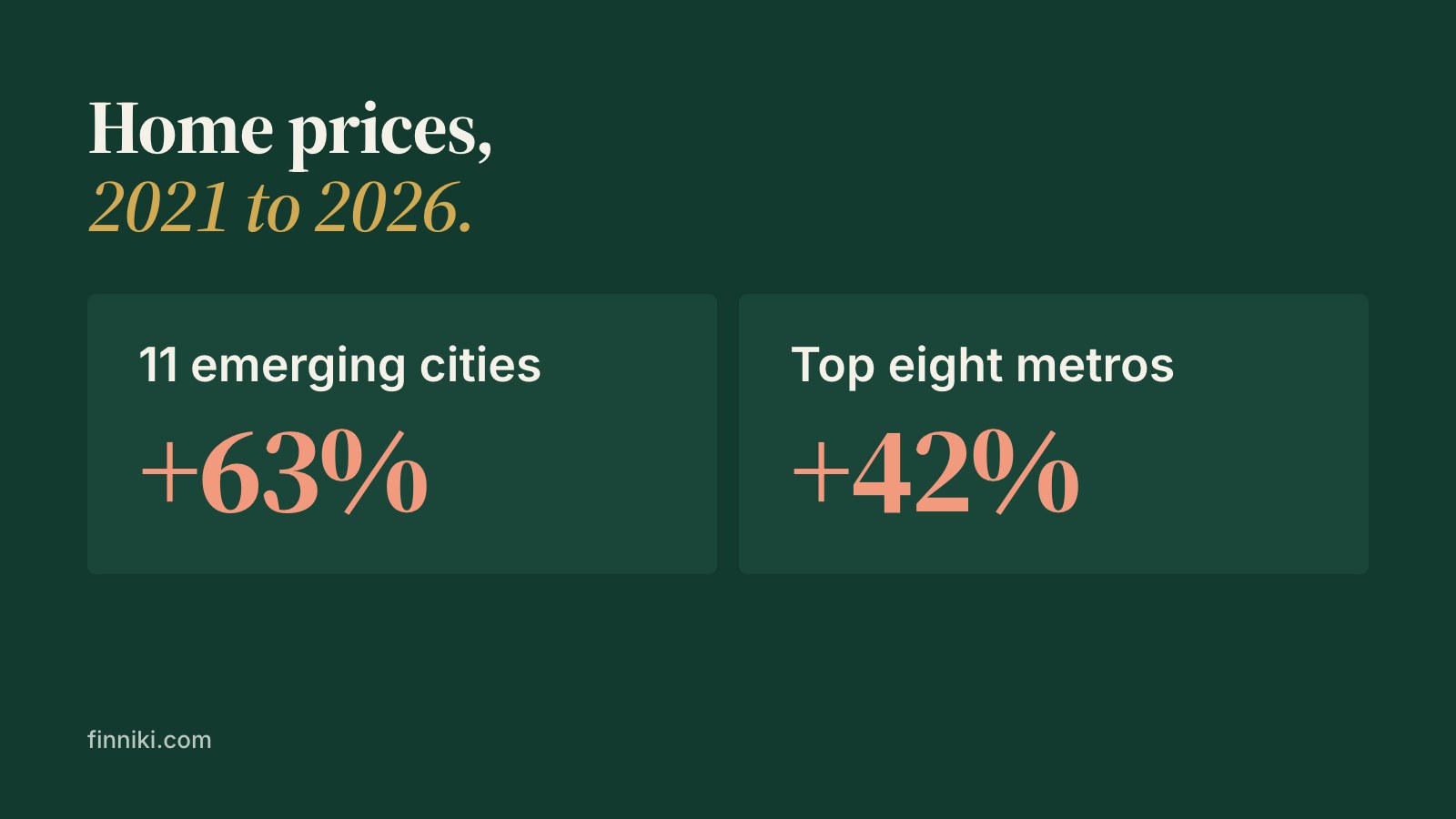
Tier-2 homes have also been rising faster. The CII–Knight Frank report on India's next real estate markets found that residential prices in 11 emerging cities (including Indore, Jaipur, Lucknow, Kochi, Coimbatore, Nagpur and Chandigarh Tricity) rose about 63% between 2021 and 2026, against 42% in the top eight cities. So you can cut costs, own sooner and own in a market that has been growing faster, all at once.
Why are big Indian cities hitting their limit?
Because they were never built for this many people. Bengaluru's roads, water and housing were planned for a far smaller city, and Mumbai has been stretched for decades. This is not discomfort you can wait out; it is a structural ceiling. Once a city reaches it, quality of life starts falling even as salaries rise: you earn more, but you also spend more, commute more and stress more.
Which tier-2 cities are people moving to?
High-growth tier-2 cities, not villages or small towns: Indore, Jaipur, Lucknow, Coimbatore, Kochi and Chandigarh are the names that keep coming up. For a growing number of educated professionals they are now a first choice, not a backup, because they combine:
- Lower living costs, especially rent.
- Jobs that are no longer confined to metros, helped by remote work and companies opening offices in smaller cities.
- Infrastructure that is catching up: better roads, expanded airports, faster internet and planned development.
- A quality of life metros struggle to match: shorter commutes, cleaner air and more time.
The job numbers are moving too. Randstad's 2025 talent report found job openings in tier-2 cities grew about 42%, more than twice the roughly 19% in the biggest cities. For 2026, Taggd's hiring outlook puts tier-2 cities at about 32% of all planned hiring in India.
Can you earn less in a tier-2 city and still save more?
Often, yes. Salaries in tier-2 cities are typically 25 to 30% lower, but living costs can be close to half: rent roughly halves, commuting costs shrink and daily spending falls. Many younger professionals have stopped asking "how much can I earn?" and started asking "how much can I keep?"
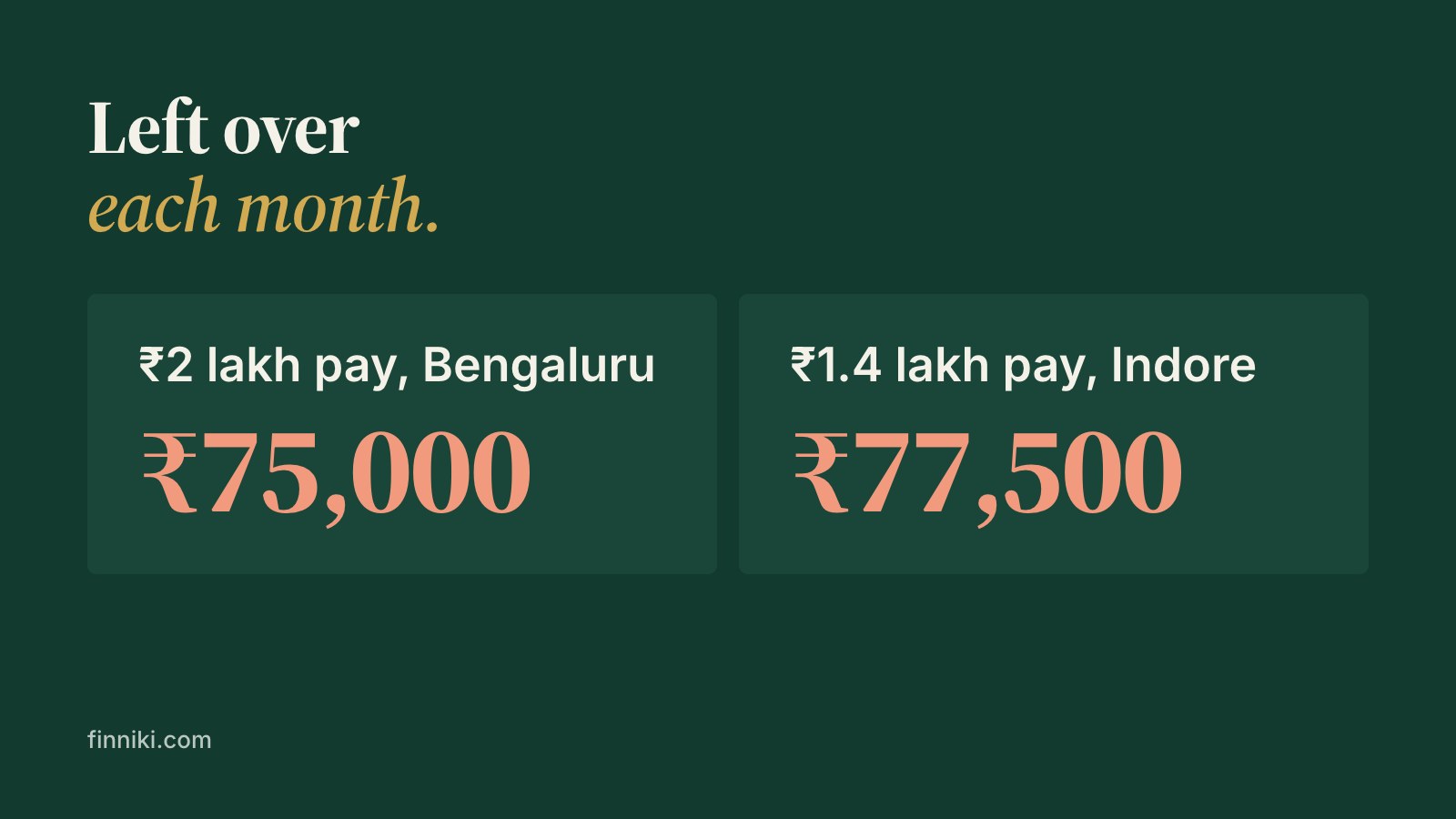
Here is a simple worked example, assuming a monthly take-home of ₹2 lakh in Bengaluru and ₹1.4 lakh in Indore (30% less), and that every cost in Indore is half the Bengaluru figure:
- Bengaluru: take-home ₹2,00,000, minus rent ₹40,000, commute and office food ₹15,000 and everything else ₹70,000, leaves ₹75,000.
- Indore: take-home ₹1,40,000, minus rent ₹20,000, commute and office food ₹7,500 and everything else ₹35,000, leaves ₹77,500.
A 30% lower salary leaves slightly more in your pocket, with hours of commuting returned to you. If your costs fall by less than half, the gap narrows, so run it with your own numbers.
Will moving to a tier-2 city hurt your career?
It depends on the kind of work you do. For some careers geography still matters: investment banking, entertainment, politics and premium retail reward being in the room. But in IT, fintech, edtech, consulting, content and SaaS, location matters less every year. Close to half of India's government-recognised startups now come from tier-2 and tier-3 cities. If your work happens on a screen, a tier-2 city can be a career upgrade: lower costs, a higher savings rate, better balance and access to local talent before the metros absorb it.
Is a tier-2 city good for your children's education?
Mostly, but be honest about the gap. Top metro schools have historically done better in board results and as feeders to the IITs and AIIMS. That gap is narrowing, but it exists. Cities such as Indore, Jaipur and Lucknow now have strong CBSE and ICSE schools and serious coaching for competitive exams.
The other side of the trade is childhood itself: more outdoor space, more family time, less screen pressure, often safer streets, and parents who are less stressed and more present. A calmer, more present parent can matter to a child as much as a school ranking.
What about ageing parents and family?
This is often what tips the decision. India is one of the few countries where three-generation living still makes economic and emotional sense. Looking after ageing parents across a metro, with the distances, traffic and isolation, wears everyone down. Living in the same city or neighbourhood means you can care for them, they can be part of your children's daily lives and the family works the way it is meant to. Career, children and family are not three separate decisions: they are one question about the life you are designing.
What are the downsides of moving to a tier-2 city?
There are three real ones:
- Healthcare: metros are still meaningfully better for specialised care.
- Careers that need presence: some roles genuinely require physical networking in a metro.
- A smaller social world: fewer people, events and options, which matters more to some than others.
For many professionals the trade is worth it. The question is whether you are one of them.
Is the shift to tier-2 cities permanent?
It looks structural, not a post-COVID blip, because three forces are pushing the same way:
- Companies are putting down roots. Infosys opened a development centre at the MIHAN SEZ in Nagpur in 2023, and HCLTech's New Vistas programme runs delivery centres in Lucknow, Madurai, Nagpur and Vijayawada. These are decade-long capital decisions that do not reverse when sentiment shifts.
- Government infrastructure is being built. Under the Smart Cities Mission, about 7,790 projects worth over ₹1.56 lakh crore had been completed by March 2026. The Bharatmala highway programme is connecting district towns, and regional airports in cities such as Surat, Indore and Coimbatore have been expanded.
- Demographic gravity. Most of India's young, educated and digitally connected people live outside the big metros. As more talent stays local, more companies follow, and as more companies follow, more talent stays.
Should you buy property in a tier-2 city even if you're not moving?
It deserves a look. The CREDAI–Liases Foras report found that about 44% of the land acquired by developers in 2024 was in tier-2 and tier-3 cities, and ANAROCK reported that about two-thirds of the land bought in the first half of 2025 was there too. That is where developers are placing long-term bets.
Demand in these cities is largely from end users, families buying homes to live in, rather than speculative investors, which tends to make prices steadier. One option is to buy in a city such as Indore, Jaipur or Lucknow now, keep living in your metro and let the asset work. Treat it like any investment: check the developer, the RERA registration and the rental market before you commit, and remember that property is hard to sell quickly.
Should you move to a tier-2 city? The 8-question scorecard
Answer each question and add up your points: 0 leans towards staying, 1 towards a hybrid and 2 towards moving. The maximum is 16.
- Can your job or business be done from anywhere? No: 0. Partly or hybrid: 1. Yes, fully remote: 2.
- What is your children's education priority? An IB or premium international school: 0. A boarding-school option: 1. A good CBSE or ICSE school in a tier-2 city is fine: 2.
- What do you save each month in the metro? Over 25% of income: 0. Between 10% and 25%: 1. Under 10%: 2.
- Do your parents or in-laws need you nearby? They live in the metro: 0. Either city works: 1. They live in a tier-2 city: 2.
- What does your career growth depend on? Physical networking and office presence: 0. Both, to some extent: 1. Skills, not the city: 2.
- What are your lifestyle needs? High, you'd miss the metro: 0. Medium: 1. Low, you prefer calm: 2.
- Can you afford a metro home now? Yes: 0. Maybe in three to five years: 1. No, you're priced out: 2.
- How long have you lived in this metro? Over 10 years, with roots: 0. Five to 10 years: 1. Under five years, still adapting: 2.
Three questions matter most:
- Question 1 outweighs everything. The rent savings, the quality of life and being near family only become available if your income can follow you.
- Question 3 cuts through the story you tell yourself. Many metro professionals feel successful but live paycheque to paycheque on a bigger paycheque. Your savings rate is the honest number.
- Question 5: if your next promotion or client genuinely needs you in the room, score 0; if it is skill-based and location-independent, score 2.
What does your scorecard total mean?
- 13 to 16, time to move: the numbers strongly support a tier-2 shift. Start planning the transition.
- 9 to 12, hybrid strategy: don't fully relocate yet. Buy property in a tier-2 city and keep a metro base for work.
- 5 to 8, invest, don't move: your metro roots are too strong. Put surplus capital into a tier-2 city instead.
- 0 to 4, stay put: your life is deeply tied to the metro, and the cost of moving outweighs the benefits for now.
The scorecard is about fit, not just money: a move that is financially smart but personally wrong costs you in ways no spreadsheet shows.
How do you move to a tier-2 city in stages?
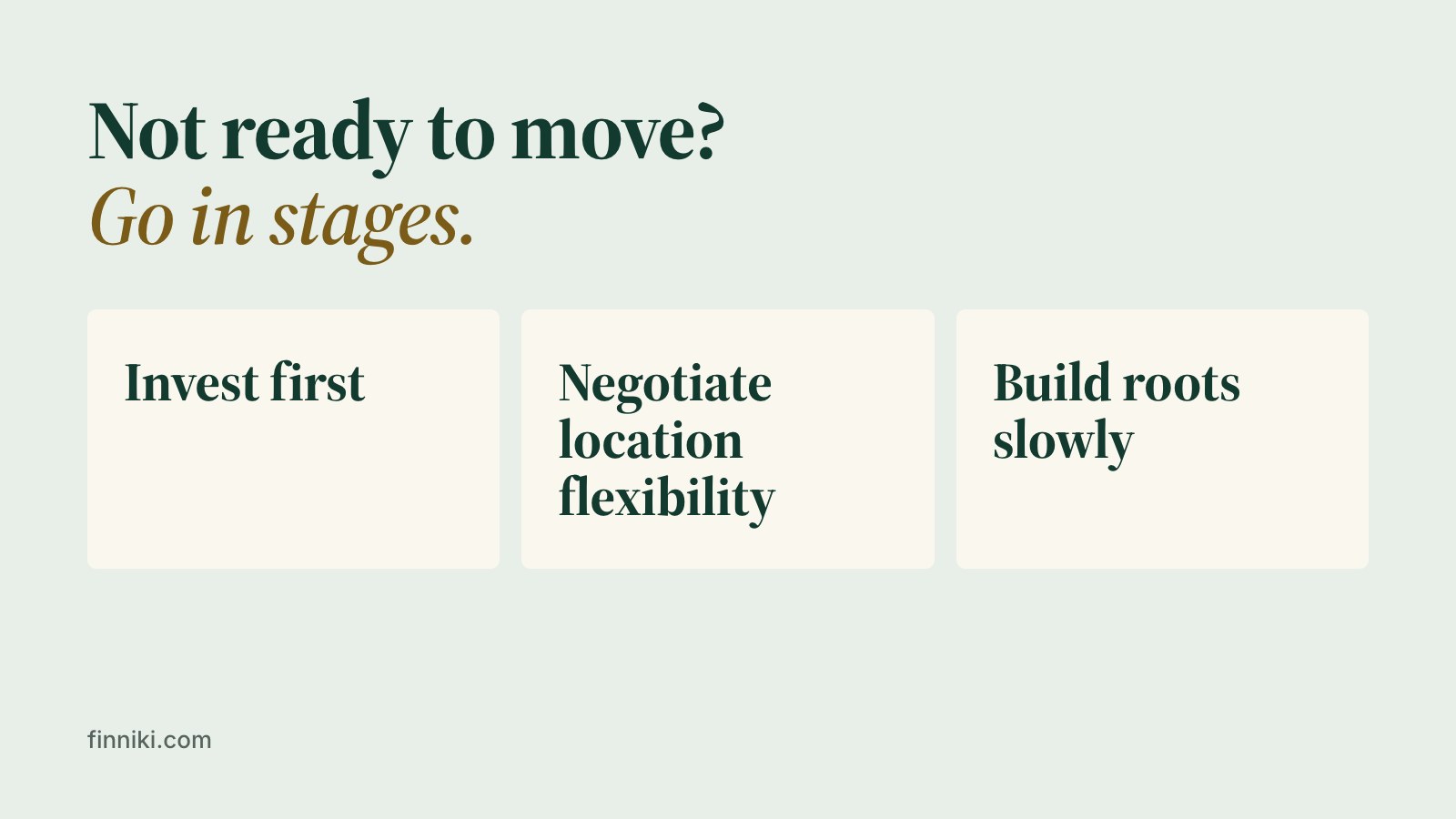
Most people land in the middle, and the middle is where the smartest play is. You do not have to resign on Monday or pull your children out of school, but you do have to stop letting inertia decide. In three steps:
- Invest first. Buy property in a high-growth tier-2 city such as Indore, Jaipur, Lucknow or Kochi. You start building equity whether or not you move.
- Negotiate location flexibility. If your role is hybrid or remote-capable, propose two weeks in the city and two weeks remote. It costs your employer little and helps it keep a good person. Ask.
- Build roots slowly. Spend school holidays in the city, and let your parents and children get to know it, so that moving later feels like coming home rather than starting over.
FAQs
Are tier-2 cities cheaper than metros?
Usually much cheaper: living costs can be close to half, with rent roughly halving and commuting costs shrinking, while salaries are typically 25 to 30% lower.
Which are the best tier-2 cities to move to in India?
Indore, Jaipur, Lucknow, Coimbatore, Kochi and Chandigarh are among the fastest-growing, with improving infrastructure, job markets and schools.
Have tier-2 property prices really grown faster than metros?
According to the CII–Knight Frank 2026 report, prices in 11 emerging cities rose about 63% between 2021 and 2026, against 42% in the top eight cities.
Is a tier-2 city good for an IT career?
Often, yes. Many IT, fintech, SaaS and consulting roles are location-independent, and companies such as Infosys and HCLTech now run centres in cities like Nagpur, Lucknow and Madurai.
What are the disadvantages of living in a tier-2 city?
Specialised healthcare is still better in metros, some careers need a metro presence, and the social world is smaller.
Should I buy property in a tier-2 city without moving there?
It can work as an investment if you check the developer, RERA registration and rental demand, and accept that property is slow to sell.
How do I decide whether to leave my metro?
Score yourself on the eight questions above: 13 to 16 suggests moving, 9 to 12 a hybrid approach, 5 to 8 investing without moving, and 0 to 4 staying put.
Make it a deliberate decision
For the first time, success in India is no longer tied to one postcode. Whether you move, invest or stay, decide on purpose. Book a session to run the numbers on your own move or property purchase, or find more episodes on FinNiki videos.
General information, not advice for your situation. Rules change; check your own numbers with a CA before you act.