Why Most Traders in India Lose Money (SEBI Data)
SEBI found 93% of F&O traders lost money over three years and 91% in FY25. Why trading fails most people, how workshops sell hope, and what to do instead.

Nikhil Varghese, CA · 5 min read

Quick answer: Most retail traders in India lose money. SEBI found that 93% of over a crore individual F&O traders lost money between FY22 and FY24, with an average loss of nearly ₹2 lakh each, and only about 1% made more than ₹1 lakh. In FY25, 91% still lost money. Over 70% of intraday traders lost money too, and the more often people traded, the worse they did. Trading fails most people not for lack of education but because it demands emotional control, time and patience that do not fit a working life. For building wealth, long-term investing through SIPs and index funds works far better.
Updated October 2026 with SEBI's FY25 study. SEBI has also tightened F&O rules since November 2024, with larger contract sizes and fewer weekly expiries.
 Watch the episode: Why 93% of traders lose money in India (SEBI data explained)
How many traders lose money in India?
The large majority, according to SEBI's own studies:
- F&O, FY22 to FY24: over 1 crore individuals traded futures and options; 93% lost money, with an average loss of nearly ₹2 lakh each after costs. Only about 1% made more than ₹1 lakh in profit.
- F&O, FY25: about 91% of individual traders lost money, with an average loss of about ₹1.1 lakh and total losses above ₹1 lakh crore.
- Intraday: SEBI found that more than 7 in 10 intraday traders lost money in a year, and those who traded more often did worse.
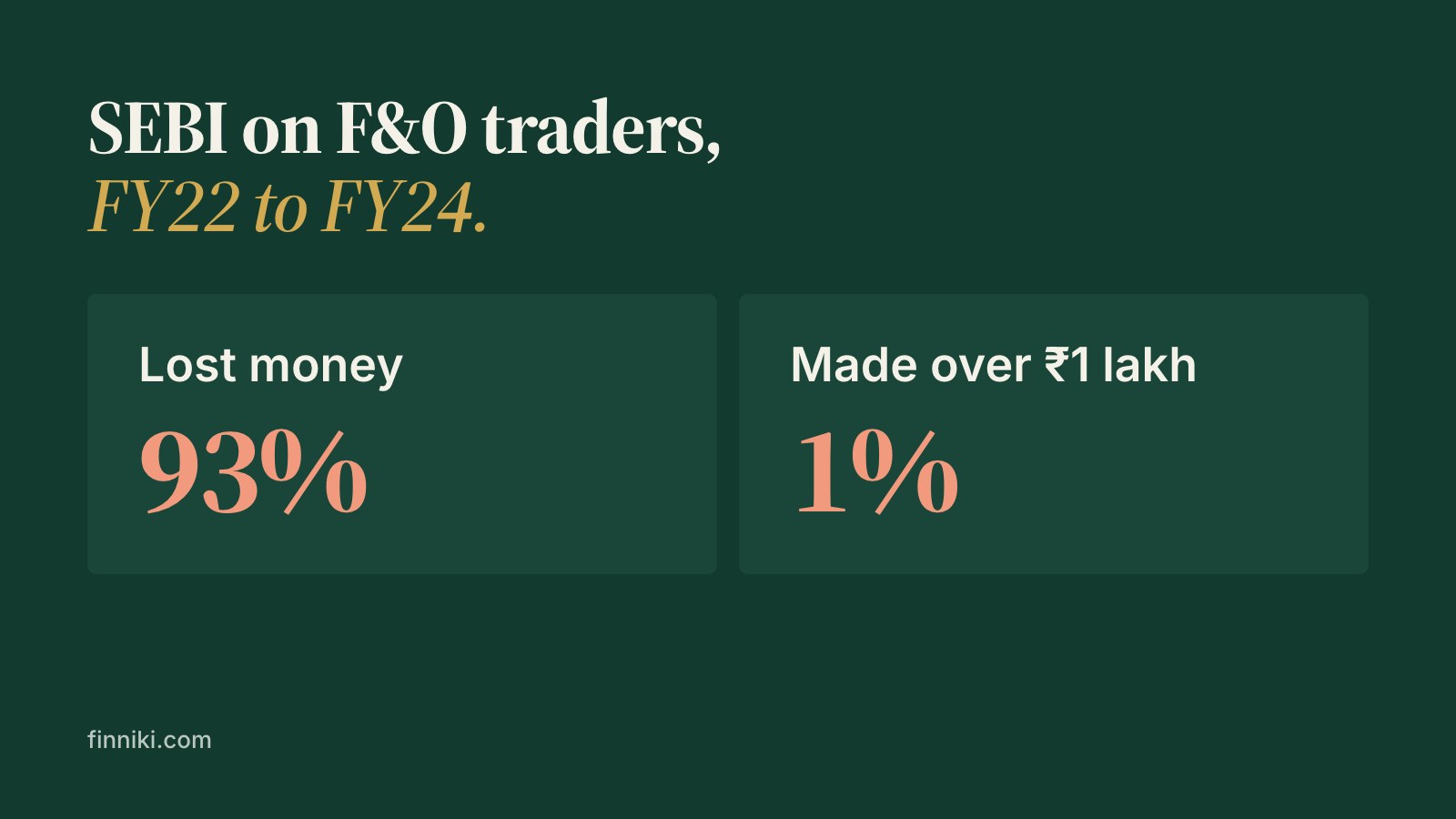
That last finding breaks the common belief that more activity means more opportunity. More trades mean more emotional decisions, more fatigue and more mistakes that compound.
Why do traders lose while investors gain in the same market?
Because of behaviour. A broad market index rises slowly and steadily over 10 to 15 years. A trader's results, exposed to the same market, look like a roller coaster: fear makes them sell too early, greed pulls them back in at the wrong moment, overconfidence follows a lucky win and panic follows three losses. The index works because it removes emotion; trading demands constant decisions, and each one tests your discipline. Markets reward patience and punish over-activity.
Why is the trading workshop industry booming?
Because hope sells. Profit screenshots, student testimonials and lifestyle images of cars and holidays are powerful marketing. What you do not see is the silent majority who paid the fee, tried the strategy and quietly left after losing. SEBI has acted: banning unregistered advisers, imposing fines and barring advertisements of trading returns without audited data. It even found some people promising to turn ₹25,000 into ₹25 lakh had lost heavily in their own accounts. But for every ban, a new channel or reel appears; marketing adapts faster than enforcement.
Why does trading fail most people?
Because it demands emotional control, time and statistical patience that do not fit most working lives. A salaried professional trading between meetings is competing with full-time professionals, millisecond algorithms and institutions with research teams and huge capital. No weekend workshop changes that. And every hour spent watching candles is an hour not spent building skills, raising income or compounding real investments; even small losses consume mental energy.
What does this look like in real life?
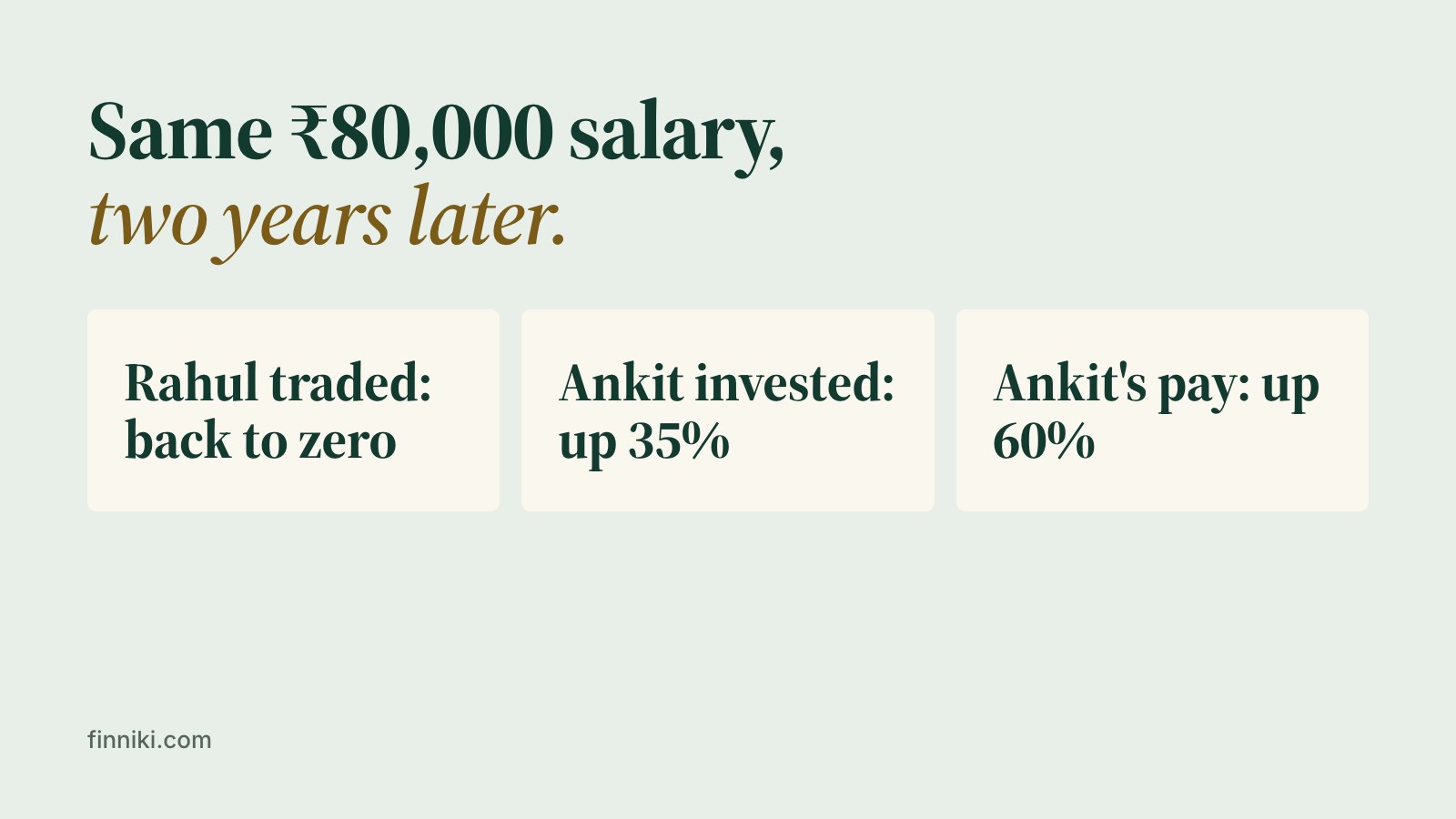
Take Rahul and Ankit, both 28 and earning ₹80,000 a month, each with ₹2 lakh:
- Rahul pays ₹15,000 for a workshop and trades the ₹2 lakh, watching charts at work and at lunch. Some months up, some down; his mood follows the market. After two years and 400+ hours, he is roughly back where he started, minus fees, charges and two years of stress.
- Ankit puts the ₹2 lakh in index funds, runs a ₹20,000 monthly SIP and focuses on his career. After two years his investments are up about 35%, his salary is up 60% and his SIP has doubled, and he is not stressed about money.
Why is options trading the most dangerous?
Because leverage magnifies mistakes as well as gains. Options promise big returns from small capital, but they need probability thinking, strict position sizing and emotional discipline, not tips from strangers. One bad expiry can wipe out months of effort. Regulation can tighten the rules; it cannot fix psychology.
What should you do if you still want to trade?
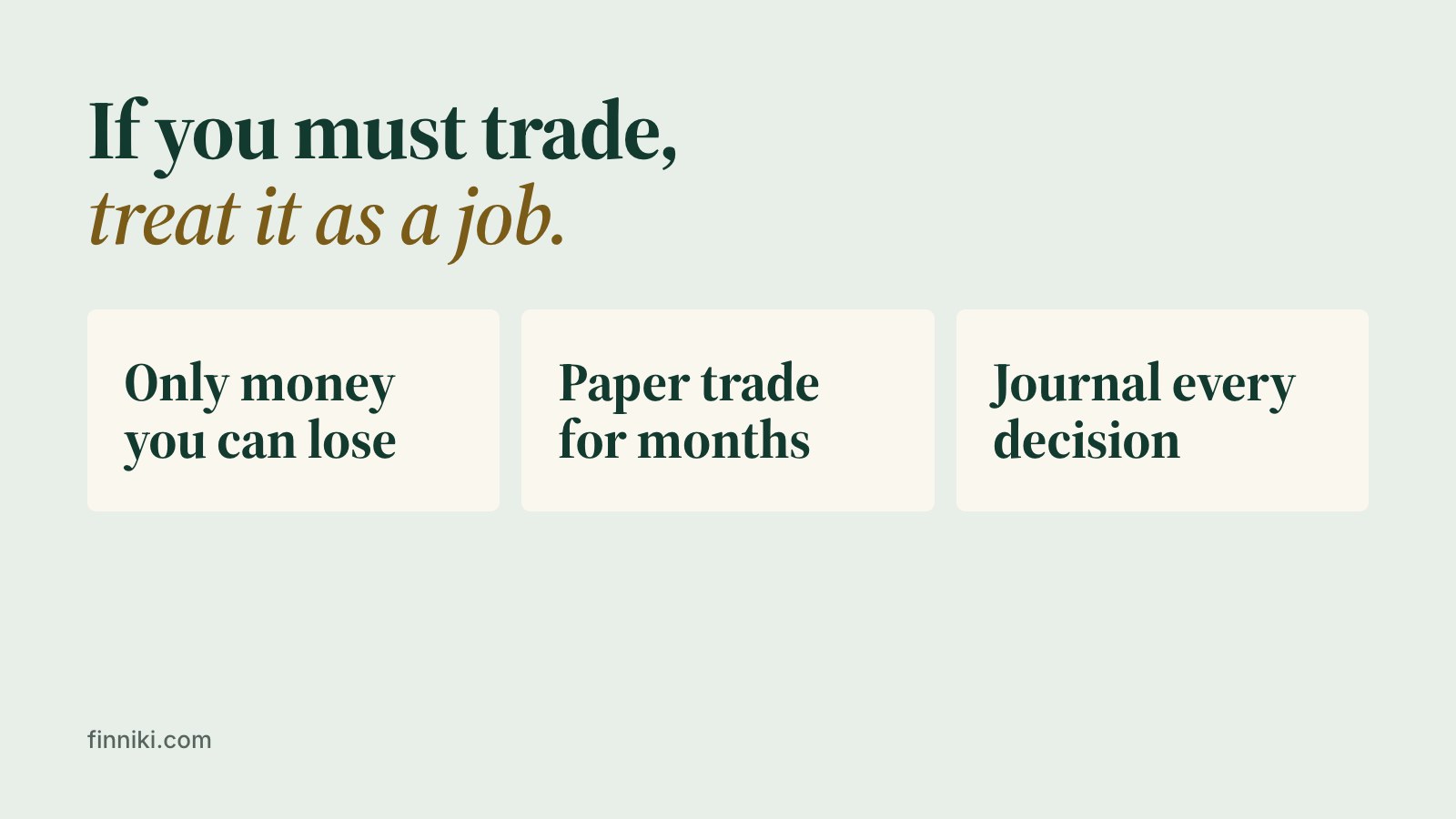
Treat it as a profession, not a hobby or a shortcut:
- Use only capital you can afford to lose completely.
- Put risk management before returns.
- Paper trade for months before using real money.
- Keep a journal of every decision.
- Accept that many mediocre trades beat one lucky win, and that doing nothing when there is no opportunity is a skill.
If you cannot commit to that, the odds are not just unfavourable but destructive. For wealth creation, investing is the better path for most people: it respects time, does not require you to be right constantly, and compounds in the background while you build your career and live your life.
FAQs
What percentage of traders lose money in India?
About 93% of individual F&O traders lost money from FY22 to FY24, and about 91% in FY25, according to SEBI.
Is intraday trading profitable?
For most people, no. SEBI found more than 7 in 10 intraday traders lost money, and frequent traders did worse.
Are trading courses worth it?
Rarely. SEBI has found that some people selling trading courses were themselves losing money, and no course changes the odds against retail traders.
Why do F&O traders lose money?
Leverage magnifies mistakes, costs add up, and retail traders compete against professionals and algorithms while making emotional decisions.
Should I trade or invest?
For most people, invest: SIPs in diversified or index funds compound steadily without constant decisions.
How can I trade more safely?
Use only money you can afford to lose, paper trade first, size positions strictly and keep a trading journal.
Build wealth the patient way
Most people are better served by a plan than a trading screen. Book a session to set up an investing plan, or find more episodes on FinNiki videos.
General information, not advice for your situation. Rules change; check your own numbers with a CA before you act.