Can the US Reset Its $40 Trillion Debt With Crypto?
The US now backs stablecoins and holds a Bitcoin reserve. Why that cannot erase its debt, how it can keep the dollar strong, and what it means for you.

Nikhil Varghese, CA · 5 min read

Quick answer: No, the US cannot wipe out its debt, now about $40 trillion, by switching to crypto. Debt is owed whether it is recorded on paper or on a blockchain, and restructuring it would need Congress and the agreement of creditors. What the US is doing is subtler: it has brought dollar stablecoins under regulation, requiring them to be backed by dollars and US Treasury bills, and set up a Strategic Bitcoin Reserve. If dollar stablecoins become the default for global digital payments, that creates new demand for US debt and keeps the dollar dominant. For investors: crypto is being absorbed into the system, not overthrowing it, so treat it as a small satellite holding at most.
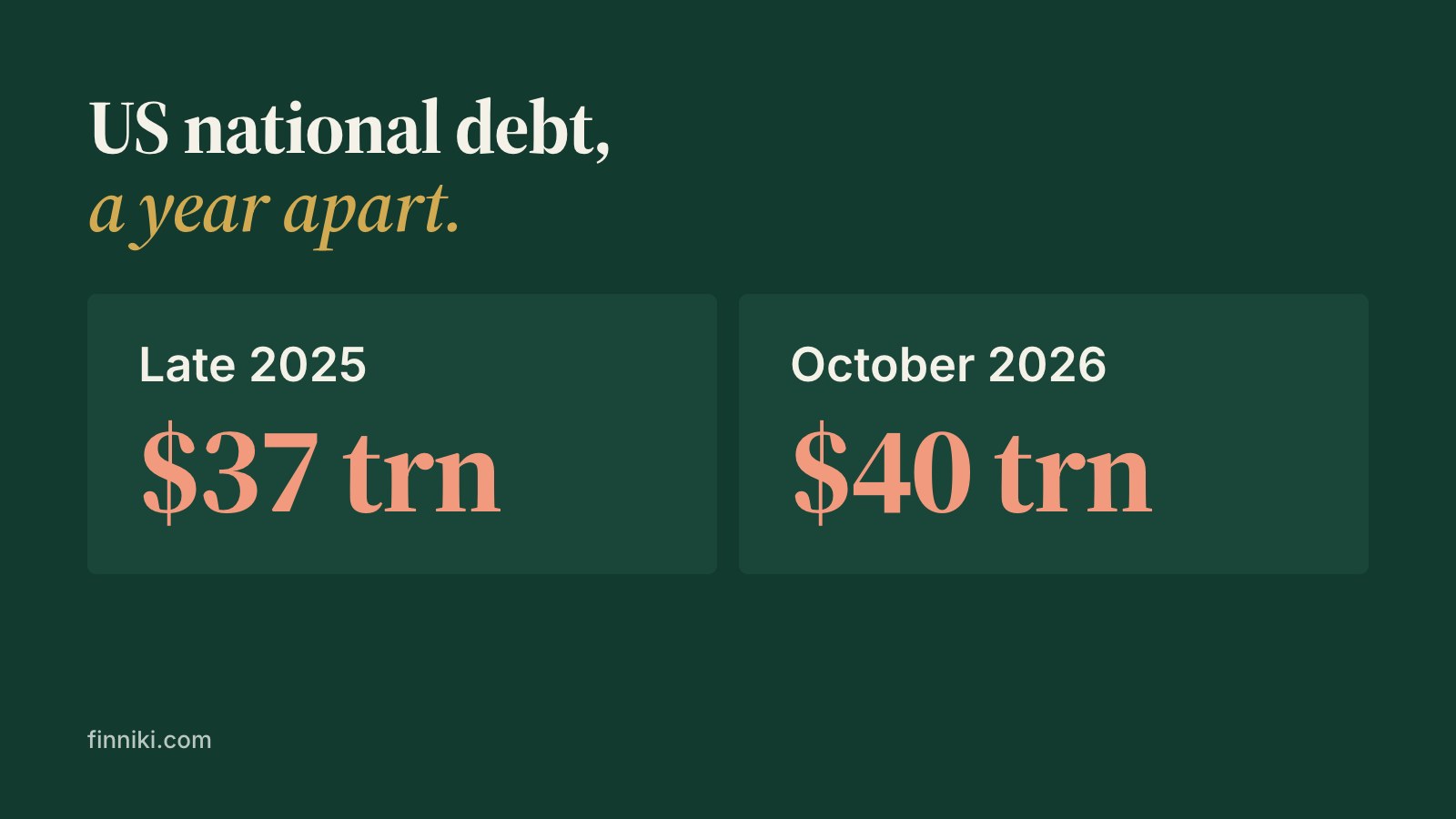
Updated October 2026. The episode cited $37 trillion of US debt; by October 2026 it had passed $40 trillion. China's holdings of US Treasuries are now about $633 billion, well under the "over a trillion" the episode mentioned.
 Watch the episode: Is the US using crypto to reset its $37 trillion debt?
Is the US planning a debt reset through crypto?
That is the theory, and it does not hold up. Some commentators argue that by controlling dollar-backed stablecoins and holding large crypto reserves, the US could restructure or dilute its debt. But a reset implies wiping the slate clean, and that is not happening. What is happening is integration: crypto is being pulled inside the US financial system.
What has the US actually done on crypto?
Until 2024, US regulators treated crypto with suspicion, suing major exchanges. In 2025 the approach reversed:
- The GENIUS Act (July 2025) created the first federal rules for payment stablecoins: only approved issuers may issue them, each must be backed one-to-one by cash and short-term US Treasuries, issuers face bank-style supervision and audits, and stablecoins cannot pay interest to holders. Its rules are being phased in.
- The Strategic Bitcoin Reserve (March 2025) holds bitcoin the government already owned, mostly seized in legal cases, and allows additions only in ways that do not cost taxpayers.
- Official policy now aims to make the US the global leader in digital finance.
Stablecoins already hold well over $100 billion of US Treasuries as backing, and analysts expect that to grow as regulated stablecoins spread.
Why can't crypto erase US debt?
Because technology changes how money moves, not who owes it. Debt is like gravity: whether you measure it in kilograms or pounds, it pulls the same. Restructuring a country's debt is a legal process involving Congress, the Treasury and, above all, the creditors who hold the bonds, including Japan and China. They will not forgive anything because the US went digital. And the new rules make manipulation harder, not easier: stablecoins must hold full reserves and are audited.
So why do people believe the theory?
Because while crypto cannot delete America's debt, it can strengthen America's position. Debt becomes a crisis only when people stop trusting that you can manage it; Japan's debt is about 2.5 times its GDP, yet the yen has not collapsed, because of trust and control. Now imagine dollar stablecoins become the default for international payments:
- Every stablecoin must hold dollar assets as backing.
- Issuers buy US Treasury bills to provide that backing.
- Global demand for US debt rises.

The US does not reduce its debt, but makes it more essential to global commerce, like being the only restaurant in town. A bitcoin reserve that rises in value works like a digital Fort Knox. The real strategy is not deleting debt but staying dominant despite it.
How could this play out?
Three scenarios:
- A. Stronger dominance (most likely). Dollar stablecoins become standard for digital payments, raising demand for dollars and Treasuries; the US keeps its lead without restructuring anything.
- B. Partial restructuring (unlikely). Any hint of restructuring could trigger a confidence crisis and market turmoil, and the political backlash makes it very risky.
- C. Global resistance. Other countries build alternatives, such as central bank digital currencies, China's digital yuan, a digital euro or gold-backed tokens, to bypass the dollar. Building trust in them would take years.
What does this mean for investors?
- Crypto is going mainstream, but inside the system. Instead of replacing banks, it is being absorbed by them; digital dollars may sit in your bank app next to savings.
- The wild returns are probably over. Regulation brings stability and less volatility.
- Government adoption does not guarantee profits, just as government use of the internet did not make every dot-com stock a winner.
- Treat crypto as a satellite, not the core: at most 5 to 10% of a portfolio, with equities, bonds, property and mutual funds doing the real work.

What is India's position on crypto?
Cautious. The RBI sees private crypto as a risk and is promoting its own central bank digital currency, the digital rupee (e₹). India taxes gains on crypto and other virtual digital assets at a flat 30%, with 1% TDS on transfers and no set-off of losses against other income. If the US pushes digital dollars, expect India to accelerate the digital rupee while keeping crypto tightly controlled. For Indian investors, keep crypto small and tactical, with money you can afford to lose, and build wealth through SIPs, mutual funds and regulated investments.
Is digital money progress or dependency?
Both questions are worth asking. If your salary, EMIs and everyday payments ran through stablecoins backed by US debt and regulated by US law, you would gain convenience but tie yourself more closely to a system controlled from abroad. Crypto has not overthrown the system; it has been given a job, a rulebook and an ID badge inside it.
FAQs
How much is the US national debt?
About $40 trillion in October 2026, up from about $37 trillion a year earlier.
Can the US wipe out its debt using crypto?
No. Debt has to be repaid or formally restructured with creditors, whatever form money takes.
What is the GENIUS Act?
A US law passed in July 2025 that regulates payment stablecoins, requiring approved issuers and full one-to-one backing with cash and short-term Treasuries.
What is the US Strategic Bitcoin Reserve?
A reserve, created in March 2025, of bitcoin the US government owns, mostly from seizures, with additions allowed only if they cost taxpayers nothing.
How are stablecoins linked to US debt?
Regulated dollar stablecoins must hold reserves in cash and short-term US Treasuries, so their growth creates demand for US government debt.
How is crypto taxed in India?
Gains are taxed at 30%, with 1% TDS on transfers, and losses cannot be set off against other income.
Keep the core of your money boring
Big shifts in global money take years. Book a session to make sure your portfolio's core is solid and any crypto is sized sensibly, or find more episodes on FinNiki videos.
General information, not advice for your situation. Rules change; check your own numbers with a CA before you act.