Why Indians Move to Canada & New Zealand on Equal Pay
₹15 lakh in India buys a lifestyle like CAD 50,000 abroad, so why move? Predictable pay, costs, healthcare and taxes, and who thrives or struggles.

Nikhil Varghese, CA · 6 min read

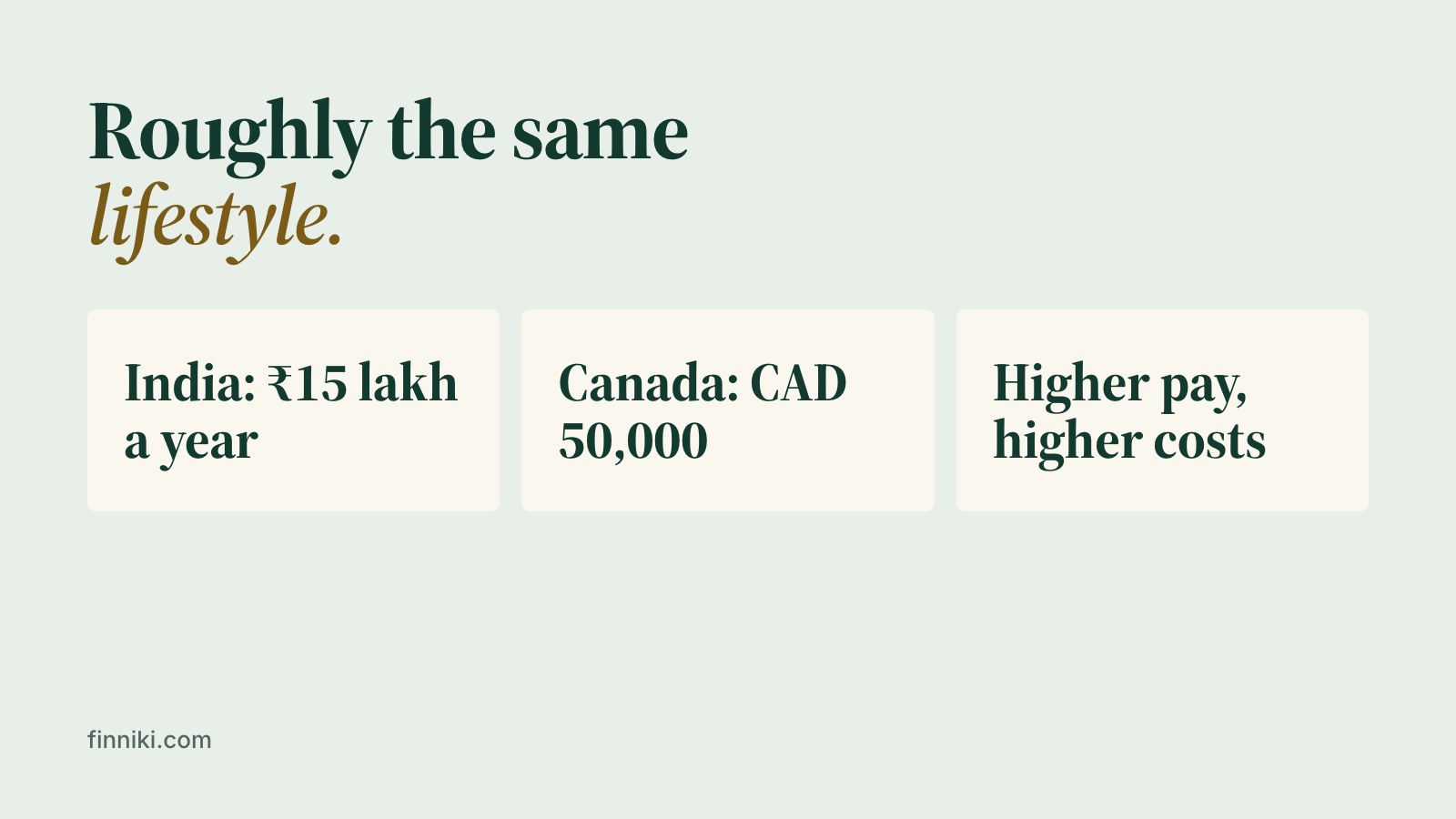
Quick answer: A ₹15 lakh salary in India buys roughly the lifestyle of a CAD 50,000 salary in Canada, so Indians do not move for comfort alone. They move for predictability: steadier pay growth, fixed and transparent costs, public healthcare, and systems that work without negotiation. The catch: higher salaries do not mean higher savings (housing is several times dearer and taxes are high), early jobs may be below your level, and you trade family closeness for distance, long winters or isolation. Canada suits long-term career builders; New Zealand suits people who prize balance.
Updated October 2026. Canada has been cutting its immigration targets and temporary-resident numbers since 2024, so check current pathways before planning. The India–New Zealand free trade agreement was signed in April 2026 and came into force on 20 October 2026, with a new temporary employment visa route for up to 5,000 skilled Indians.
 Watch the episode: Same salary, better life? Why Indians choose Canada and New Zealand
Why do Indians move abroad if India pays the same?
Because the problem is not income but unpredictability. Many well-paid people in India still feel their finances and lives are unstable: hard work should bring peace of mind, not endless negotiation with systems that do not work. Canada and New Zealand are best understood not as destinations but as systems, and what people buy by moving is how those systems behave.
How does pay compare between India, Canada and New Zealand?
On raw numbers the gap looks huge, but purchasing power closes most of it. A ₹15 lakh salary in India delivers about the same lifestyle as CAD 50,000 abroad: decent housing, basic comforts, occasional travel. Typical salaries run around CAD 65,000 to 100,000 in Canada and NZ$48,000 to 60,000 or more in New Zealand.
The real difference is how pay grows. In India it often rises fast early, then flattens as promotions slow and raises barely beat inflation. In Canada and New Zealand it grows more slowly but steadily, with experience and skill rather than constant job-hopping. You may not feel rich; you feel stable.
Who do Canada and New Zealand want?
People who can contribute immediately. Both have ageing populations and labour shortages; Canada's job vacancies peaked near a million in 2022. Neither rewards degrees, college names or titles for their own sake; they reward usefulness and problem-solving.
- Canada has drawn software developers, engineers and healthcare professionals in particular.
- New Zealand prioritises nurses and aged-care workers, civil engineers, accountants, IT developers and skilled trades.
That is why many migrants start in jobs below their level: the system rewards skills that can be used now. Align with real shortages and the doors open.
Why don't higher salaries abroad mean higher savings?
Because costs are fixed, automated and unavoidable. In India many costs are flexible and negotiable; abroad they are not. Housing is the biggest hit, several times dearer than in India, food costs more, and transport, utilities and insurance lock in. A single person spending about ₹47,000 a month in India needs roughly CAD 2,800 to 3,000 a month in Canada for a similar life.
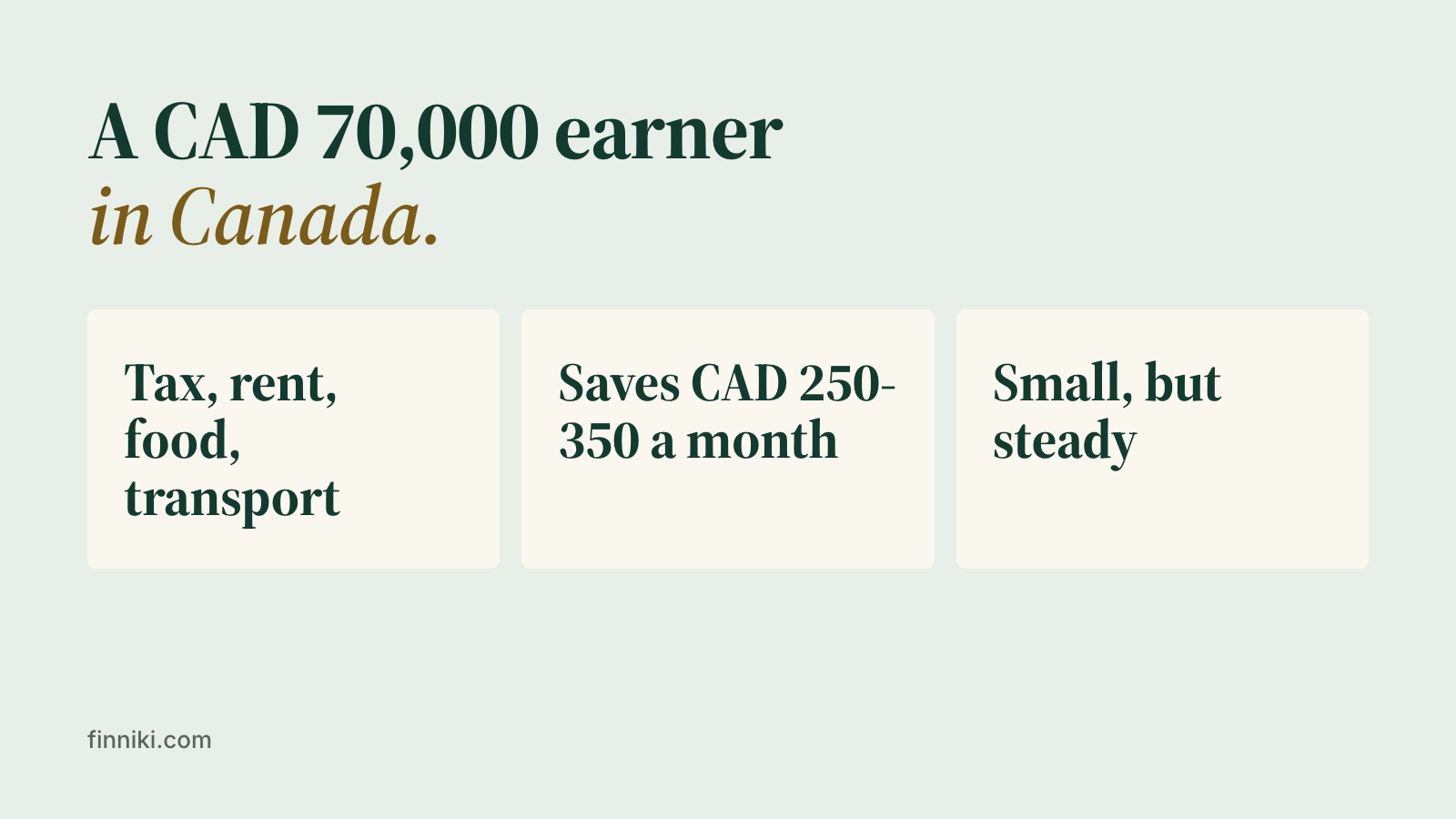
Take Ajay, a software professional earning CAD 70,000 in Canada. After tax, rent, food, transport, utilities, phone and insurance, he saves about CAD 250 to 350 a month. Disappointing on paper, but consistent, automatic and repeatable, and that predictability matters more than occasional spikes.
What is healthcare like in Canada and New Zealand?
- Canada: hospital care, emergencies and doctor visits are publicly covered (some provinces impose a waiting period of up to three months for newcomers). There is no billing counter after an emergency. Dental, vision and prescriptions are not fully covered, but employer insurance usually fills the gap.
- New Zealand: a public-private mix. Public care exists, but capacity limits push many people towards private insurance, whose premiums have been rising fast.
Either way, healthcare decisions involve less negotiation and fewer financial shocks than many Indians are used to. Both countries also rank among the world's safer and less corrupt, with transport, policing and regulation that are sometimes slow but reliable.
Are taxes higher in Canada and New Zealand?
Yes, and they buy more. In Canada, combined federal and provincial income tax for middle incomes typically takes a quarter to a third of income, plus sales taxes of 5 to 15% depending on the province. New Zealand's income tax ranges from 10.5% to 39%, with GST of 15%.
In return: public healthcare, unemployment benefits, child support, public pensions, working infrastructure and digital government. In India, many people pay tax and still budget separately for private healthcare, schooling, security and workarounds. Abroad, higher taxes replace many of those private costs, and that reliability is the real dividend.
What is daily life like?
Quality of life is a side effect of systems that work. New Zealand runs at a slower social rhythm, with work-life balance as the default and less admiration for overwork. Canada offers scale: large Indian communities in Toronto and Vancouver, cultural institutions, community networks and a wide range of industries and career paths. In India, balance often depends on negotiation, privilege or seniority rather than design.
Who struggles after moving?
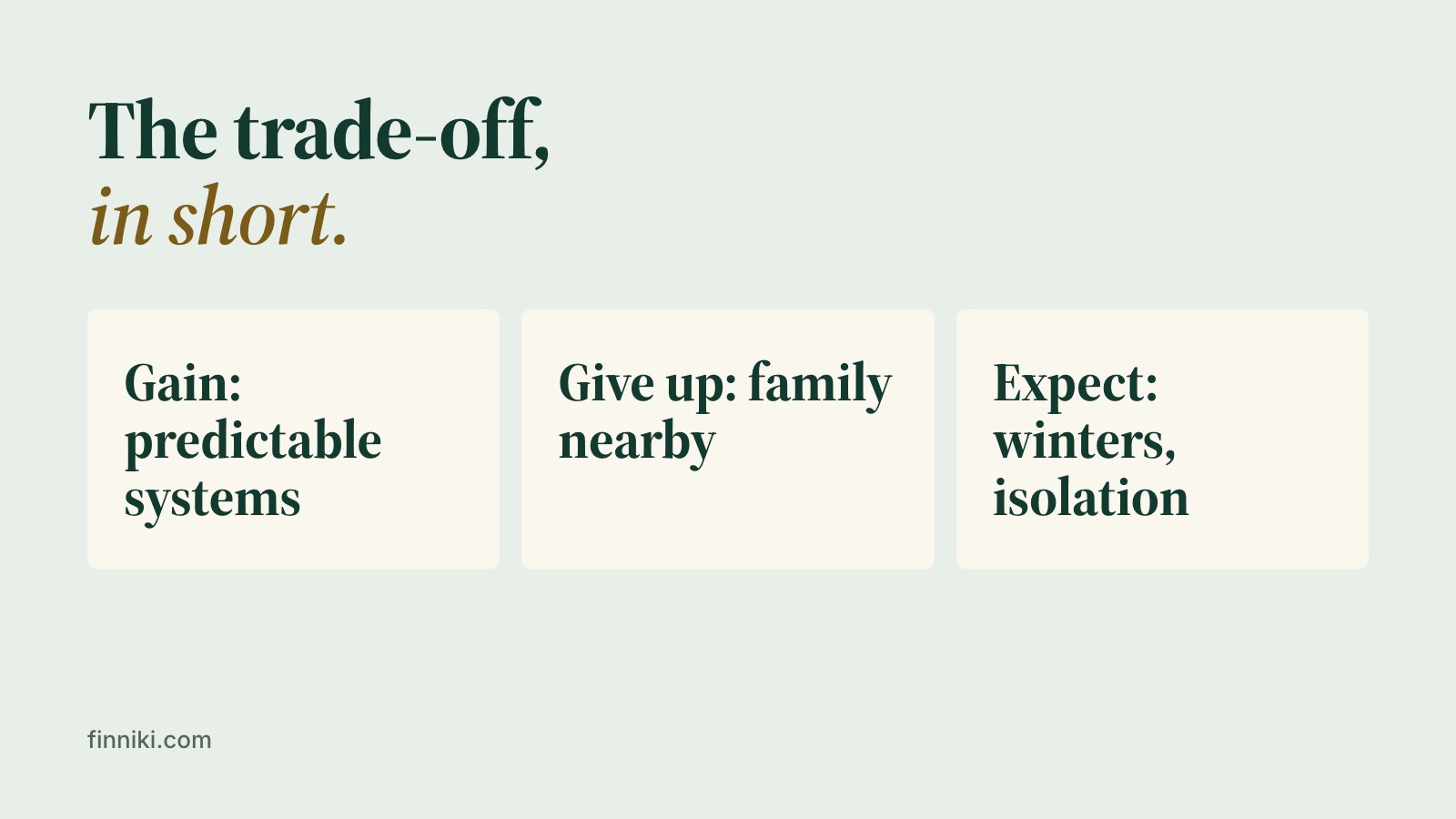
People who need daily family support, struggle with early isolation, or tie their identity to status and hierarchy. Canada's long, hard winters affect mood and social life more than newcomers expect. New Zealand's distance from India makes visits costly and infrequent, and worry about ageing parents is constant. Building a social circle takes patience. None of this is failure; it is the trade-off.
So why do people move and stay?
Because the system keeps its promises: if you work, you are paid; if you follow the rules, outcomes are predictable; if you fall sick, treatment does not cost your life savings. Canada rewards long-term career builders who value scale; New Zealand rewards those who value balance. Neither promises wealth; both offer stability with dignity. Comfort is not why people move; what comes after comfort is.
FAQs
Is a ₹15 lakh salary in India equal to living abroad?
In purchasing-power terms it is roughly like CAD 50,000 in Canada: decent housing, basic comforts and occasional travel.
How much can an Indian save in Canada?
Less than expected at first. A CAD 70,000 earner might save CAD 250 to 350 a month after tax and living costs.
Is healthcare free in Canada?
Hospital and doctor care is publicly covered, though some provinces have a waiting period for newcomers, and dental, vision and prescriptions usually need private or employer cover.
What is the GST in New Zealand and Canada?
New Zealand's GST is 15%. Canada's federal GST is 5%, and combined sales taxes range up to 15% depending on the province.
What changed for Indians moving to New Zealand in 2026?
The India–New Zealand free trade agreement came into force on 20 October 2026, including a temporary employment visa route for up to 5,000 skilled Indians.
Who should not move abroad?
People who need close family support, find isolation hard, or value status and hierarchy over predictability.
Plan a move with the numbers
Moving abroad changes your taxes, accounts and residency status in India too. Book a session to plan the financial side of your move, or use the NRI status calculator.
General information, not advice for your situation. Rules change; check your own numbers with a CA before you act.