Why Saving Alone Won't Make You Wealthy Anymore
FDs paid 8 to 12% for our parents; today about 6 to 7%, less after tax. Why saving alone no longer builds wealth, and why not investing is now the risk.

Nikhil Varghese, CA · 5 min read
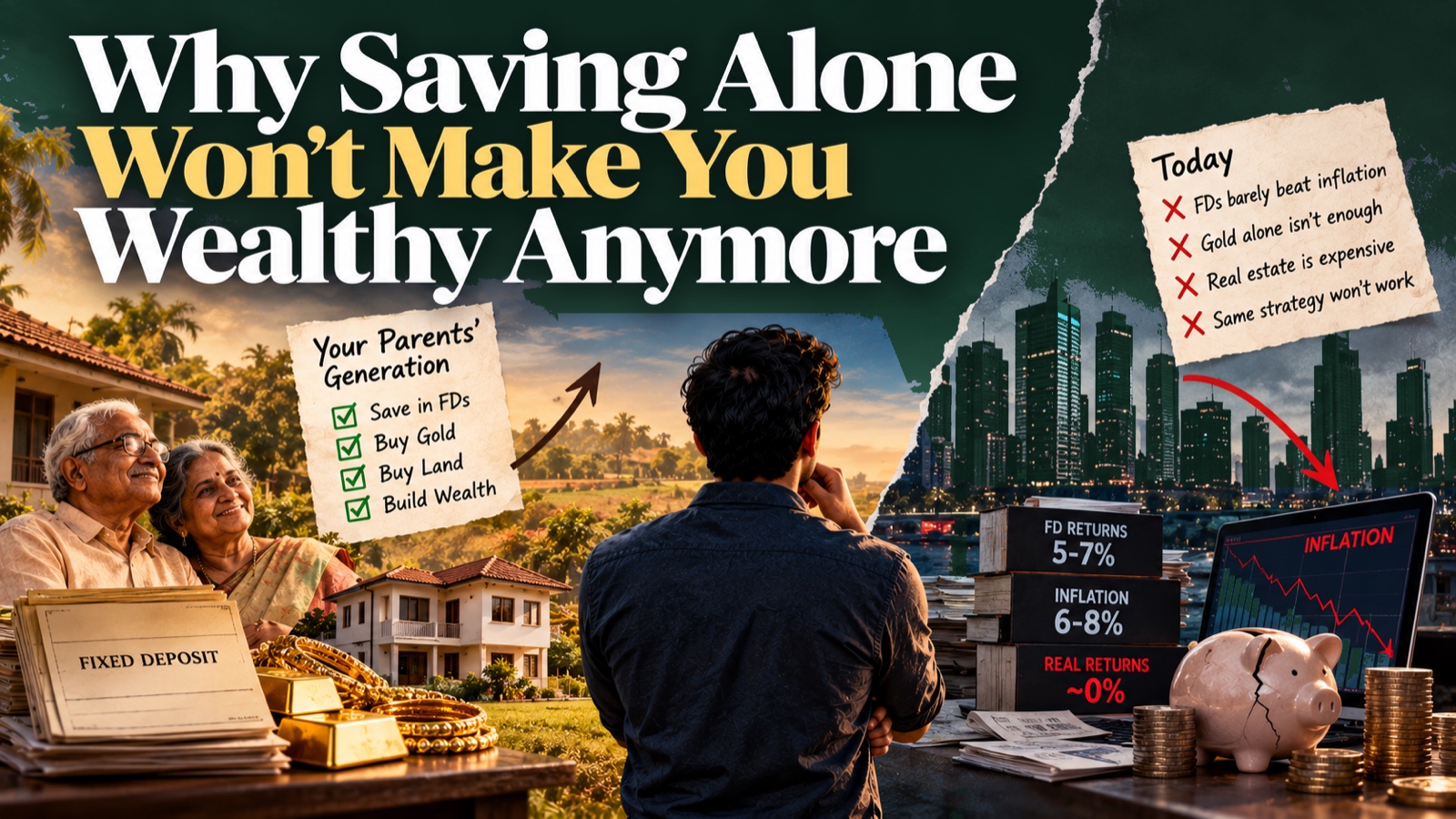
Quick answer: Saving alone built wealth for the previous generation because fixed deposits paid 8 to 12% while inflation ran lower, so money in the bank grew in real terms. Today most bank FDs pay about 6 to 7%, and after tax at the 30% slab that is closer to 4.5%, while the inflation households actually feel (school fees, healthcare, rent) often runs higher. Gold is now mainly a hedge, and property is bought after decades of price rises. Saving keeps you safe; investing is what moves you forward. Not investing has become a risk in itself.
Updated October 2026 with current FD rates.
 Watch the episode: Your parents saved money. Why that won't make you wealthy anymore
Why did saving make our parents wealthy?
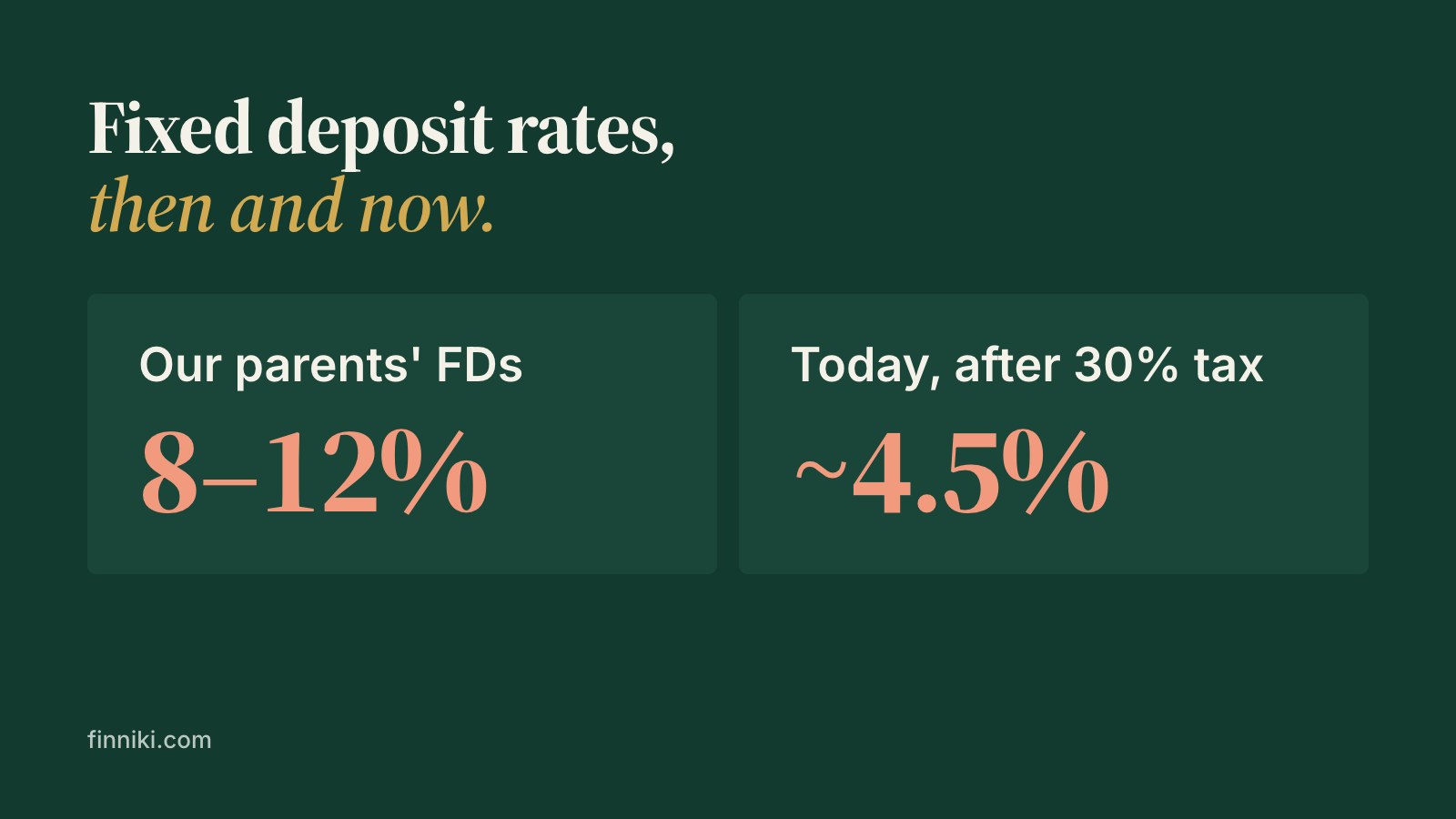
Because interest rates beat inflation. In the 1980s and 1990s, India was a high-interest, high-inflation economy, but rates were higher still: fixed deposits regularly paid 8 to 12%, and even savings accounts paid meaningful interest. With inflation at 6 to 7% and an FD at 9 to 10%, savers beat inflation comfortably without touching the stock market. Many retirees lived on FD interest alone without worrying about losing money. Saving worked because growth was built into it.
Why doesn't saving work the same way today?
Because the gap has flipped. Most bank FDs now pay about 6 to 7%. For someone in the 30% tax slab, a 6.5% FD earns about 4.5% after tax. Meanwhile the inflation you actually feel, in education, healthcare, rent and everyday living, often runs higher than the official figure. Money parked in a bank today is not growing; it is quietly losing value. The same action that once built wealth now barely preserves it.
Why didn't our parents invest in the stock market?
Because markets were hard to reach. There were no investing apps, no SIPs and no low-cost index funds; information was scarce, execution was complicated and the stock market looked like a place for traders and speculators. Bank deposits, gold and land were the most practical and transparent options. That was not foolishness; it was the environment.
Why do South Indian families prefer gold, FDs and land?
History and access. In Tamil Nadu, Karnataka, Kerala and Andhra Pradesh, wealth was traditionally built through fixed deposits, gold and real estate, and many families still see the stock market as speculation rather than ownership. Gold was savings, security and social capital in one. Land was affordable and cities had not yet expanded, so early buyers gained enormously.
Mumbai, by contrast, grew up around stock exchanges, brokers and financial institutions. Exposure created familiarity, and familiarity created participation, so equity culture spread faster there and in parts of the North. Again, this was context, not ignorance.
Is gold still a good long-term investment?
As a hedge, yes; as a wealth builder, less so. Gold has had a strong run since the Russia–Ukraine war, as central banks in China, India, Turkey and elsewhere bought heavily after watching Russia's reserves frozen by sanctions. But that rally is driven by geopolitical fear. When the world stabilises, gold tends to flatten out: it does not compound and pays no income. Treat it as crisis insurance, and keep it to about 10 to 15% of your portfolio; much more than that is overexposure. For more, see should you buy gold now.
Is real estate still a good way to build wealth?
Not the way it was. Entry prices have risen dramatically, rental yields are low and often struggle to beat inflation, property is hard to sell quickly and transaction costs are high. Most importantly, today's buyers arrive after decades of appreciation have already happened. Our parents bought land before cities expanded; we are buying after prices have absorbed that growth. The asset has not changed; the point at which we buy it has.
How much difference does the interest rate make?
A lot, over 20 years. Take ₹10,000 a month saved for 20 years, ₹24 lakh in total:
- At 9%, as FDs paid in the 1990s, it grows to about ₹67 lakh.
- At 5%, it grows to about ₹41 lakh.
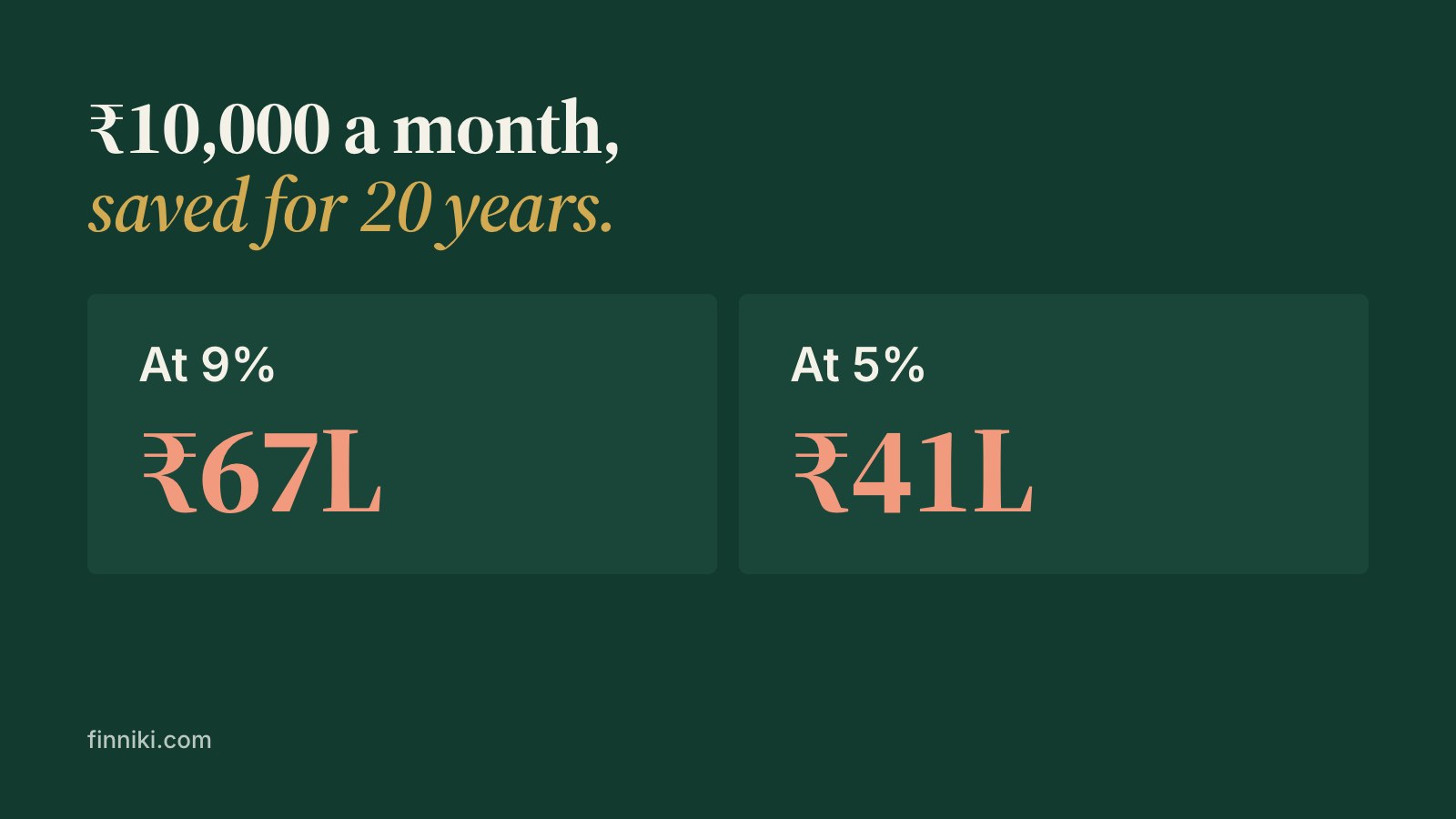
And at 6% inflation, prices roughly triple over those 20 years. Your bank balance looks healthier, but your cost of living races ahead. That gap between what your money shows and what it can buy is the illusion many savers live in.
What is the biggest money mistake people make today?
Copying their parents' results without understanding the conditions that produced them. Saving worked because:
- Interest rates were higher, so simple savings earned real returns.
- Assets were cheaper, so land, gold and homes could be bought early.
- Life expectancy was shorter, so savings had to last fewer years.
- Healthcare and education were cheaper, taking a smaller share of income.
Today rates are lower, assets are expensive and living costs have risen sharply. Same action, very different outcome.
Why is not investing now the bigger risk?
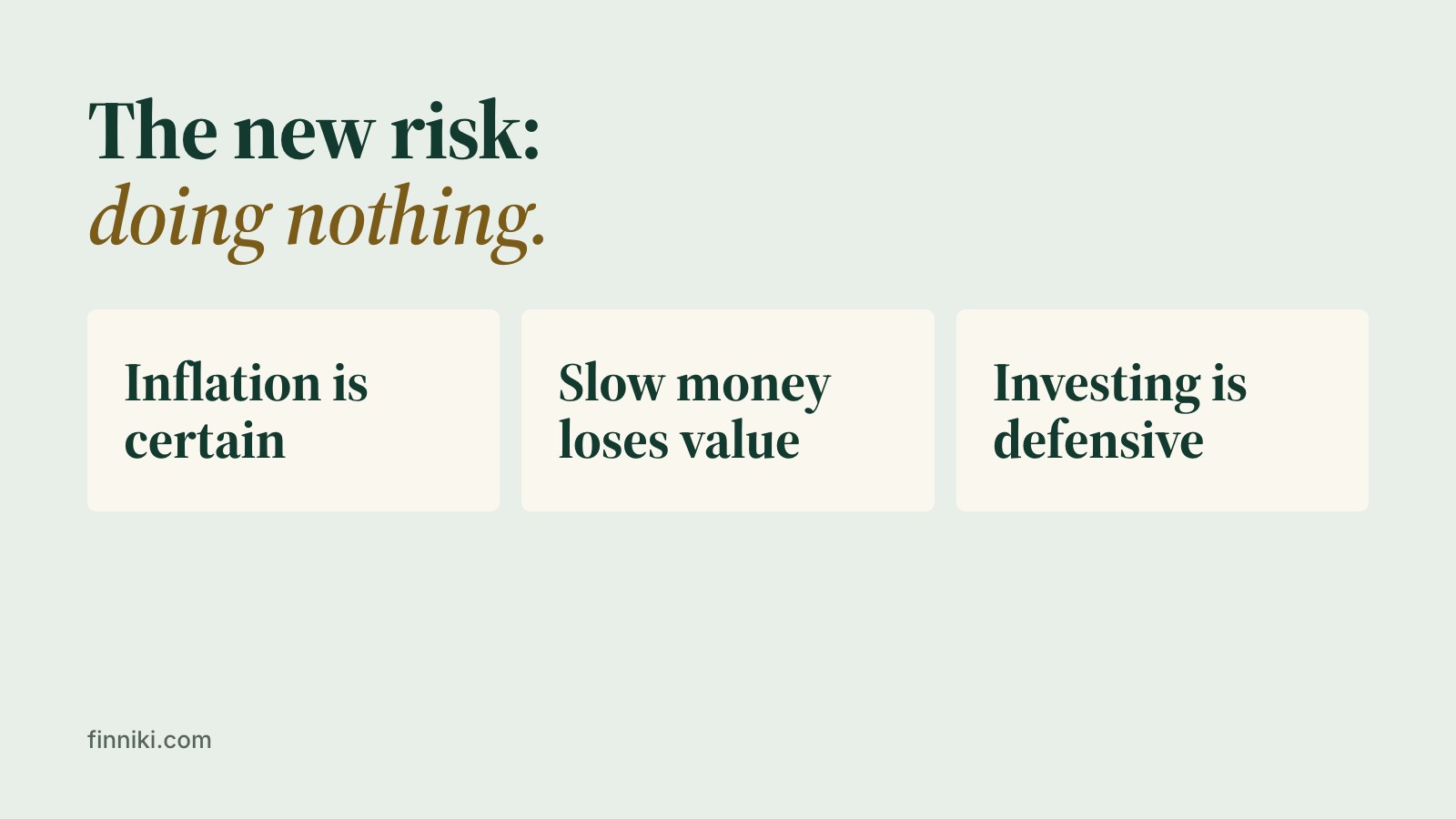
Because inflation is a certainty, not a possibility. Stock markets used to be seen as the risky choice and bank deposits as the safe one. But when your money grows slower than inflation, it loses purchasing power quietly, with no alert and no warning. Doing nothing with your money is now an active decision: a decision to accept erosion. With longer lives, costlier healthcare and education, and peak earnings coming later, investing has shifted from an aggressive move to a defensive one.
Why are more Indians investing in equity now?
Because the numbers demand it. Equity participation is rising, including in the South, not because people suddenly love risk but because access and understanding have improved. SIPs spread investments over time and make volatility easier to live with; mutual funds make diversification simple; information is transparent and easy to find. Young earners are realising that salary growth alone is not enough and that traditional assets no longer build wealth the way they did. The shift is not emotional or fashionable; it is mathematical.
FAQs
Why is saving money not enough anymore?
Because bank interest, especially after tax, often fails to keep up with the inflation households actually face, so savings lose purchasing power over time.
Are fixed deposits still worth it?
For emergency funds and short-term goals, yes. As a long-term wealth builder, an FD paying 6 to 7% before tax rarely beats real-life inflation.
How much gold should I hold?
Around 10 to 15% of your portfolio, as a hedge against crises rather than a growth engine.
Is real estate still a good investment in India?
It can be, but entry prices are high, rental yields are low and property is illiquid, so it no longer builds wealth as reliably as it did for earlier generations.
Why did FDs work for our parents?
Interest rates of 8 to 12% were higher than inflation, so money in the bank grew in real terms.
Is investing in the stock market risky?
It is volatile in the short term, but over long periods not investing carries the bigger risk: certain erosion by inflation.
Respect the past, change the strategy
Saving keeps you safe; investing lets you move forward. Book a session to build a plan that beats inflation, or find more episodes on FinNiki videos.
General information, not advice for your situation. Rules change; check your own numbers with a CA before you act.