401(k) When Moving Back to India: Options & Tax (2026)
Leaving a 401(k) untouched can cost the most. Five options, the RNOR window, estate tax and Form 40, with a worked ₹2 crore example for H-1B returnees.

Nikhil Varghese, CA · 10 min read

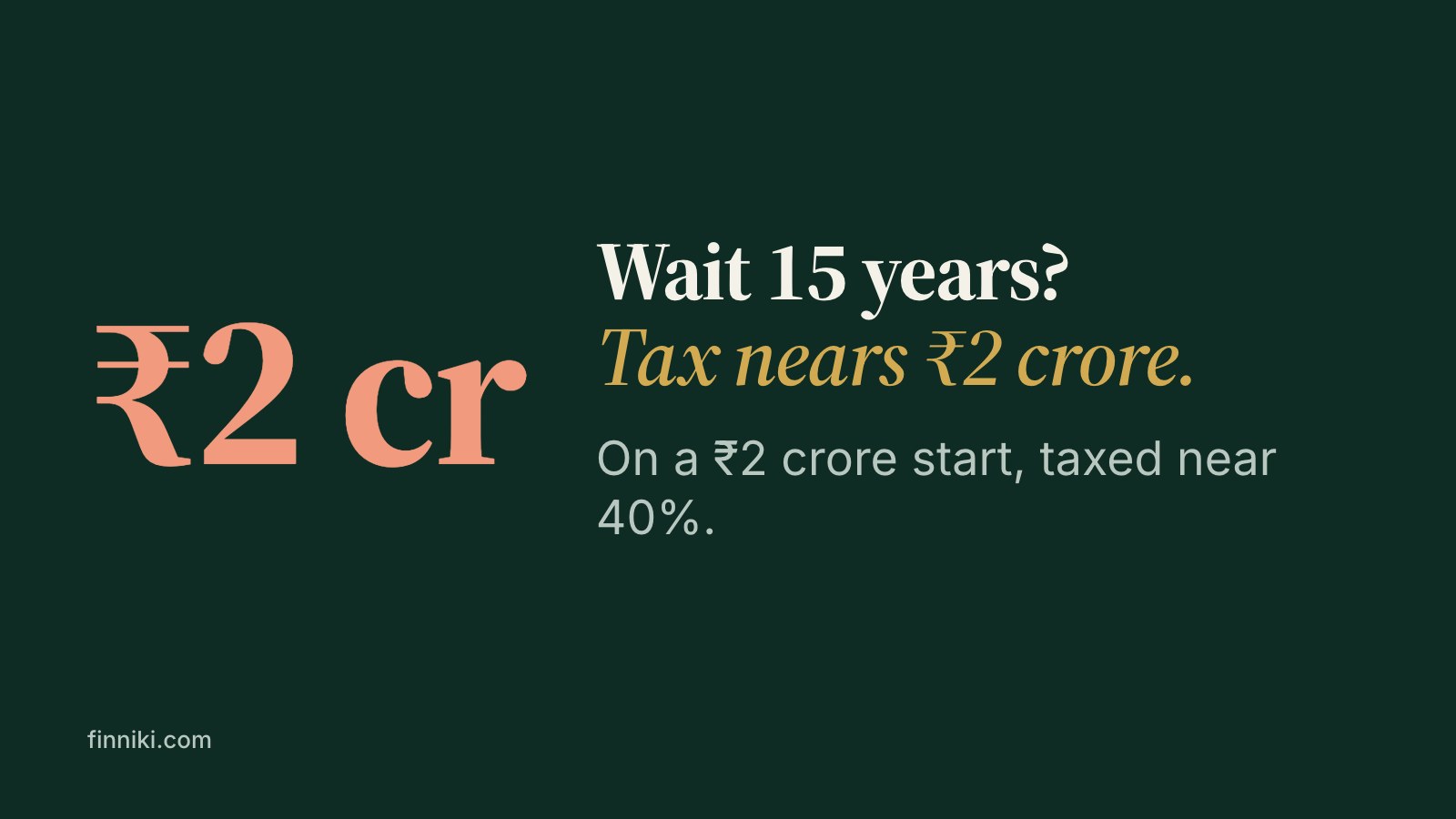
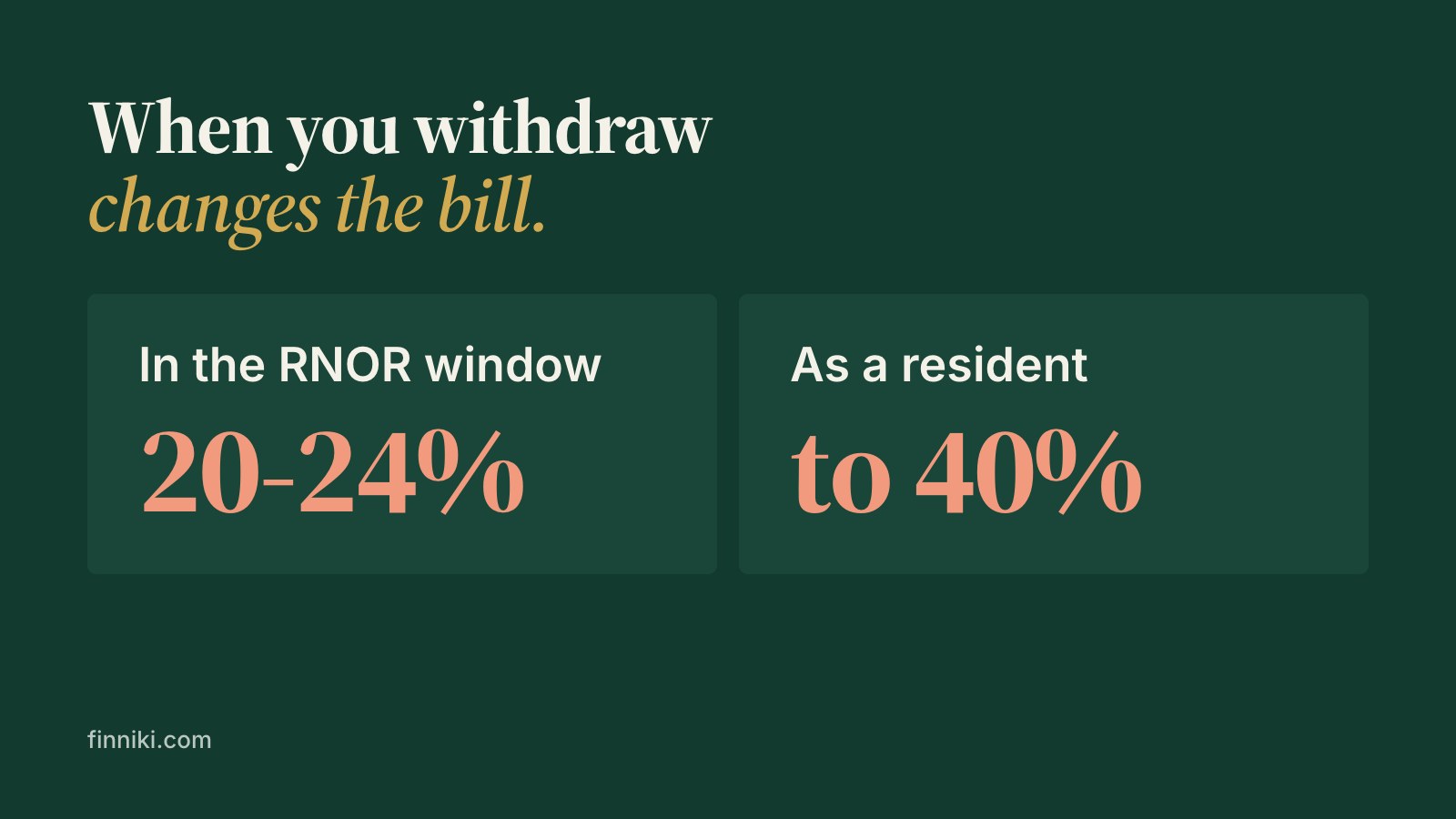
Quick answer: For many H-1B returnees, leaving a 401(k) untouched until age 59½ is the most expensive option, not the safest. ₹2 crore left alone for 15 years could grow to ₹5 to 7 crore, and as a full Indian resident the withdrawal can be taxed at slab rates that approach 40% with surcharge and cess, which is close to ₹2 crore of tax on a ₹2 crore starting balance. In the narrow window after you land, while you are RNOR and have little other US income, withdrawing and paying the 10% early-withdrawal penalty can cost roughly 20 to 24% all in, against up to about 40% later as a full resident. The right answer depends on three things: your US status after you leave, your Indian status after you land, and whether the account is traditional or Roth.
Updated October 2026. India now runs on the Income-tax Act, 2025: the relief for foreign retirement accounts that used to be Section 89A with Form 10-EE is now Section 158 read with Rule 74 of the Income-tax Rules, 2026, filed on Form 40. The tax figures are the episode's illustrative examples for one balance, so run your own numbers with a CA before acting.
 Watch the 15-minute episode: Moving back? What happens to your 401(k) and the ₹2 crore tax bill
What happens to your 401(k) when you move back to India?
It turns into a cross-border tax problem. A 401(k) is a US retirement account: pre-tax money goes in from your paycheck, your employer usually matches part of it, it grows without yearly tax, and withdrawals are taxed as ordinary income. If you stay in America for life, that is the whole story. If you move to India, the account does not move with you. It sits in one country while you live in another, and both countries have an opinion about it. The question is not "should I touch my 401(k)?" but which system takes the bigger bite, and when.
Take Ankit: 40 years old, 12 years on an H-1B, about ₹2 crore in his 401(k), moving back within the year. His instinct, like most people's, is to leave it and sort it out at 59½. Three things decide his answer:
- His US status after he leaves. The day he leaves for good he stops being a US tax resident and becomes a non-resident alien (NRA). That changes his withholding, his filing and his exposure to US estate tax.
- His Indian status after he lands. Most returnees pass through RNOR (Resident but Not Ordinarily Resident) first. Think of it as free parking: the meter has not started, but it will, and nobody taps on the window to tell you when. Use the RNOR calculator and the NRI status calculator.
- The account type. A traditional 401(k) (pre-tax money) is treated very differently in India from a Roth (already taxed in the US). India does not automatically honour the tax-free status the US gives a Roth.
Is leaving your 401(k) untouched until 59½ the safe choice?
Often not. The option that sounds cautious hides three problems:
- Estate tax. An NRA loses the US$15 million exemption a citizen gets. The exemption can drop as low as US$60,000. Anything above it, a 401(k) included, can face US federal estate tax of up to 40% if you die still holding it.
- The Compounding Paradox. Leave ₹2 crore alone for 15 years and it could reasonably grow to ₹5 crore, perhaps ₹7 crore. But by then you are a full Indian resident, and withdrawals are taxed at slab rates that can push towards 40% with surcharge and cess. On the grown balance, the tax comes out close to ₹2 crore, on money that started at ₹2 crore. Every year the account copies your corpus, and a second copy of the bill is made at the same magnification.
- Operational drag. Statements keep arriving and nothing looks wrong. Plenty of providers do not really support NRA clients, some will not update an Indian address or let you rebalance, and two-factor authentication tends to die when your US number does. Every year the account must also be reported under Schedule FA on your Indian return, and the Black Money Act does not go easy on a miss.
Fix: run your estate-tax exposure and your future tax rate side by side, today. That calculation is free. A notice twelve years from now is not.
Should you withdraw everything before you leave the US?
Usually not while you still draw a US salary. A withdrawal then stacks on top of that year's income. A salary alone may already put you at 22 or 24% federal tax. Add the withdrawal and the 10% early-withdrawal penalty (you are under 59½) and the total can cross 40%. The exception is a genuinely low-income US year, for example after you have stopped working. Same account, same amount, same paperwork: only the date changed, and it is worth close to 20 percentage points.
Is withdrawing during the RNOR window cheaper?
For many returnees, yes. Once you are back in India and off a US salary, a withdrawal during RNOR is still taxed by the US, but with little other US income that year, the rate drops sharply. India does not tax it during the RNOR window. Adding the 10% penalty, the episode puts the all-in cost at roughly 12% US tax plus 10% penalty, about 20 to 24%, against up to about 40% later as a full resident. That is close to a quarter of what waiting would have cost in the ₹2 crore example.
One practical point: the plan administrator withholds a flat 30% at source whatever your bracket. Most of the gap comes back when you file your Form 1040-NR, but it is a timing hit, so do not plan around receiving the full amount on day one.
In the episode's second example, Divya, a 38-year-old engineer in Seattle, asked a CA who handled returnees eight months before her return date and withdrew inside her RNOR window, coming out at about 22% all in. She was not smarter than Ankit. She had one more conversation, eight months earlier. The fix is one withdrawal, planned properly, inside an RNOR window you have actually calculated.
Where should the money go after you withdraw?
Converting everything to rupees solves the US problem but hands back the dollar exposure you spent twelve years building. You do not have to choose:
- RFC account (Resident Foreign Currency): parks the dollars in India as dollars while you decide what to do next.
- Irish-domiciled ETFs: give S&P 500 or NASDAQ 100 exposure without the US-situs estate-tax problem, because the fund itself sits outside America.
- GIFT City feeder funds: route through India's IFSC into international markets under Indian regulation. See GIFT City for NRIs.
Who should skip all of this?
Three groups:
- Balance under about ₹50 lakh: the estate-tax exposure is real but small, and the cost of restructuring may not be worth it.
- A decent chance you will return to the US (a spouse's job, a company that keeps posting you): do not dismantle something you will want again.
- A child heading to a US university in the next few years: dollars in a US account are dollars you will spend in dollars anyway.
None of that makes the account risk-free. It means the fix might cost more than the problem.
What happens if you drift into Resident and Ordinarily Resident status?
If nobody decides anything, the RNOR window opens, nobody counts, and it closes. You become Resident and Ordinarily Resident, and India can tax your worldwide income, including 401(k) withdrawals, at full slab rates on top of your Indian earnings.
There is relief, and the names have changed. It used to be Section 89A with Form 10-EE. Under the Income-tax Act, 2025 it is Section 158, read with Rule 74 of the Income-tax Rules, 2026, filed on Form 40. It lets eligible residents defer Indian tax on a foreign retirement account until the money is withdrawn, instead of being taxed as it accrues. If your adviser still says 10-EE, they are working from the old Act. Three catches:
- It is a one-way door. Once you exercise the option it applies to every later year and generally cannot be withdrawn.
- It fixes timing, not the rate. When you eventually withdraw, India still taxes it at full slab rates.
- It does not remove Schedule FA. The account is still reported every year, and non-disclosure still carries the ₹10 lakh penalty under the Black Money Act.
File Form 40 before your return due date, and get your CA to put your RNOR end date in writing.
Does a Roth conversion help an NRI returning to India?
Usually not. If you convert to a Roth before you leave, you pay US tax now and withdraw tax-free later, which is decent planning if you stay in America. But India does not automatically recognise Roth treatment. You could pay US tax at conversion and Indian tax at withdrawal, in two different financial years, with the foreign tax credit unable to bridge the gap cleanly. Have your CA model the Indian side before you convert anything.
What is Rule 72(t) (SEPP), and is it right for a move to India?
Substantially Equal Periodic Payments let you withdraw before 59½ without the 10% penalty, as long as you take roughly equal payments for at least five years or until 59½, whichever is later. If you are genuinely retiring early, it works. The catch: if you change the schedule or stop early, the IRS can apply the 10% penalty retroactively to everything you have taken, with interest. A rigid five-year commitment in the middle of an international move, where your residency, income and plans are still changing, is a poor fit for most people.
What should you do before boarding the flight?
- Confirm in writing whether your provider supports non-resident alien clients.
- Sort out your login and two-factor authentication while you still have a US number.
- Keep one US bank account open for distributions.
- Download everything: statements, contribution history, W-2s, 1099s and rollover records.
- Review your beneficiary designations.
- Calculate your actual RNOR window with a CA before you fix a return date, not after you land.
On Ankit's balance, every year he leaves this undecided quietly moves roughly ₹8 to ₹10 lakh from his side of the table to someone else's, partly through the growing tax base and partly through the estate exposure he carries for free. It is not dramatic in any single year, which is why it never triggers a decision.

FAQs
Should I withdraw my 401(k) before moving back to India?
Not automatically. Withdrawing while you still earn a US salary can push the total tax above 40%. For many returnees the cheaper window is after landing, while RNOR and with little other US income.
What is the 10% early-withdrawal penalty on a 401(k)?
A US penalty on withdrawals before age 59½, added to the ordinary income tax on the amount withdrawn.
Is a 401(k) withdrawal taxed in India during the RNOR window?
The episode's position is that India does not tax it during RNOR. Once you become Resident and Ordinarily Resident, India taxes withdrawals at full slab rates.
How much tax is withheld when a non-resident alien takes a 401(k) distribution?
The plan administrator withholds a flat 30% at source. Most of the gap comes back when you file Form 1040-NR.
What is Form 40 and Section 158?
The Income-tax Act, 2025 relief for foreign retirement accounts, replacing Section 89A and Form 10-EE. It defers Indian tax until withdrawal, is a one-way option and does not cut the rate.
Do I still report my 401(k) in India if I file Form 40?
Yes. The account stays in Schedule FA every year. Non-disclosure can attract the ₹10 lakh Black Money Act penalty.
What is the US estate tax risk for an NRI with a 401(k)?
A non-resident alien can lose the US$15 million citizen exemption, which can drop to as low as US$60,000. Above that, US federal estate tax of up to 40% can apply.
Does a Roth 401(k) stay tax-free in India?
Not automatically. India does not automatically honour Roth treatment, so model the Indian side with a CA before converting.
Run your own numbers before you book the one-way ticket
Your RNOR window, your account type and your balance decide the answer. Book a one-to-one session to calculate yours before you fix a return date, or watch more explainers on our video page.
General information, not advice for your situation. Rules change; check your own numbers with a CA before you act.