5 Costly NRI FEMA Penalties (and How to Avoid Them)
Five FEMA mistakes NRIs pay for: using a resident savings account, hawala, buying farmland, forgotten FCNR deposits and old violations. How to fix each.

Nikhil Varghese, CA · 5 min read

Quick answer: Most NRI penalties under FEMA (the Foreign Exchange Management Act) come from paperwork, not fraud. The five costliest: continuing to use a resident savings account after becoming an NRI, sending money through hawala or other informal channels, buying agricultural land, a plantation or a farmhouse, leaving FCNR deposits unattended when they mature or your status changes, and assuming old violations no longer matter. FEMA penalties can be up to three times the amount involved. Fix them by converting accounts on time, using only bank channels, checking land type before buying, reviewing deposits yearly and compounding past mistakes voluntarily.
Updated October 2026. RBI's revised FEMA compounding rules, in force since September 2024, simplified voluntary settlement of past contraventions.
 Watch the episode: NRI FEMA rules explained, 5 costly penalties you must avoid
Why do NRIs get FEMA penalties?
Because the rules governing your money change the moment you become an NRI, and nobody tells you. FEMA applies to NRIs and to foreign citizens holding OCI or PIO cards. It does not ask whether you meant to break a rule, only whether you followed it. Banks will not stop you, and everything keeps working normally, until a notice arrives. The cases below are examples of how ordinary mistakes become very expensive.
Penalty 1: Can an NRI keep using a resident savings account?
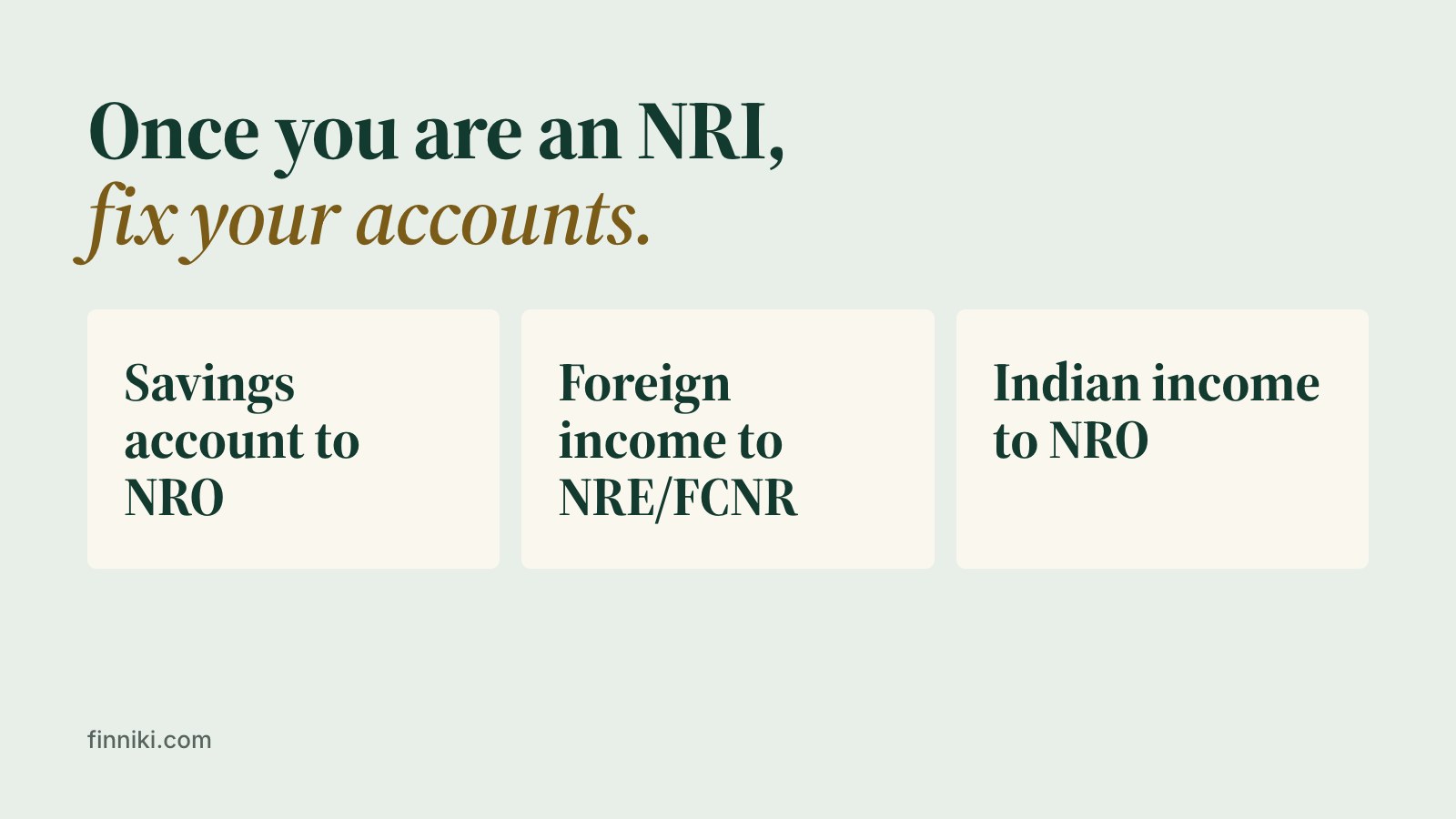
No. Once you qualify as an NRI, you may not operate a resident savings account: it must be redesignated as an NRO account, and foreign income should go into NRE or FCNR accounts.
Take Rahul (not his real name), who moved to Singapore and kept using his old savings account for SIPs, card bills and rent from his Bengaluru flat. He sent about ₹25 lakh a year home into that account for five years: ₹1.25 crore of clean, taxed money, but every credit was a FEMA breach. He was fined about ₹75,000, and worse, about ₹39 lakh lost its eligibility to be repatriated: money he earned and paid tax on, locked in India.
The fix is one conversation with your bank as soon as your status changes: convert the savings account to NRO, route foreign income to NRE or FCNR, and use NRO only for Indian income such as rent and dividends.
Penalty 2: Is it illegal to send money through hawala?
Yes, completely, whatever the amount. Hawala and any informal transfer bypass authorised banking channels, so the transaction is illegal even if the money was earned legally, taxed abroad and meant for a parent's medical bills. One NRI sent about ₹5 lakh a year informally for four years, ₹20 lakh in all, for a better rate and faster delivery. He was fined ₹15 lakh and ₹7 lakh was confiscated: a ₹22 lakh loss, more than he had sent.
Salary slips, tax returns and employment contracts do not help; FEMA asks only whether you used the right channel, and one informal transfer can expose your whole financial history to scrutiny. Always use authorised banks and remittance services, even at a slightly worse rate.
Penalty 3: Can an NRI buy agricultural land in India?
No. NRIs and OCI cardholders cannot buy agricultural land, plantation property or a farmhouse in India, and cannot receive them as a gift. They can only hold such land if they inherit it, or if they bought it while they were still resident.
One NRI bought farmland near a new highway for ₹25 lakh, expecting it to triple. Years later, during a sale, the purchase was flagged: penalty ₹41 lakh, more than the land cost. Property records do not expire, and most NRIs discover the problem only when they try to sell. Check the land's classification before you discuss price, and get a written opinion from a lawyer who knows FEMA if in doubt.

Penalty 4: What happens if you forget an FCNR deposit?
The non-compliance quietly builds up. FCNR deposits are excellent while you are an NRI: foreign-currency savings with no exchange risk and interest that is tax-free in India. But when a deposit matures, or your residential status changes (for example, when you move back), it must be renewed, converted or closed according to the rules. Left alone, it sits incorrectly structured year after year. In one case the problem ran for 24 years before the penalty: ₹52 lakh. Because FEMA penalties can reach three times the amount involved, long-running violations become very expensive. Track maturity dates and review deposits whenever your status changes.
Penalty 5: Can old FEMA violations still be penalised?
Yes. FEMA sets no fixed time limit, so a violation from 15 years ago can be examined today: mixing resident and NRI money, breaching repatriation limits or never correcting an old mistake. The solution is compounding: voluntarily applying to the RBI to settle the contravention by paying a defined amount, which closes the matter. Compounding early is almost always cheaper and cleaner than waiting for a notice.
How do you avoid FEMA penalties as an NRI?
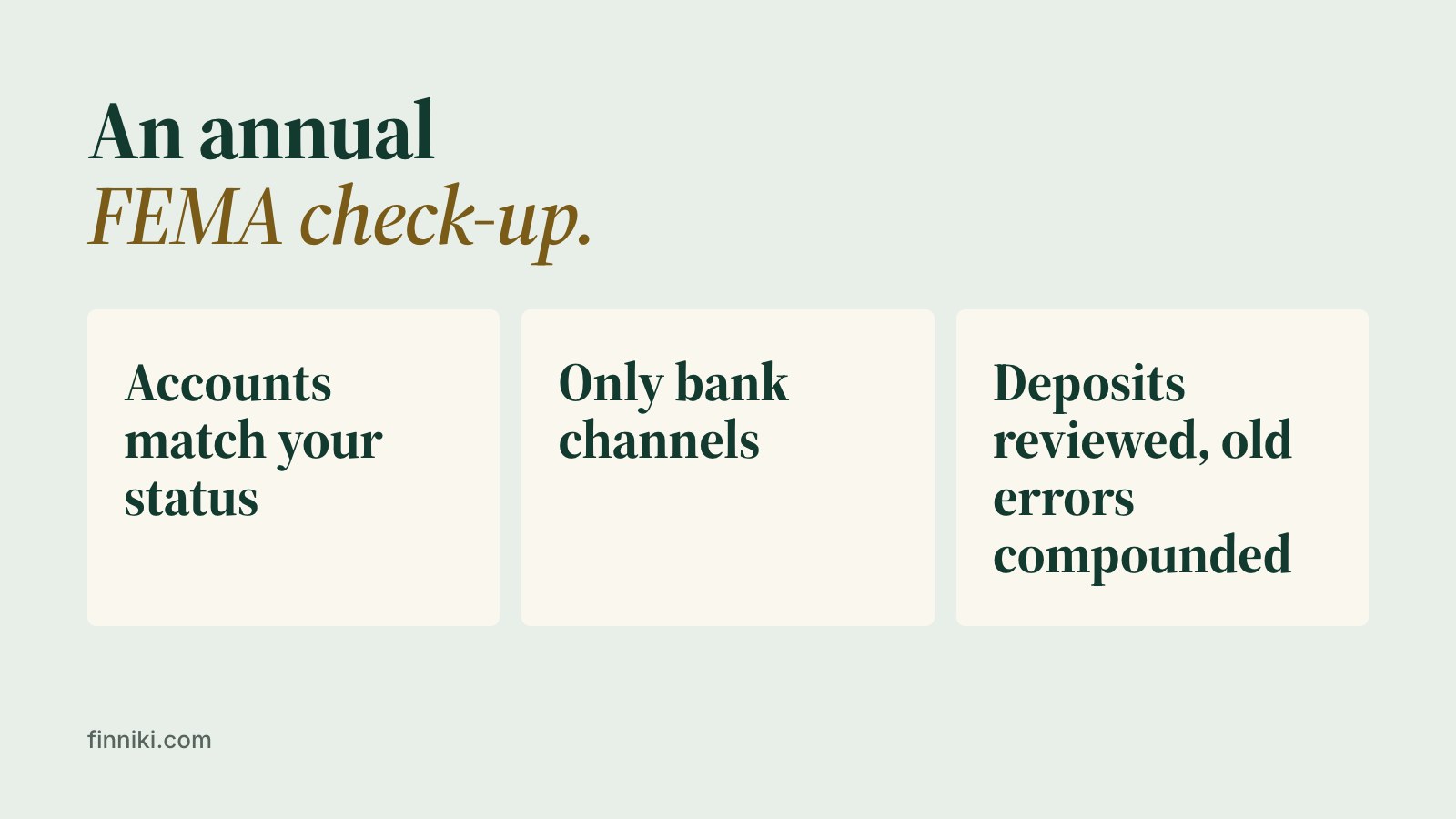
Most NRIs who lose large sums do so through small mistakes repeated for years, not one illegal act. Five habits prevent almost all of them:
- The right accounts for your status (NRE, NRO, FCNR).
- Only legal banking channels for transfers.
- Verified property types before any purchase.
- An annual review of deposits and accounts.
- Early correction of past mistakes through compounding.
FAQs
Can an NRI keep a resident savings account?
No. It must be redesignated as an NRO account once you become an NRI, and foreign income should go to NRE or FCNR accounts.
What is the penalty for FEMA violations?
Up to three times the amount involved where it can be quantified, plus possible confiscation in serious cases.
Can NRIs buy agricultural land in India?
No. They can hold it only by inheritance, or if bought before they became non-resident; they cannot buy it or receive it as a gift.
Is it illegal for NRIs to use hawala?
Yes. Any transfer outside authorised banking channels breaches FEMA, regardless of amount or purpose.
What should I do with my FCNR deposit when I return to India?
Review it with your bank: it can usually run to maturity, but interest becomes taxable once you are resident, and it must be converted or closed under the rules.
What is FEMA compounding?
A voluntary process in which you admit a contravention to the RBI and pay a set amount to settle it, avoiding a larger penalty later.
Get your NRI paperwork in order
A one-time review of your accounts and holdings can prevent a penalty years later. Book a session, or read our guides to NRI repatriation and the NRI demat account.
General information, not advice for your situation. Rules change; check your own numbers with a CA before you act.