NRI Retirement in India: The Complete Financial Guide
How much an NRI needs to retire in India by city, currency risk, NRE/NRO/FCNR timing, the RNOR window, property, healthcare and tax-efficient income.

Nikhil Varghese, CA · 7 min read

Quick answer: Retiring in India as an NRI can be comfortable or quietly expensive, depending on preparation. Decide your city and lifestyle first (about ₹1.5 to 2 lakh a month in a Tier 1 city, ₹70,000 to 1 lakh in Tier 2), then build a corpus of roughly 25 to 30 times annual expenses: about ₹8 to 10 crore for a Tier 1 retirement and ₹5 to 6 crore for Tier 2. Manage currency risk by keeping some money in global assets and converting gradually, do not rush to close NRE and FCNR accounts, rent before you buy, buy health cover before you return, and use the RNOR window to restructure with little tax.
Updated October 2026. The rupee was about ₹90 per dollar when this episode was recorded; it is about ₹96 now. One of the episode's SIP figures, its property-tax point and its GIFT City claim are corrected below.
 Watch the episode: NRI retirement planning India, a step-by-step roadmap
Why do NRIs need a separate retirement plan for India?
Because India's costs, taxes and currency behave differently from where you earn. About 35 million NRIs and people of Indian origin sent home about $135 billion in 2024-25, and many plan to retire in India. On paper it looks ideal: lower costs, family nearby, familiar food and culture. In practice, healthcare costs rise fast, one wrong account decision can make interest taxable for life, and buying property too early can lock you into a neighbourhood you dislike.
Step 1: How do you want to live in retirement?
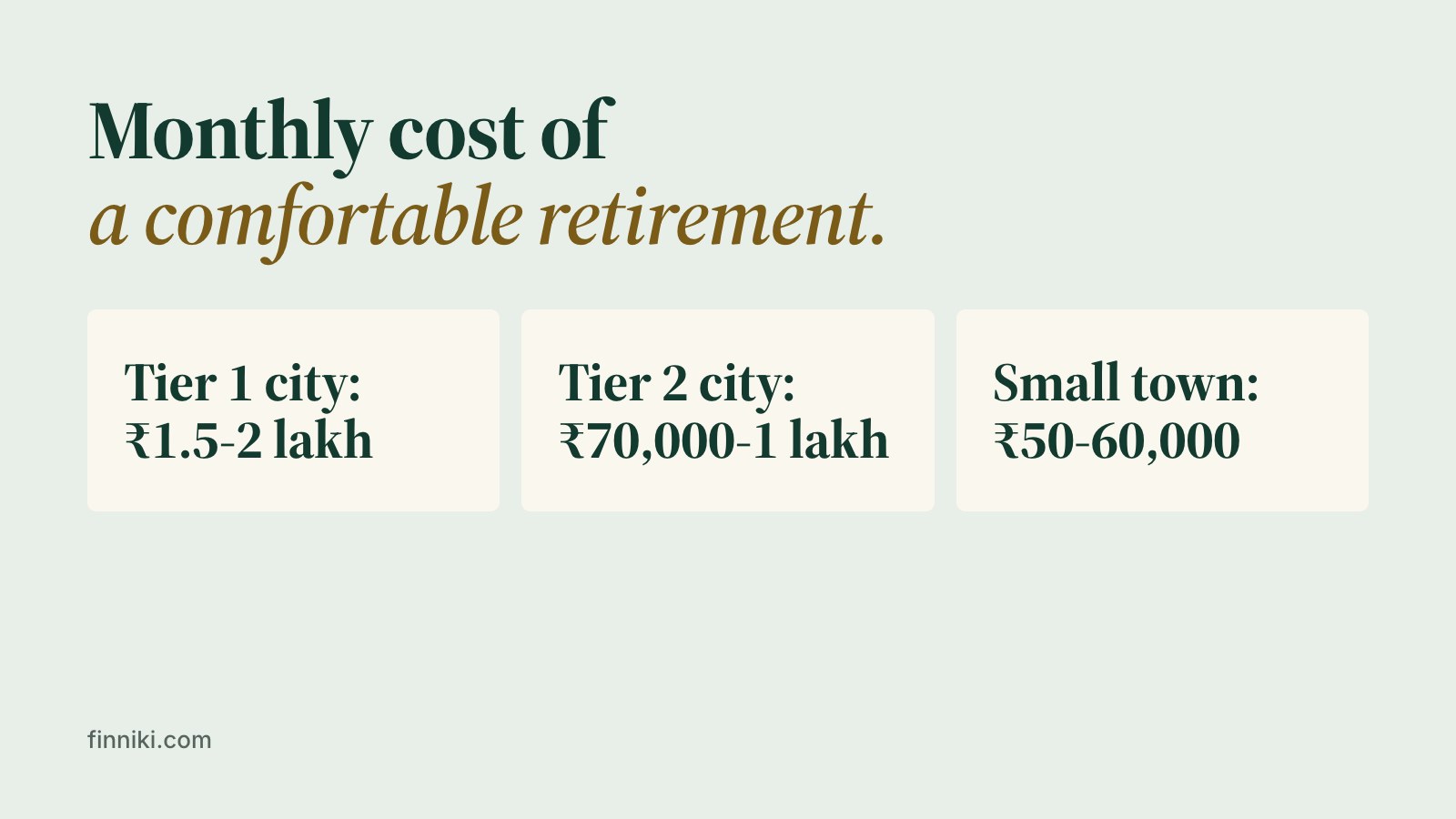
Decide this before any numbers. Costs vary widely with location and lifestyle. Roughly, a comfortable retirement costs:
- Tier 1 city (Mumbai, Bengaluru, Delhi): ₹1.5 to 2 lakh a month
- Tier 2 city (Indore, Coimbatore, Jaipur): ₹70,000 to 1 lakh
- Smaller towns: ₹50,000 to 60,000
Also decide whether you will own or rent, whether you will rely on private hospitals, and whether retirement means quiet or travel. India is affordable only when your lifestyle matches your location.
Step 2: How much do you need to retire in India?
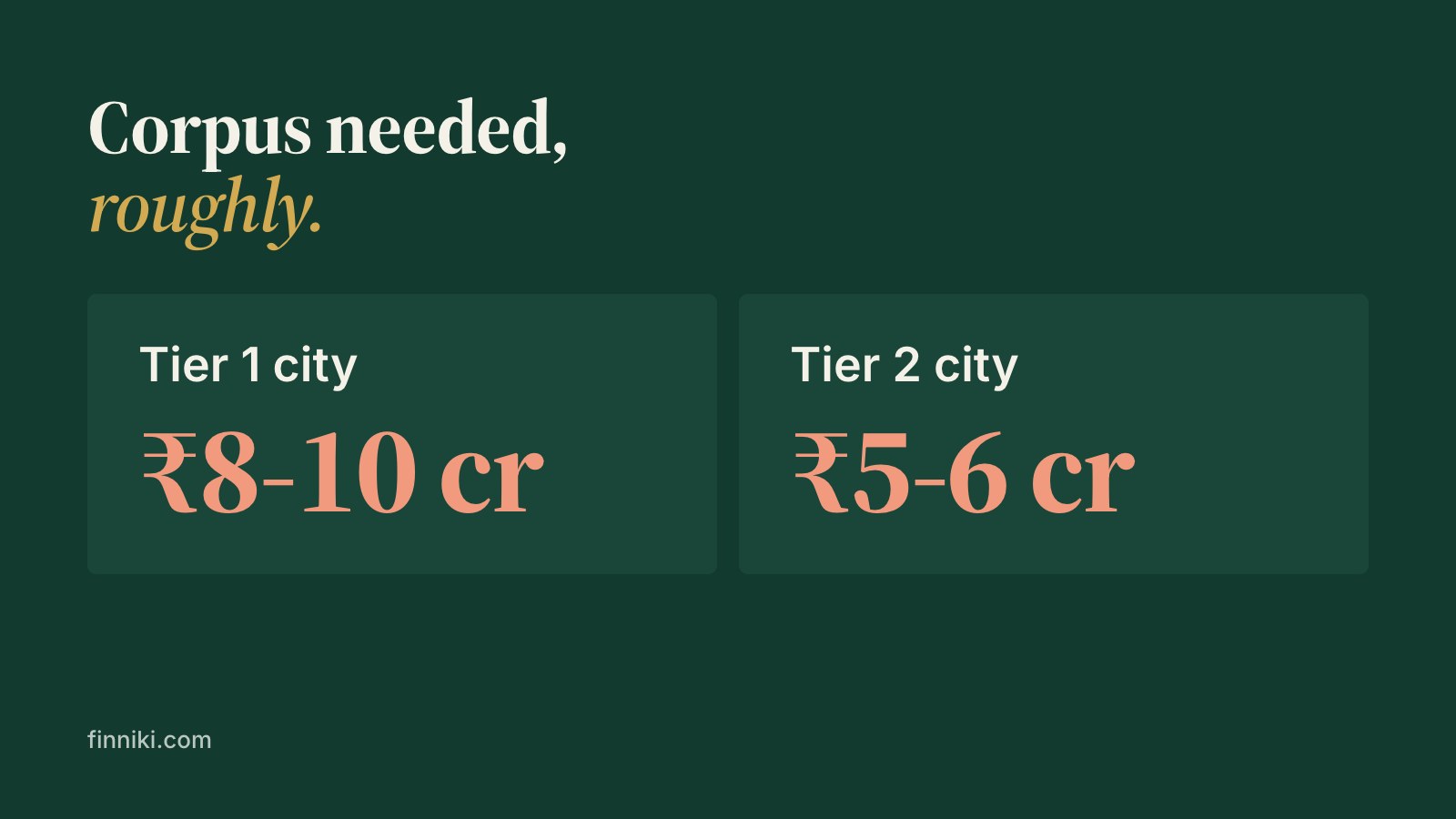
Use Indian maths, not Western formulas. Everyday inflation in India runs at about 6 to 7%, so expenses roughly double every 10 to 12 years, and medical costs rise 10 to 12% or more. After retirement you will invest more conservatively, so assume modest returns. A practical rule: corpus = 25 to 30 times annual expenses, which suggests about:
- ₹8 to 10 crore for a comfortable Tier 1 city retirement
- ₹5 to 6 crore for Tier 2
It is achievable with time: ₹50,000 a month at 12% for 20 years grows to about ₹5 crore. Over 15 years, ₹50,000 a month grows to about ₹2.5 crore and ₹78,000 to about ₹3.9 crore (the episode put the latter at ₹5 crore). The corpus is for dignity and independence, not luxury upgrades or risky ventures.
Step 3: Why is currency risk a trap for NRIs?
Because exchange-rate thinking replaces purchasing-power thinking. At ₹90 or ₹96 to the dollar, savings look large and India feels cheap. But what matters is how much life those rupees buy over 20 to 30 years. A falling rupee makes your dollars look bigger while Indian inflation shrinks what each rupee buys. And big one-time conversions, often made emotionally on landing, give no chance to average out a bad rate.
Treat conversion as a risk to manage, not a one-off win: keep part of your corpus in global assets, convert gradually in line with actual spending, and diversify across currencies.
Step 4: What should you do with NRE, NRO and FCNR accounts?
Plan the transition, not just the return date:
- NRE account: for money earned abroad. Interest is tax-free in India while you are an NRI, and fully repatriable.
- NRO account: for income earned in India, such as rent, dividends or pension. Interest is taxable, and repatriation has limits and paperwork.
- FCNR deposits: keep money in foreign currency while earning interest, protecting you from currency swings and letting you time conversions.
The big mistake is converting everything to resident accounts the moment you land. Take your time and get advice on the timing, because once you are resident the tax-free status of NRE interest ends, and when deposits must be redesignated depends on your residential status. A rushed decision can raise your tax bill for years.
Step 5: How should your investments change before and after returning?
Gradually, and starting before your status changes:
- Before returning: keep a good share in global equity and dollar assets for diversification and protection from rupee weakness.
- After returning: Indian equity can take a larger role for growth, with stable debt, government bonds and later senior citizen schemes for predictable income.
- A guide for ages 30 to 50: 60% equity, 30% debt, 10% gold or international assets, shifting towards stability nearer retirement.
Avoid ULIPs, traditional insurance plans sold as investments and high-commission products that lock your money in.
Step 6: Should NRIs buy property in India before retiring?
Usually not straight away. Residential rental yields in India are often only 2 to 3%, with maintenance, legal and society costs on top, and property ties your money up when you might need it. Tax changes since July 2024 also reduced the indexation benefit on property sales: gains are now generally taxed at 12.5% without indexation, with resident individuals allowed to choose the old 20%-with-indexation route only for property bought before 23 July 2024.
A smarter approach: rent for two to three years after returning. Learn the city, check how close you are to good hospitals, and see how traffic and air quality affect daily life. Then buy, if you still want to.
Step 7: How should NRIs plan for healthcare in India?
Early. Healthcare is one of India's biggest advantages: a major operation costing $40,000 to $60,000 in the US may cost ₹3 to 6 lakh in a good private hospital here; a heart bypass can cost around ₹10 lakh; an MRI about ₹10,000; a specialist visit ₹800 to 1,500. But it is only cheap if you are prepared:
- Buy a strong base health policy before you return.
- Add a super top-up for large bills.
- Keep a ₹10 to 15 lakh medical emergency fund for what insurance does not cover.

Step 8: What is the RNOR window and why does it matter?
RNOR (Resident but Not Ordinarily Resident) is a transition status many returning NRIs get for up to about two to three years, depending on how long they lived abroad. During it, most foreign income and overseas assets are not taxed in India, which gives you time to restructure calmly. Use the RNOR calculator to check your status.
A tax-efficient income structure for, say, a ₹6 crore corpus: keep ₹2 to 2.5 crore in safe instruments such as FDs and government bonds for steady expenses, put ₹3.5 to 4 crore in equity-oriented mutual funds, and draw ₹1.5 to 2 lakh a month through an SWP. Under the new regime, a resident with total income up to ₹12 lakh pays no tax after the rebate; on the SWP, only the gain portion of each withdrawal is taxed, and long-term equity gains are taxed at 12.5% above ₹1.25 lakh a year. A $3,000-a-month lifestyle in the US often matches a ₹2 to 2.5 lakh lifestyle in India, with house help and good healthcare.
Step 9: Can GIFT City help an NRI's retirement?
It can, for the money you invest while you are still non-resident. Many GIFT City funds and dollar deposits are tax-efficient for non-residents, and they let you keep savings in dollars. But the exemptions are tied to non-resident status: once you become resident, income and gains are generally taxed like other investments, so GIFT City is not a "zero tax forever" solution. Allocate a sensible slice, not everything. See our guide to GIFT City for NRIs.
What mistakes do NRIs make when retiring to India?
- Overestimating how cheap India is.
- Buying property too early, emotionally.
- Moving all their money to India at once.
- Ignoring a healthcare buffer.
- Leaving financial decisions to relatives without understanding them.
- Forgetting to plan for the surviving spouse.
The five-step NRI retirement plan
- Decide your lifestyle and city first.
- Calculate the corpus at 25 to 30 times annual expenses.
- Manage currency risk: do not convert everything at once.
- Shift investments gradually.
- Return financially before you return emotionally, and use the RNOR window well.
FAQs
How much money does an NRI need to retire in India?
Roughly 25 to 30 times annual expenses: about ₹8 to 10 crore for a comfortable Tier 1 city retirement and ₹5 to 6 crore for Tier 2.
Should I close my NRE account when I return to India?
Not in a rush. Get advice on timing: NRE interest stops being tax-free once you are resident, and the accounts must be redesignated at the right time.
What is RNOR status?
Resident but Not Ordinarily Resident, a transition status for up to about two to three years in which most foreign income is not taxed in India.
Should I buy a house in India before retiring?
Usually rent for two to three years first, then buy once you know the city and area suit you.
Is healthcare cheaper in India for retired NRIs?
Much cheaper than in the US, but rising fast. Buy health cover before returning and keep an emergency fund.
Are GIFT City investments tax-free?
Many are tax-efficient for non-residents, but the benefits generally end once you become resident.
Plan your return properly
The order in which you move money, close accounts and buy property can matter more than the date you fly. Book a session to plan your return, or use the RNOR calculator.
General information, not advice for your situation. Rules change; check your own numbers with a CA before you act.