Money Resolutions for 2027: What to Fix Before You Invest
Before you invest in 2027: claim forgotten money, consolidate accounts, update nominees and KYC, plug silent leaks and protect before you grow.

Nikhil Varghese, CA · 8 min read

Quick answer: The best money resolution for 2027 is not a return target; it is a set of habits you control. Before you pick a single fund, do three pieces of financial hygiene: claim money you have forgotten (Indian banks have moved about ₹86,917 crore of unclaimed deposits to the RBI's DEA Fund), consolidate scattered accounts, and update nominees, KYC and contact details. Then plug the silent leaks: unused subscriptions, lifestyle inflation and missed card payments. Only after an emergency fund and insurance are in place does investing work as it should, with money that can stay invested and a plan you can stick to.
Updated October 2026. Earlier versions of this checklist used RBI's June 2025 figure of over ₹67,000 crore; banks had moved ₹86,917 crore to the DEA Fund by 30 June 2026. Bank accounts can now carry up to four nominees, since 1 November 2025.
 Watch the 2026 episode: Money Resolutions for 2026 That Actually Change Your Life
Why shouldn't "25% returns" be your money resolution?
Because it is a hope, not a resolution: you cannot control what markets do. A better resolution is "I want to make fewer financial mistakes" or "I want my money life to feel less stressful". Most people do not lose money because they picked the wrong stock; they lose it because their decisions are inconsistent. They panic when markets fall, pile in when markets rise, stop investing when things feel uncomfortable and restart only when everything feels safe again.
So resolve to focus on process, not outcomes: invest regularly, review your portfolio calmly instead of obsessively, and avoid impulsive decisions when everyone around you is panicking. Those are within your control, and they matter more than finding the "perfect" investment.
How much unclaimed money is lying in Indian banks?
About ₹86,917 crore in bank deposits alone: the amount banks had transferred to the RBI's Depositor Education and Awareness (DEA) Fund by 30 June 2026, according to a reply in the Rajya Sabha in August 2026. Add insurance, dividends, mutual funds, shares and provident fund, and the government put the total of unclaimed financial assets at about ₹1.84 lakh crore when it launched its "Your Money, Your Right" campaign in October 2025. Real money, belonging to real people, simply forgotten.
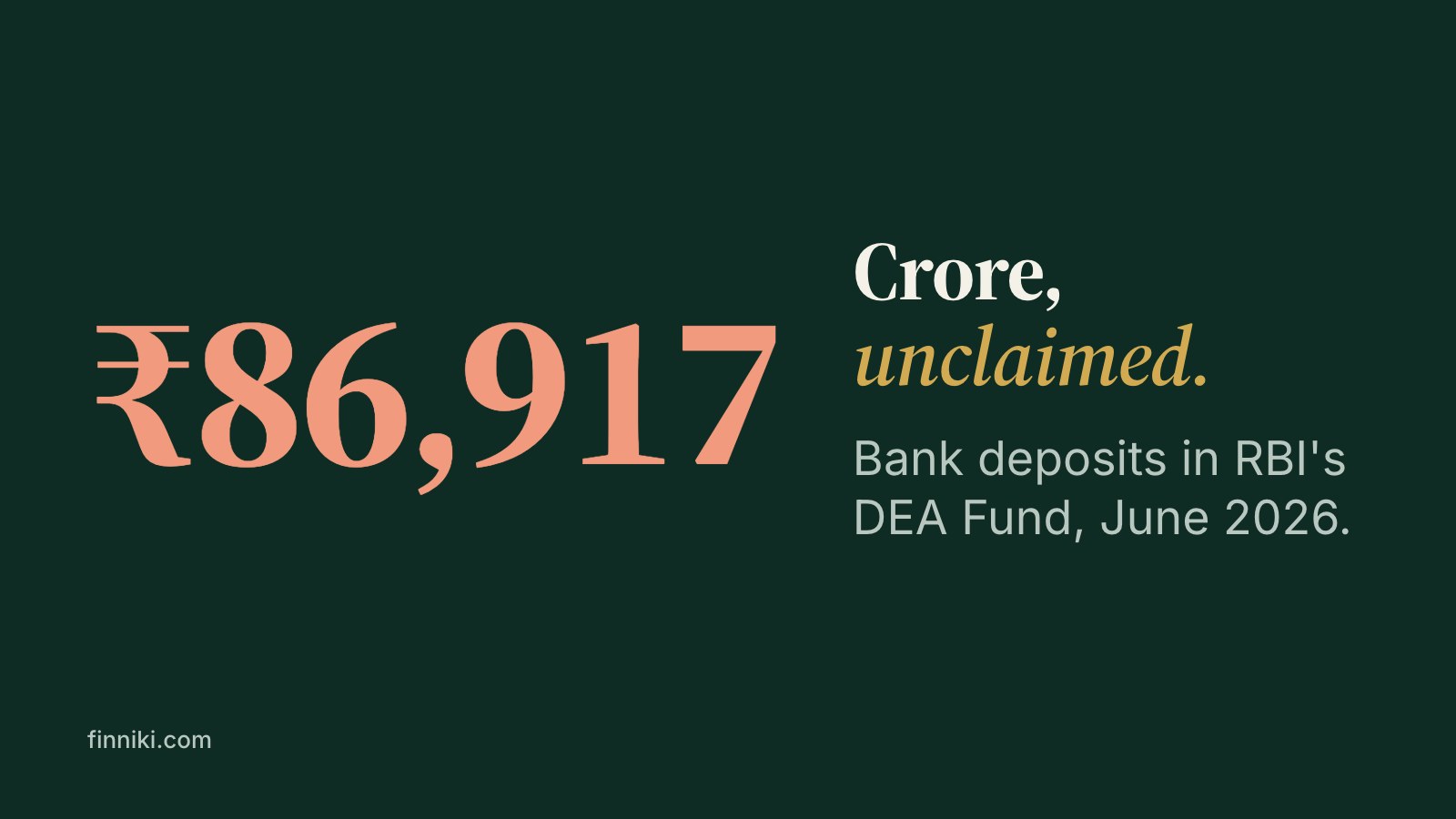
It happens quietly. A family changes cities; someone switches jobs several times; a salary account opened with a first employer fifteen years ago is forgotten. An account with no customer-initiated transaction for two years becomes inoperative, and a balance left unclaimed for ten years moves to the DEA Fund. In Thane district alone, officials found about ₹452 crore belonging to more than 11 lakh account holders.
The money is not lost: you or your legal heirs can still claim it through the bank, at any time. Spend one weekend checking old accounts and search the RBI's UDGAM portal, which looks across many banks at once.
Why should you consolidate your bank and investment accounts?
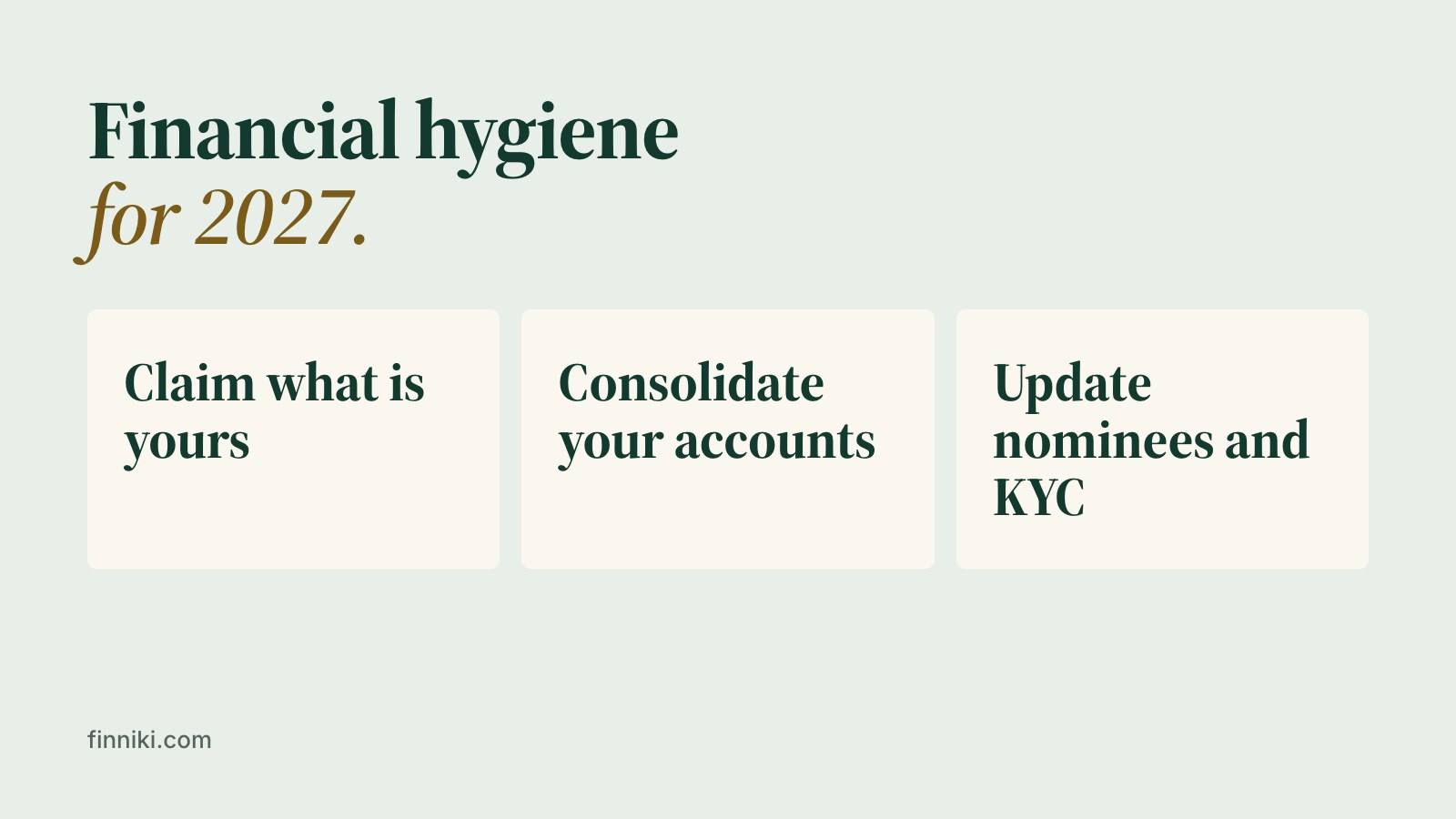
Because complexity causes mistakes. Over the years you open a bank account for each new job, another for a cashback offer, a demat account on one app and a trading account on another "just to try it", a wallet that once held money, and SIPs started without a goal because a friend suggested them or a notification arrived at the right moment. Soon your finances look like a cluttered cupboard: you forget renewal dates, miss important emails, lose track of how much you invest and where, and if something goes wrong you do not know where to start.
Take one weekend to audit everything:
- List every bank account, demat account, wallet and investment account you hold.
- Close the ones you do not use.
- Merge SIPs that have no clear purpose.
- Pick one or two platforms you trust and stay with them.
Fewer accounts mean better visibility and fewer chances of error. The goal is not convenience; it is clarity.
Why do nominees, KYC and contact details matter so much?
Because neglect stays invisible until an emergency, when access matters most. Many people in India still have no nominee on accounts, incomplete KYC, or old phone numbers and email addresses linked to their bank and investment accounts. Banks now let you name up to four nominees on a deposit account, so there is no reason to leave it blank.
Take one man who stopped using an old email address years ago but left it linked to his bank and demat accounts. When that email was compromised, one-time passwords were intercepted within hours and he was locked out of his own accounts. He spent weeks between the bank, customer care and branches proving the money was his. If your Aadhaar-linked mobile number or main email is not fully under your control, you are exposed. Hygiene will not make you rich overnight, but poor hygiene can lock you out of your own money.
How do subscriptions quietly drain your money?
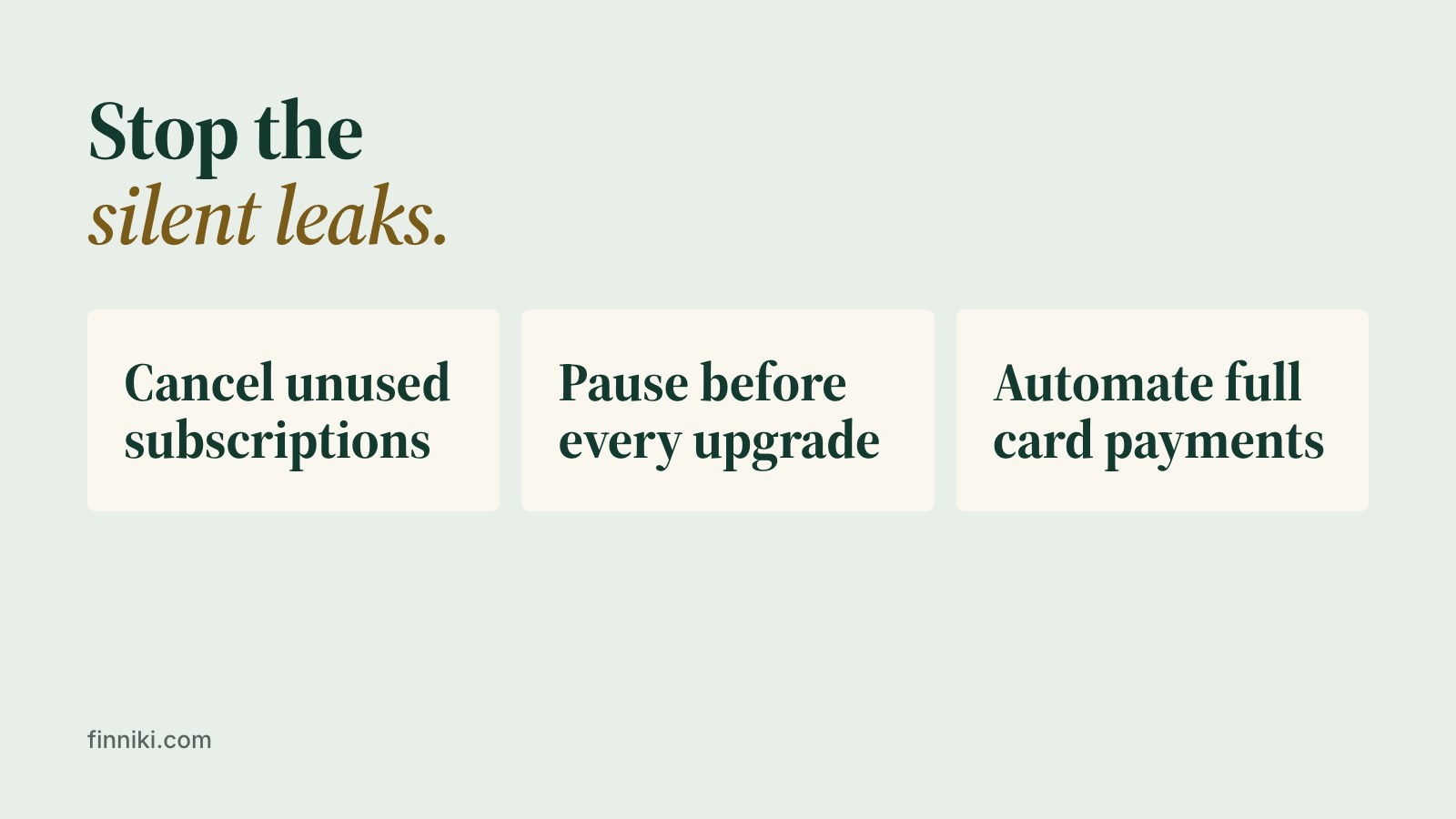
Through free trials that turn into paid plans and auto-debits for things you no longer use. OTT platforms, apps, software, gyms and newsletters: ₹199 here, ₹499 there, each harmless on its own, together a steady drain on cash flow. Unlike an investment, that money earns nothing.
This is the one part of personal finance where a fix pays back immediately. Set aside a day this week, go through your bank statements and card bills line by line, and cancel every subscription you do not actively use or value. Every one you remove is money recovered at once, with no market risk and no waiting.
What is lifestyle inflation, and how do you stop it?
It is your spending rising automatically with your salary: a better phone, a better car, more food delivery, more convenience, and EMIs that once felt affordable and now feel permanent. Enjoying your money is fine; you earned it. The problem is growth without awareness.
Before any lifestyle upgrade in 2027, ask one question: is this improving my life, or just keeping pace with my income? If it is intentional and fits your priorities, enjoy it. If it is happening only because your salary rose, redirect that money instead. Lifestyle growth should be a choice, not a reflex. For more of these everyday leaks, see our list of personal finance mistakes to avoid.
Which small money habits cost the most over time?
The ones that do not feel dangerous: missing a credit card due date, paying only the minimum because you will "sort it out later", paying penalties because attention lapsed rather than money. One missed payment brings a fee, the fee brings interest, the next bill feels heavier, so you pay the minimum again. Nothing explodes overnight; the small oversights compound against you. Our guide to the credit card minimum-due trap shows how fast that interest adds up.
The fix needs no extra income. Automate everything you can: auto-debit the full card balance, set reminders for important dates and use calendar alerts. Avoiding losses often matters more than chasing extra gains.
Does investing success come from intelligence or discipline?
Discipline. Most people do not fail at investing because they chose the wrong asset; they fail because they could not stick to the plan. They stopped when markets fell, jumped in when markets rose and kept switching strategies because someone online seemed to be doing better. A disciplined investor doing average things consistently will almost always beat a brilliant investor acting occasionally. Consistency compounds; inconsistency destroys. Our guide to staying invested shows how much behaviour alone is worth.
What should you have in place before you invest?
Protection, before growth:
- An emergency fund of a few months' expenses. It is not pessimism; it is freedom. You stop making fear-based decisions and can stay invested when markets dip instead of panic-selling.
- Health insurance. One medical emergency can undo years of disciplined investing. See how much health cover you need.
- Term insurance, if anyone depends on your income.
You do not invest to get rich first; you invest so that one bad event does not make you poor.
What is the golden rule of investing for 2027?
Invest only money that can stay invested. Keep short-term money and long-term investments apart. If you need money in two years for a house down payment, it does not belong in equity, however attractive returns look: if markets fall just when you need it, you are forced to sell at a loss. Peace of mind is not separate from returns; it improves them, because it helps you stay invested through the ups and downs.
Is money the only thing worth measuring?
No. If money is the only measure, you will always feel behind. Compare yourself with your past self, not with others: the problems you handle easily today are not the ones you struggled with five years ago, and that progress is real even when it does not show in a balance. Your mental and physical health are the assets that make every other asset usable. If your money is growing but your stress is growing faster, something is wrong. Money is a tool meant to create choices, not pressure.
FAQs
What are good money resolutions for 2027?
Focus on process, not returns: claim forgotten money, consolidate accounts, update nominees and KYC, cut unused subscriptions, control lifestyle inflation, automate bill payments, and build protection before investing.
How do I check for unclaimed bank deposits in India?
Search the RBI's UDGAM portal, which covers many banks at once, or ask the bank directly. You or your legal heirs can claim the money at any time, even after it has moved to the DEA Fund.
When does a bank account become inoperative?
After two years with no customer-initiated transactions. Balances unclaimed for ten years are moved to the RBI's Depositor Education and Awareness Fund.
How many nominees can I add to a bank account?
Up to four, since 1 November 2025, either together or one after another; lockers allow successive nominees only.
How many bank and investment accounts should I have?
As few as you can manage clearly. Close unused accounts and stick to one or two platforms you trust, so nothing is forgotten.
Should I invest before building an emergency fund?
No. Build an emergency fund and get health insurance, and term insurance if anyone depends on you, before you invest for growth.
Should money needed in two years go into equity?
No. Money you will need soon belongs in safer options, because a market fall just before you need it would force you to sell at a loss.
Start 2027 with a money reset
Pick one weekend for hygiene and one day for leaks, then let a simple, automated plan do the rest. Book a session for a full money check-up, or find more episodes on FinNiki videos.
General information, not advice for your situation. Rules change; check your own numbers with a CA before you act.